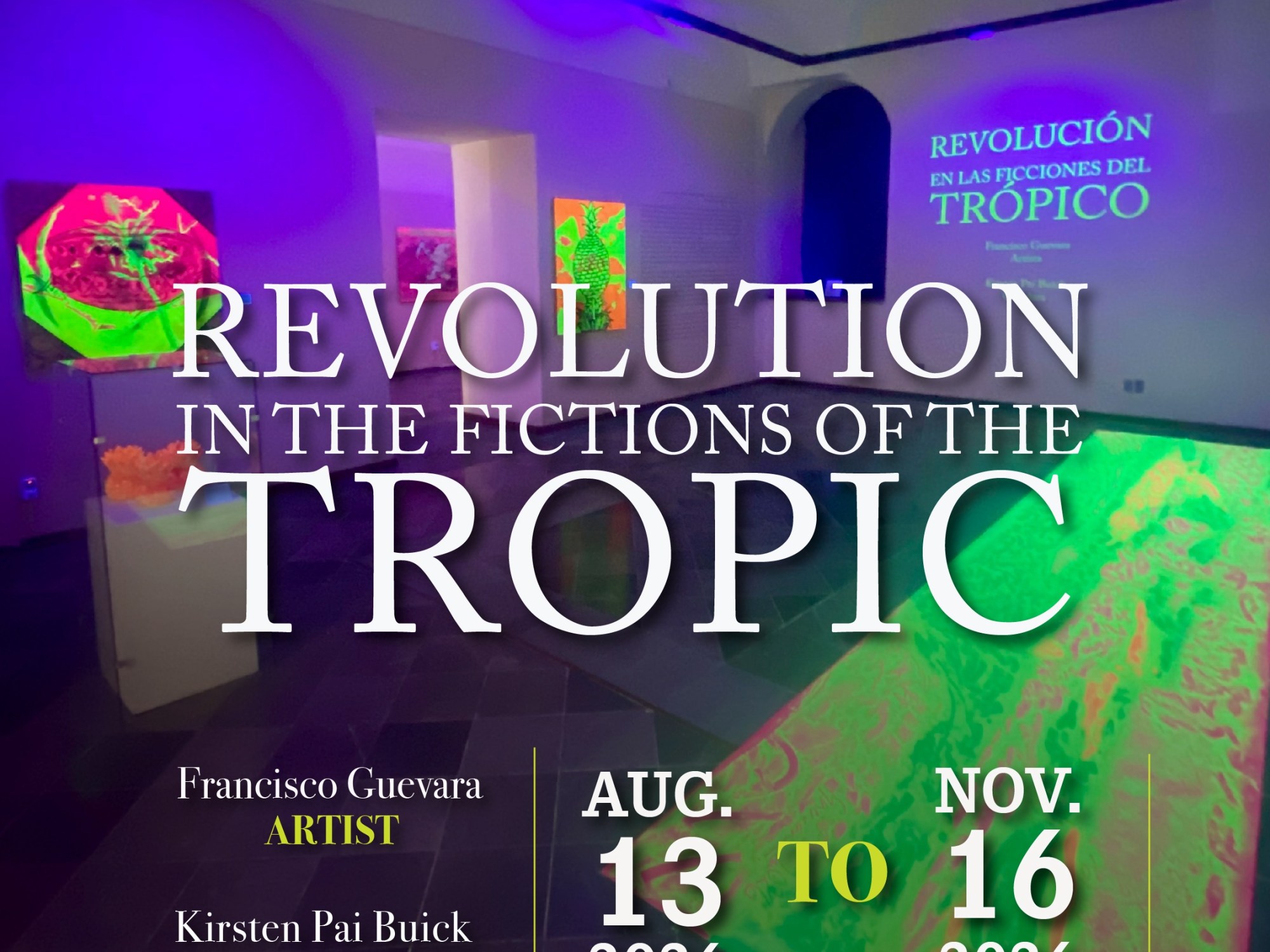
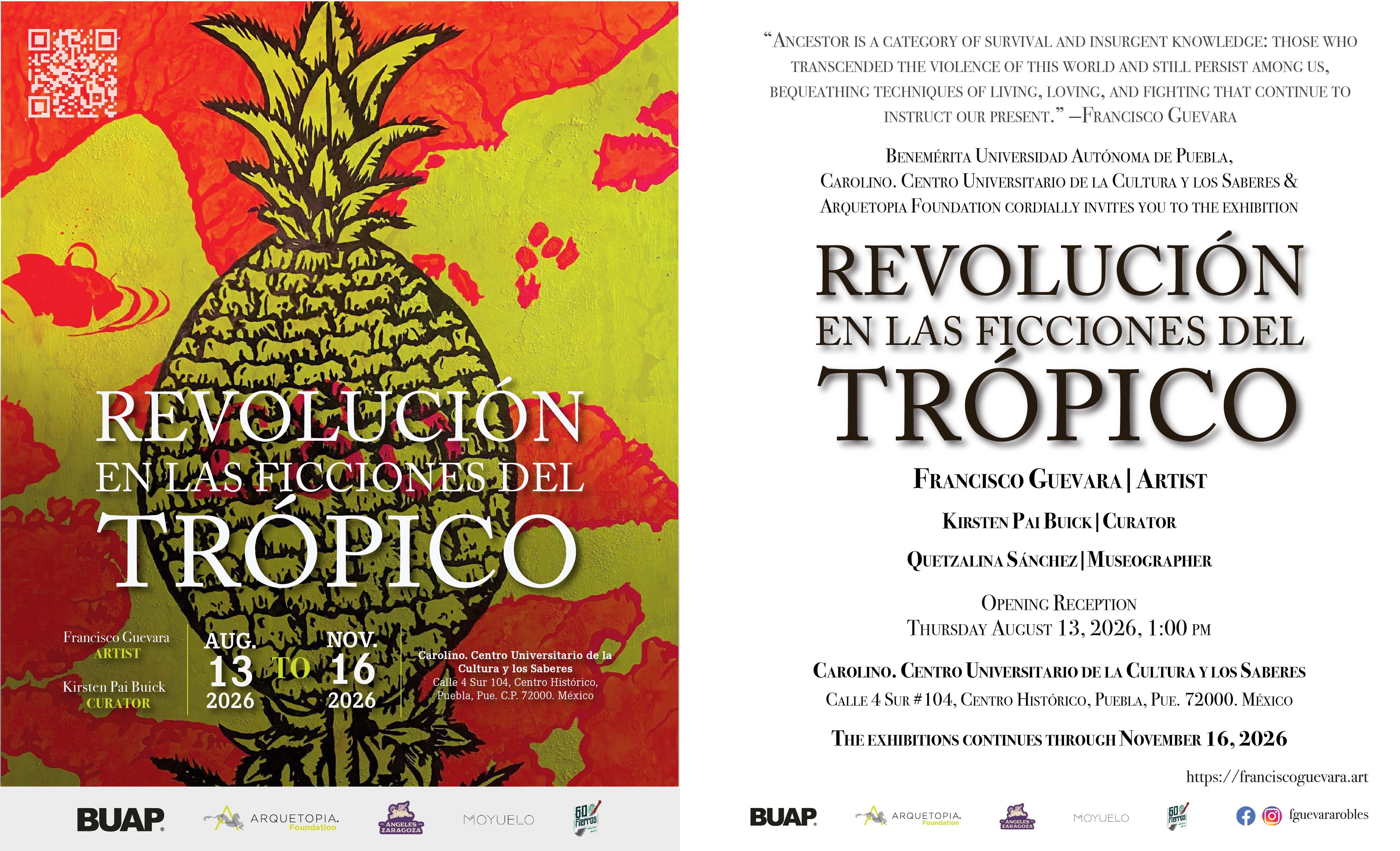
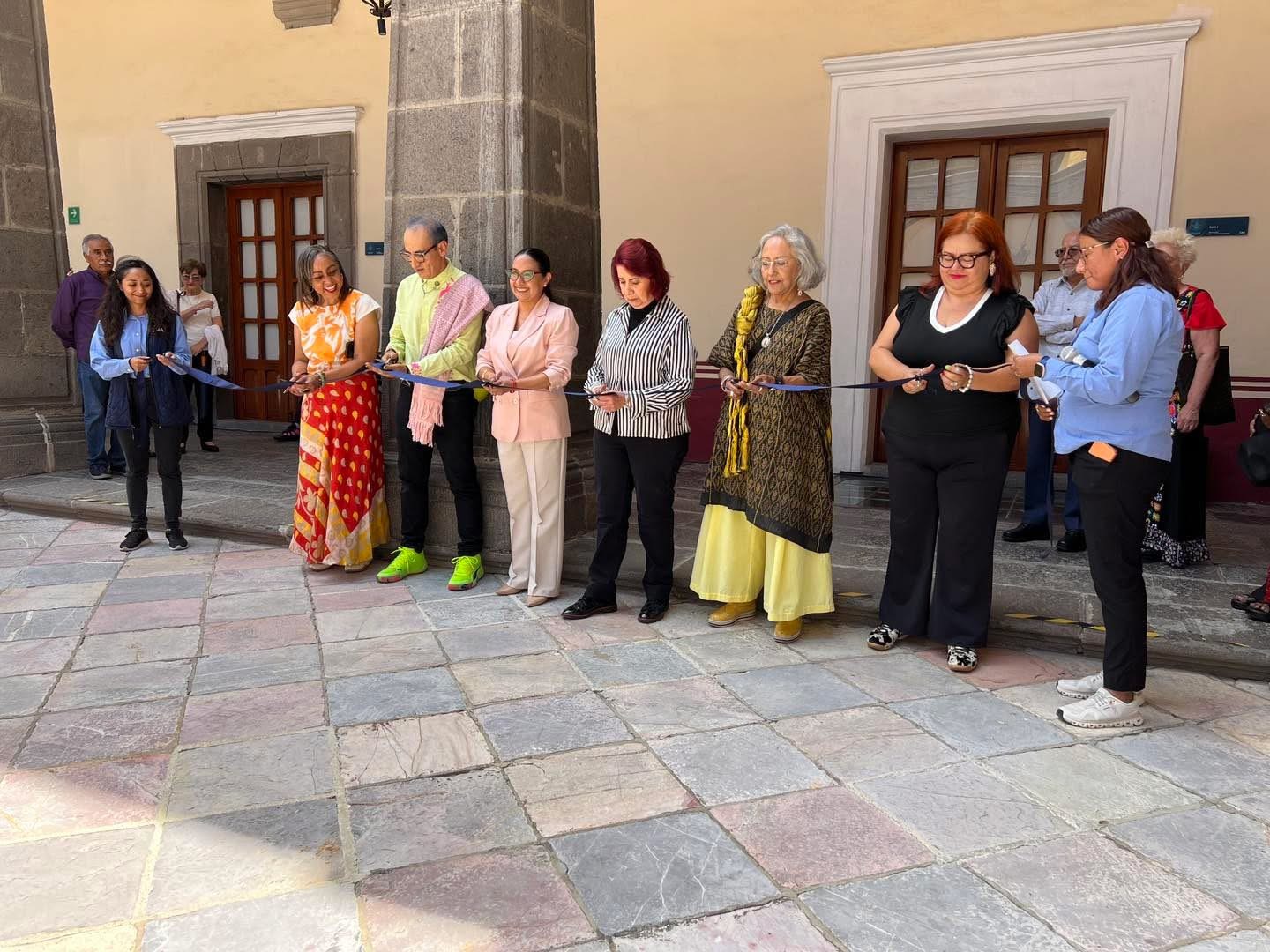
August 13 through November 16, 2026
Carolino Centro Universitario de la Cultura y los Saberes
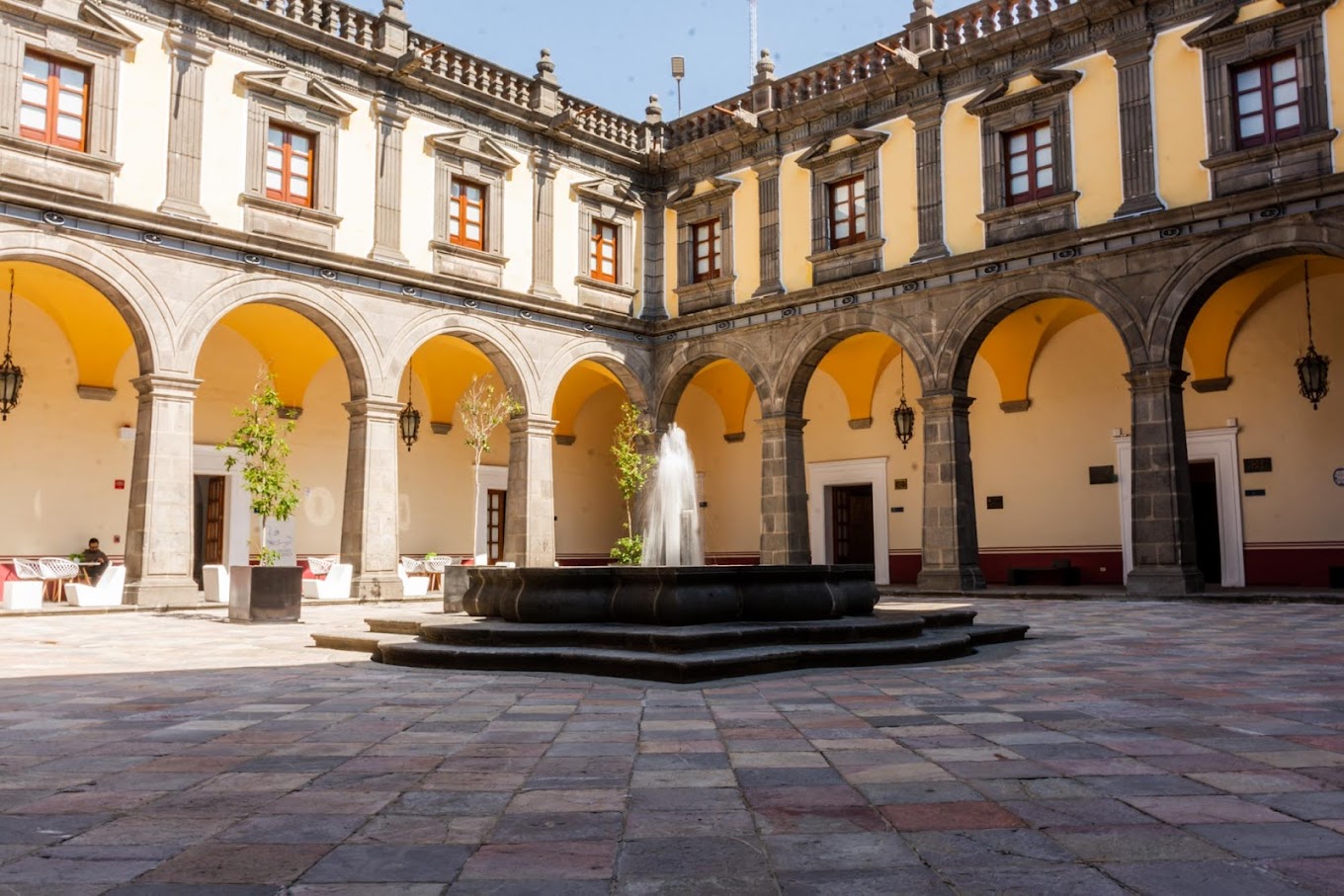
Calle 4 Sur #104, Centro Histórico, Puebla, Pue. 72000.
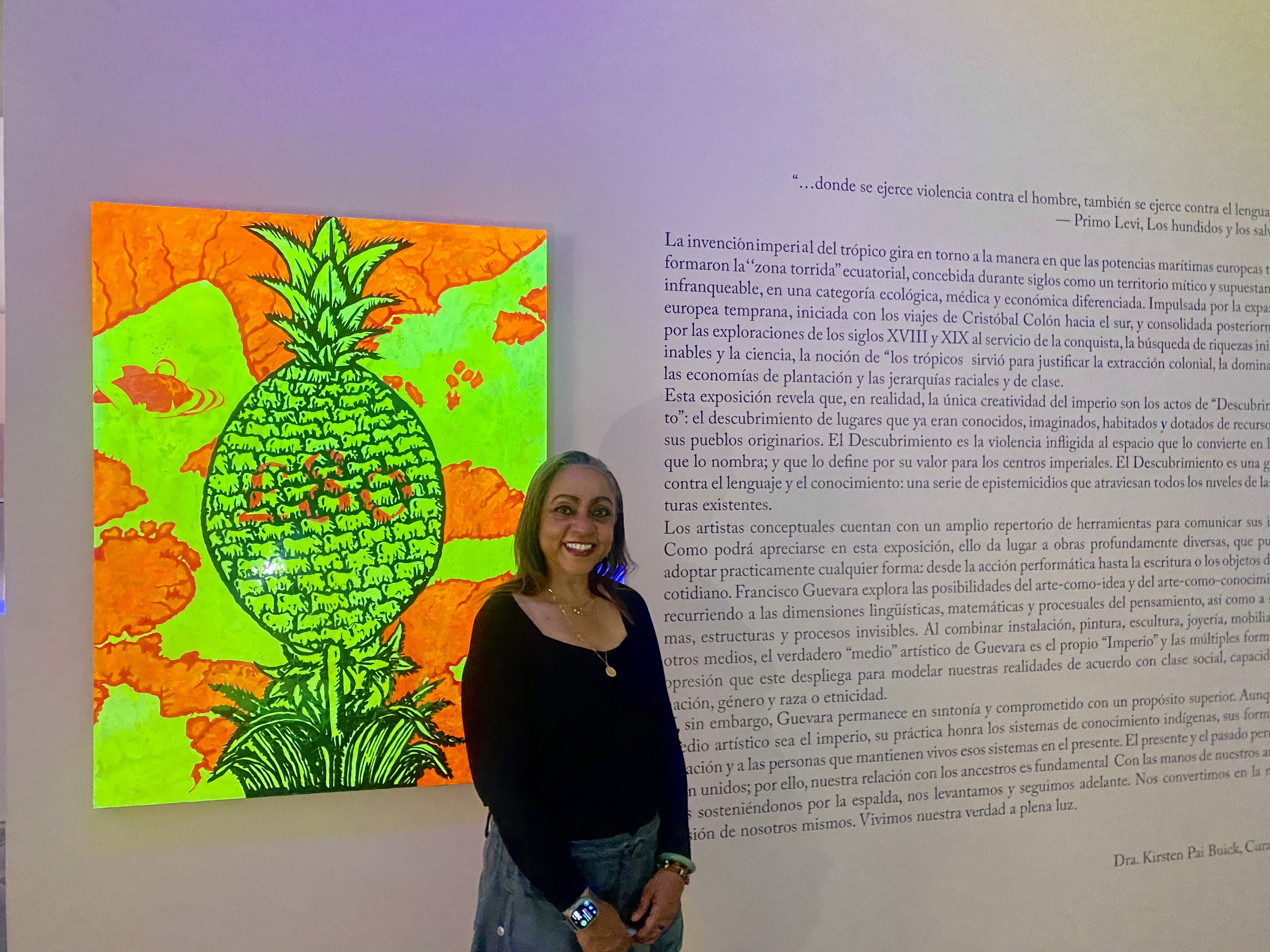
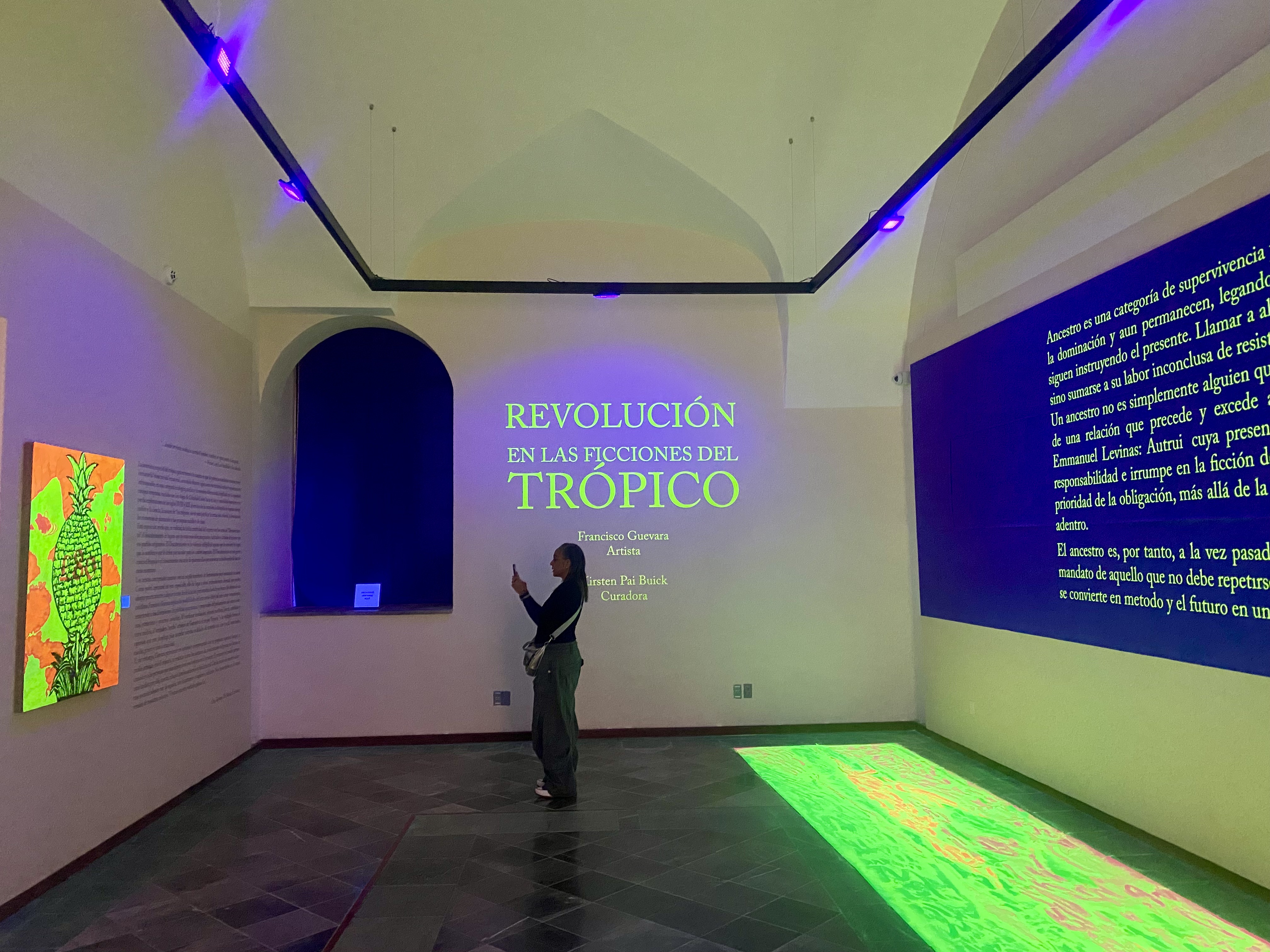
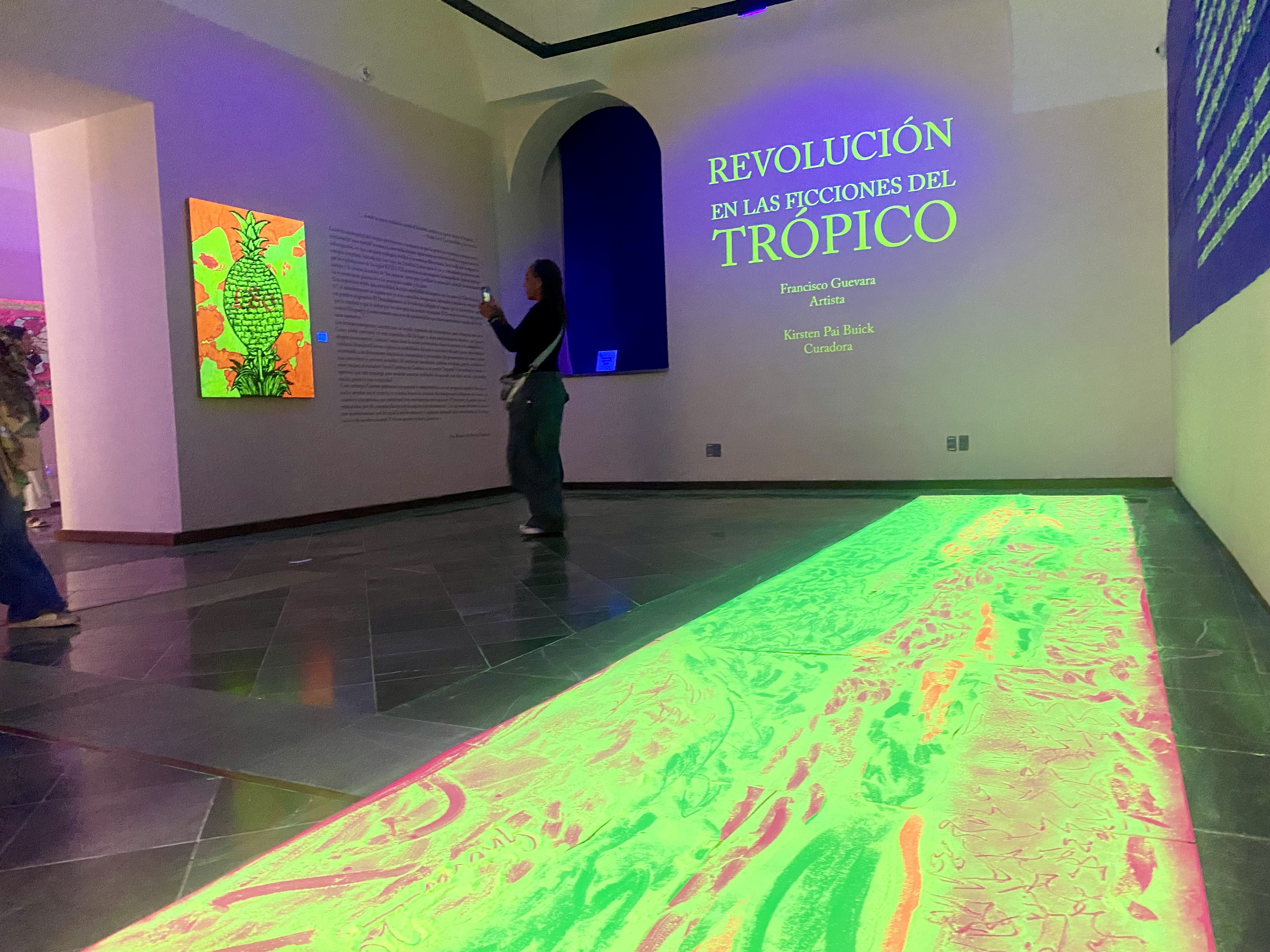
“…where violence is inflicted on man it is also inflicted on language…”
Primo Levi, The Drowned and the Saved
The imperial invention of the tropics centers on how European maritime powers transformed the equatorial “torrid zone” from a mythical, supposedly impassable wasteland into a distinct ecological, medical, and economic zone. Driven by early expansion, beginning with Christopher Columbus’s voyages south, and later consolidated by 18th and 19th century explorations for the purposes of conquest, unimaginable wealth, and science, the “tropics” justified colonial extraction, domination, plantation economies, and racial and class hierarchies.
This exhibition reveals that, in fact, empire’s only creativity are acts of “Discovery”—of places already known, imagined, sourced, and resourced by their indigenous inhabitants. Discovery is the violence inflicted on space that transforms it into place; that names it; and that defines it by its value to imperial centers. Discovery is a war on language and knowledge, epistemicides at all levels of existing cultures.
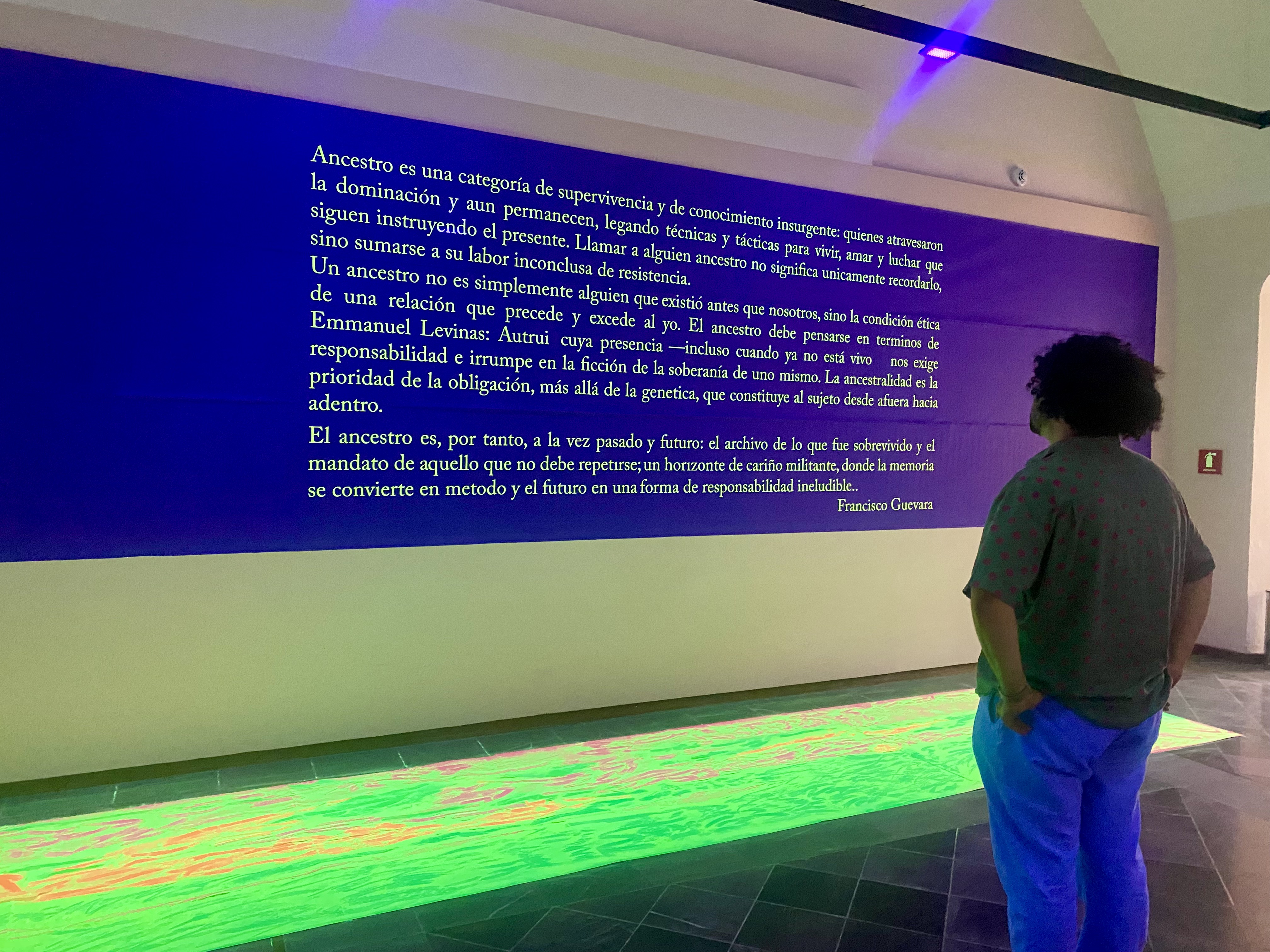
Conceptual artists have an array of tools to communicate their ideas. As you will experience, this results in vastly different types of artworks that can look like almost anything – from performance to writing to everyday objects. Francisco Guevara explores the possibilities of art-as-idea and art-as-knowledge, using linguistic, mathematical, and process-oriented dimensions of thought as well as invisible systems, structures, and processes for their art. Combining installation, painting, sculpture, jewelry, furniture, etc., Guevara’s artistic “medium” is “Empire” itself and the various acts and oppressions that are deployed as tools to shape our realities according to class, ability, nation, gender, and race or ethnicity.
And yet, Guevara remains attuned to and aligned with a higher purpose. Though his artistic medium is empire, his practice honors indigenous knowledge systems and ways of creating and the people who carry those systems into the present. The present and the past are linked, and thus our connection to the ancestors is paramount. And with the hands of our ancestors at our backs, we rise and we push forward. We become our best selves. We live our truth in the light.
Kirsten Pai Buick, Ph.D.
“Ancestro es una categoría de supervivencia y de conocimiento insurgente: quienes trascendieron la violencia de este mundo y aún persisten entre nosotros, legando tácticas para vivir, amar y luchar que continúan instruyendo nuestro presente.” –Francisco Guevara
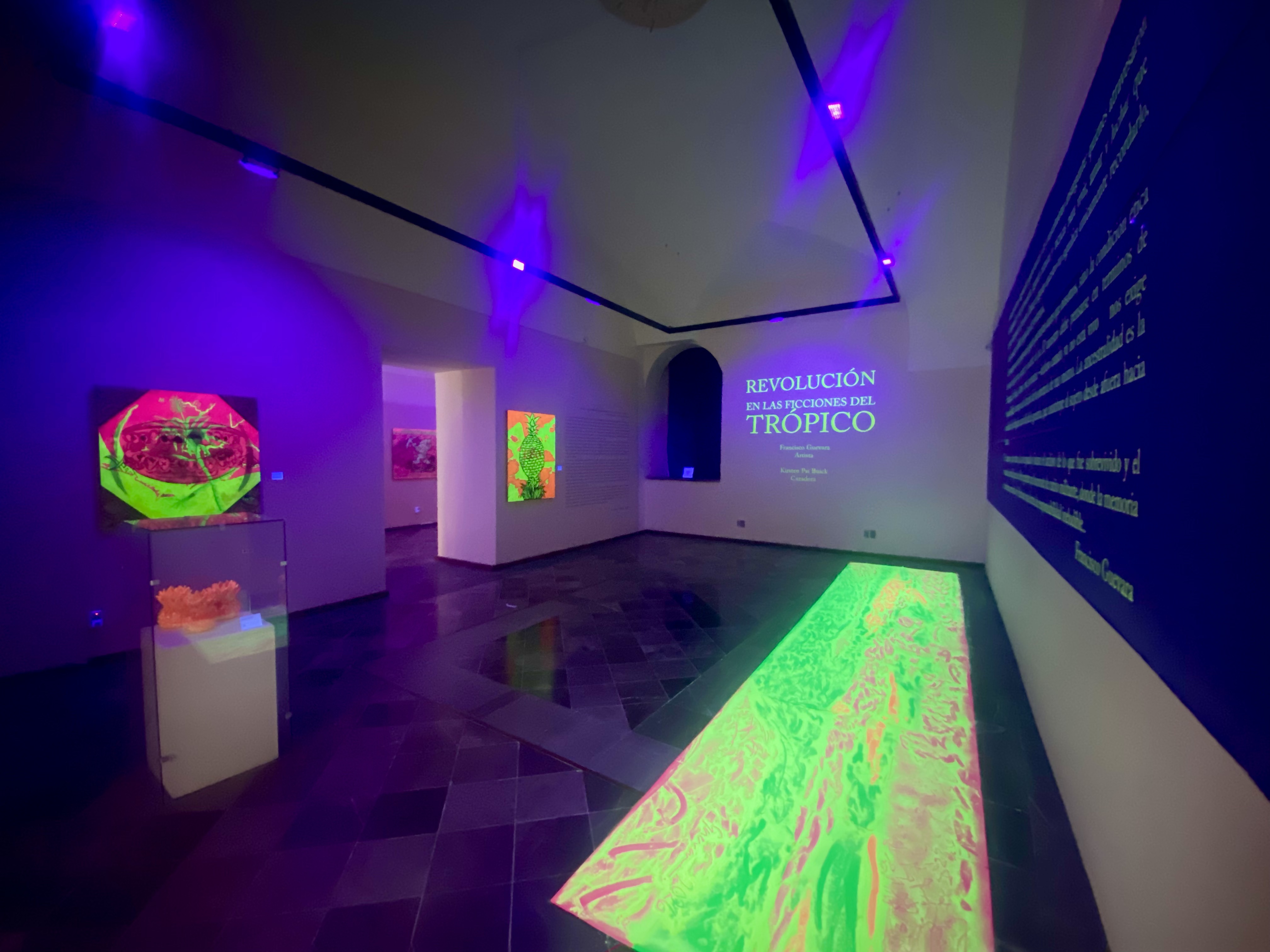
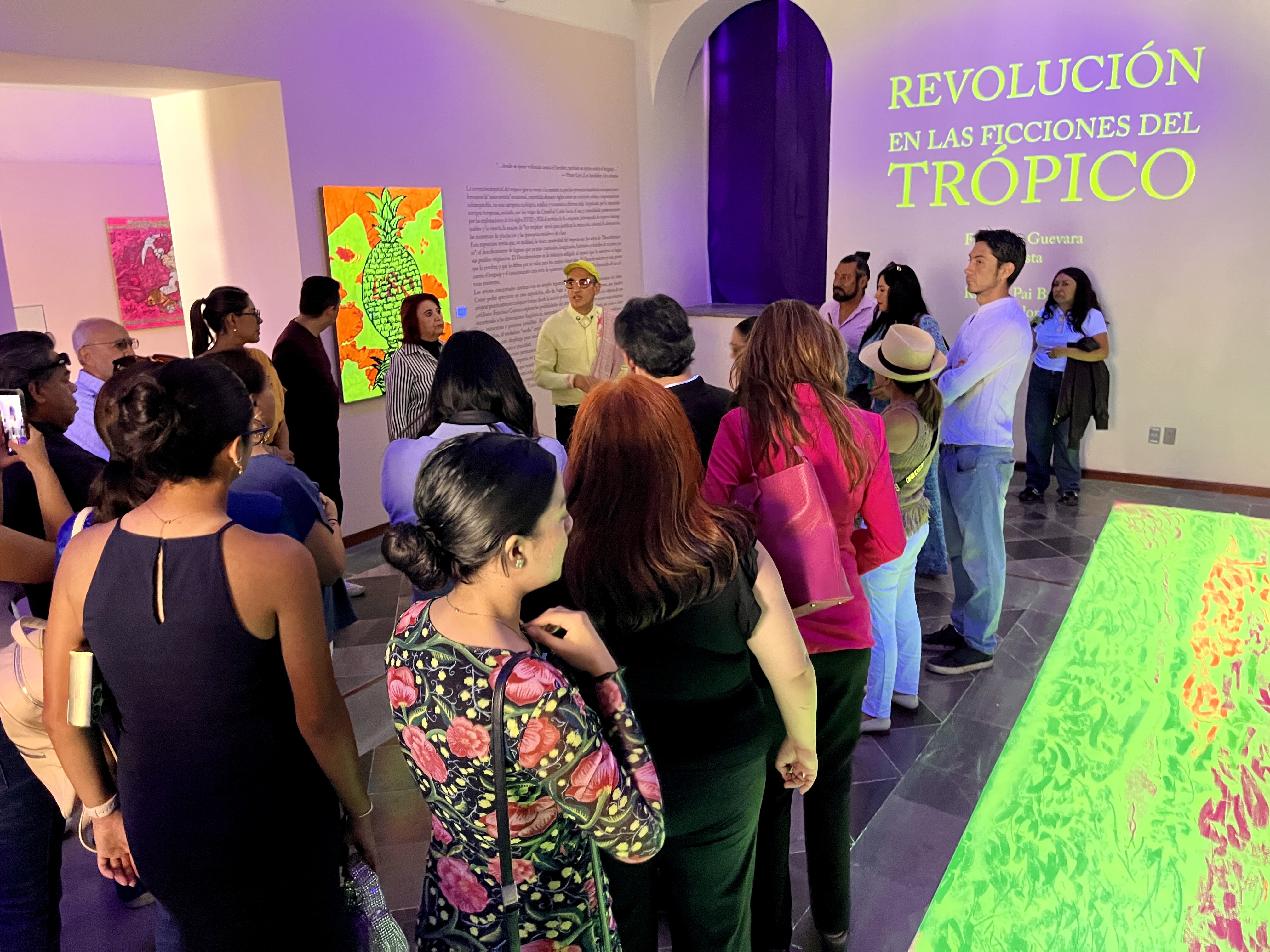
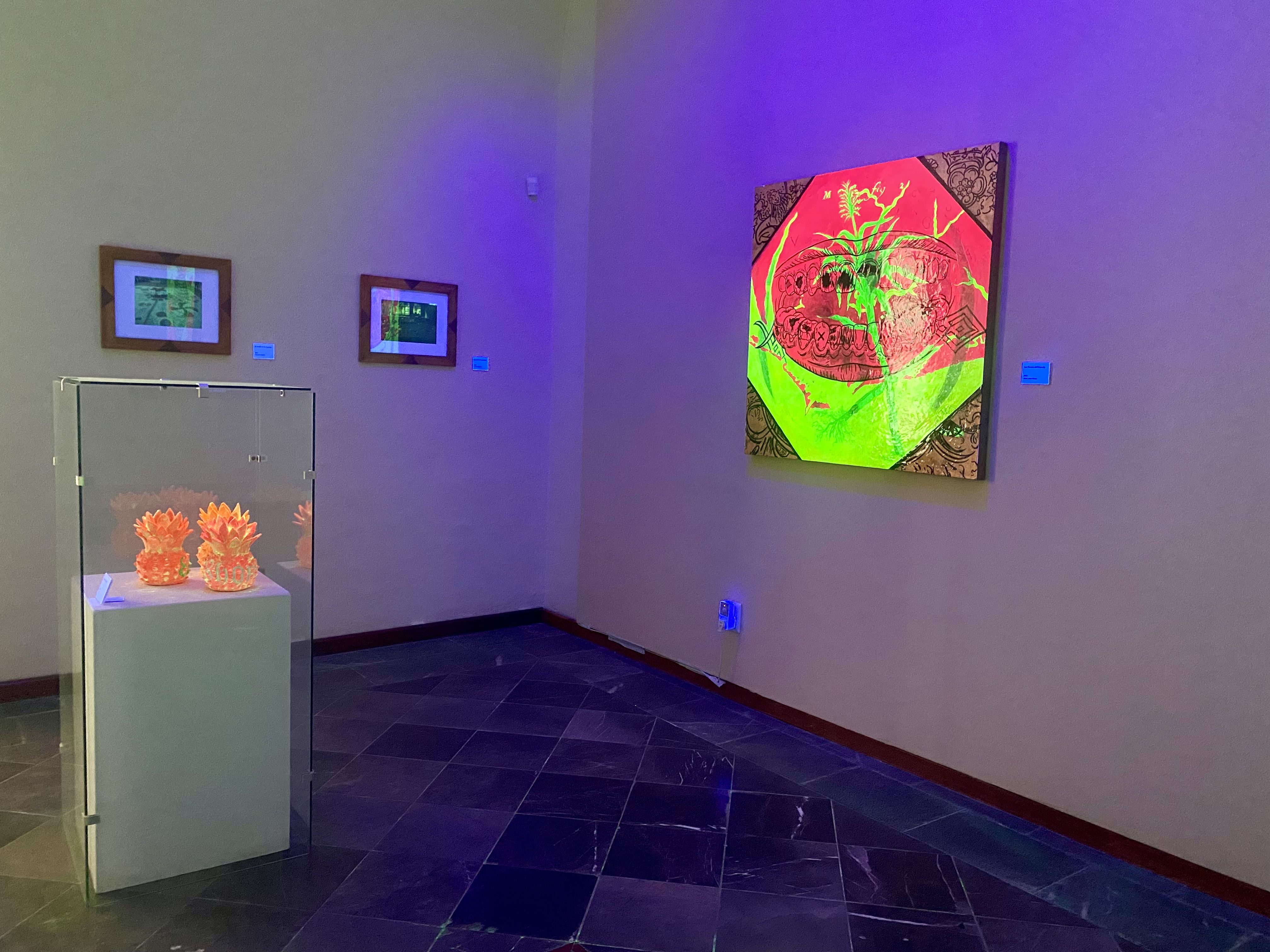
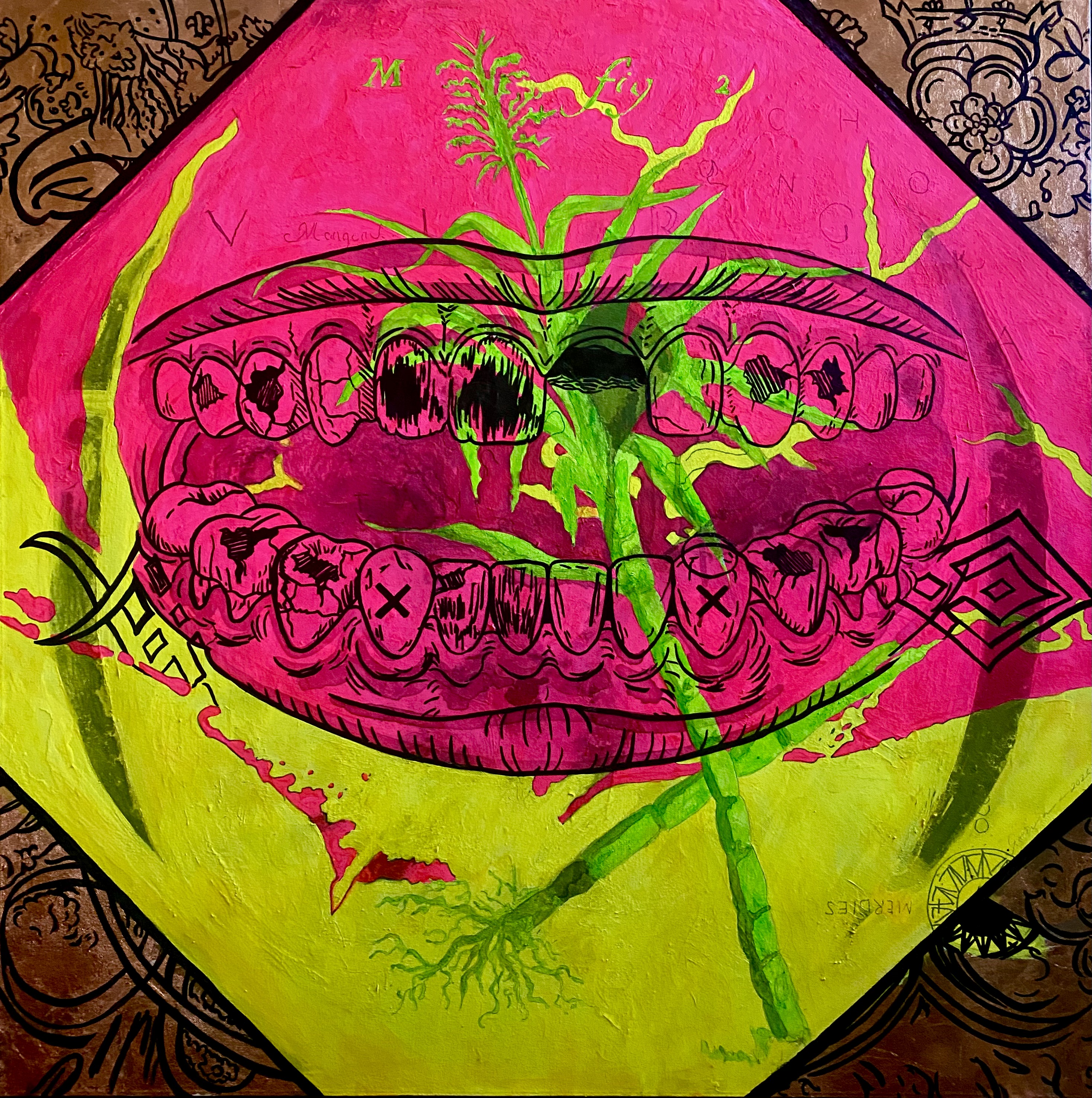
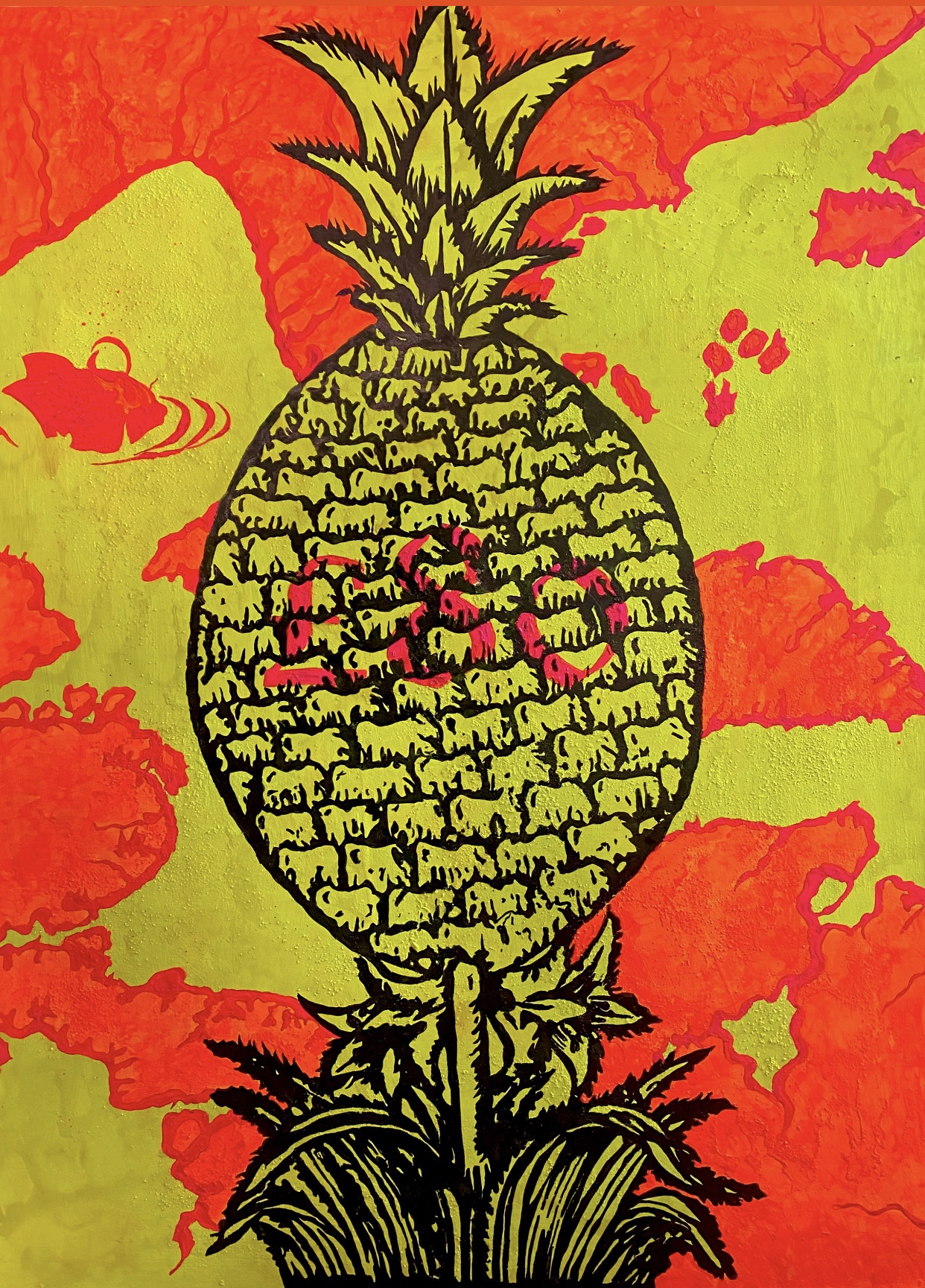
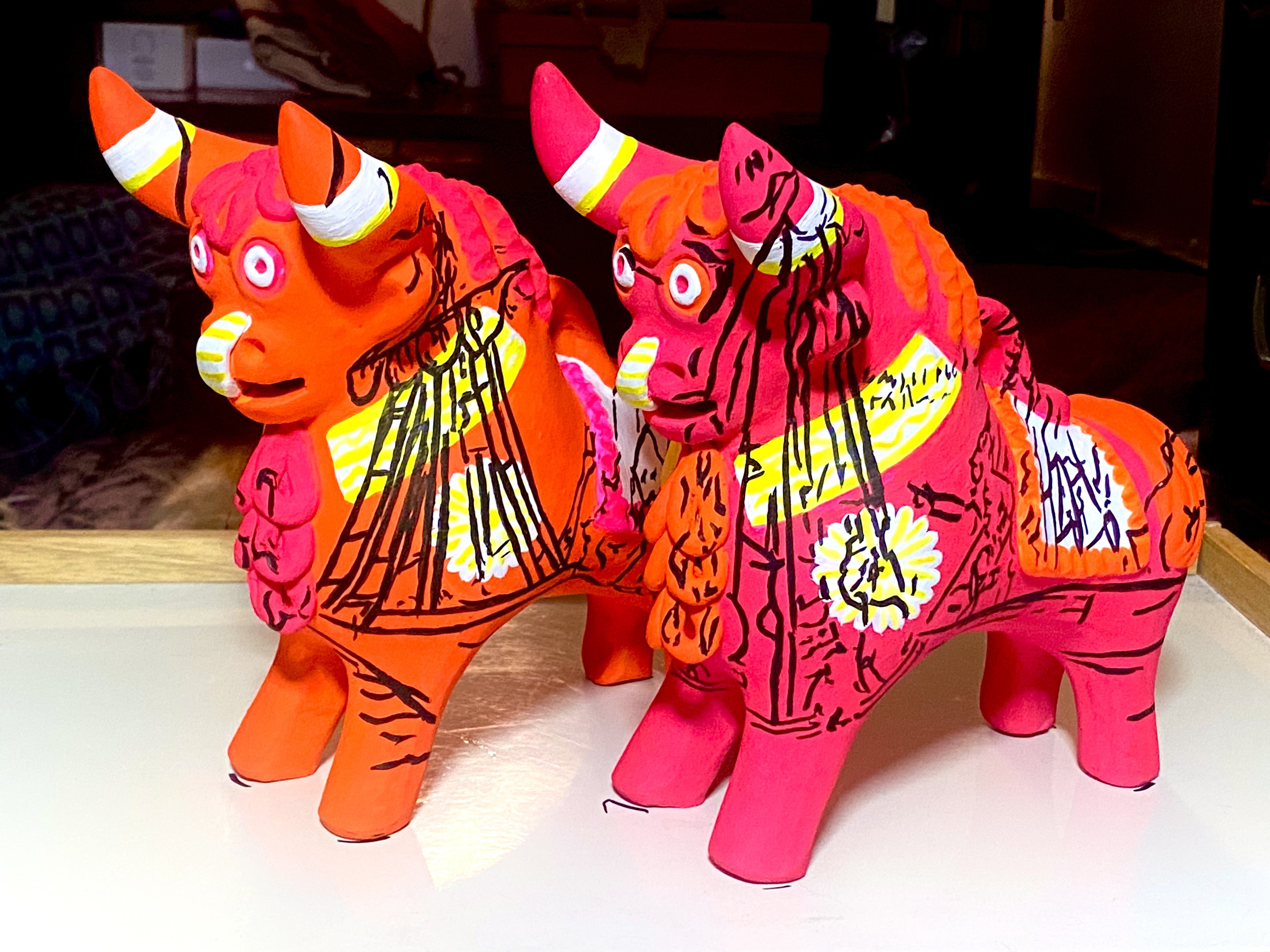
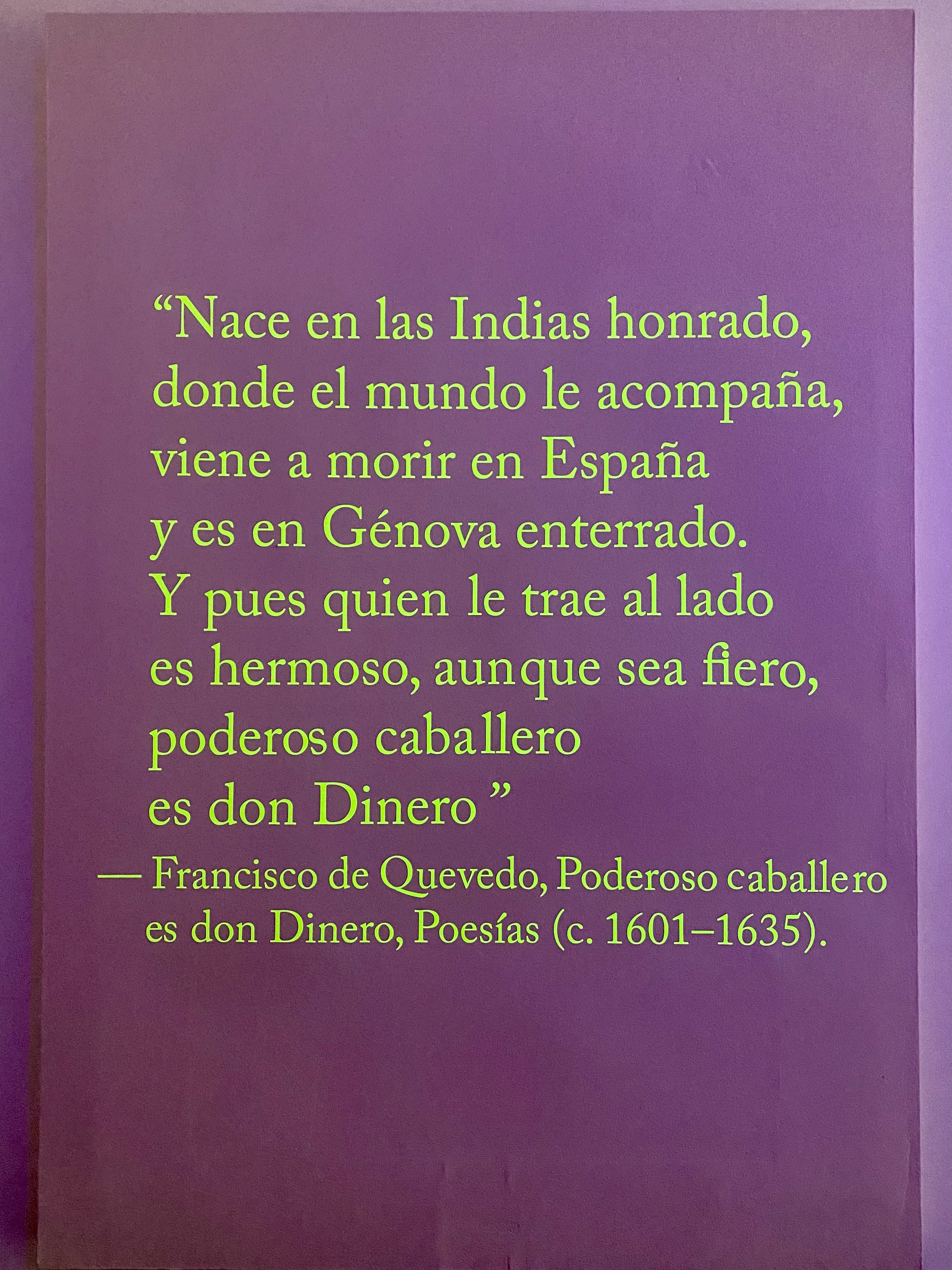
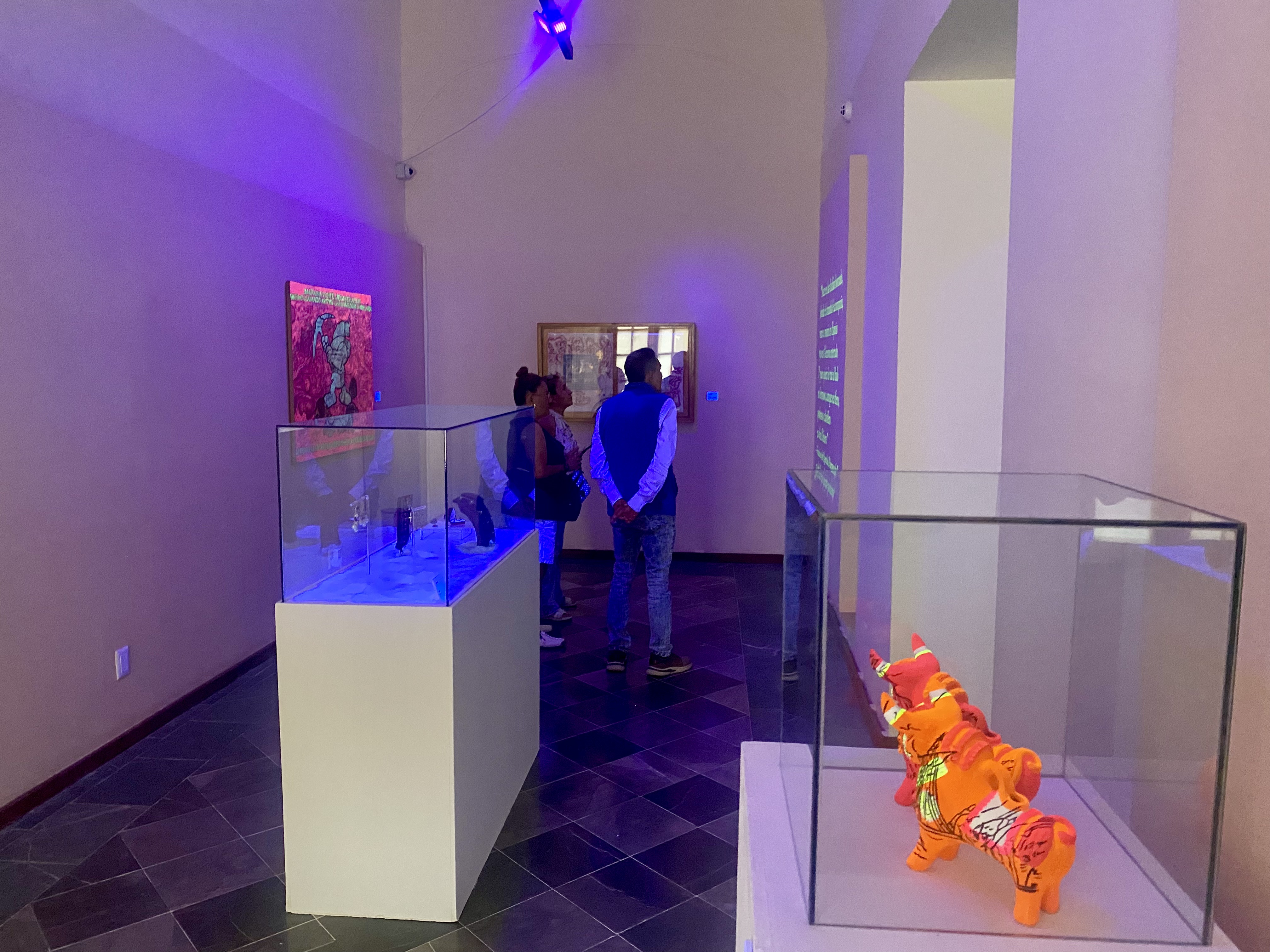
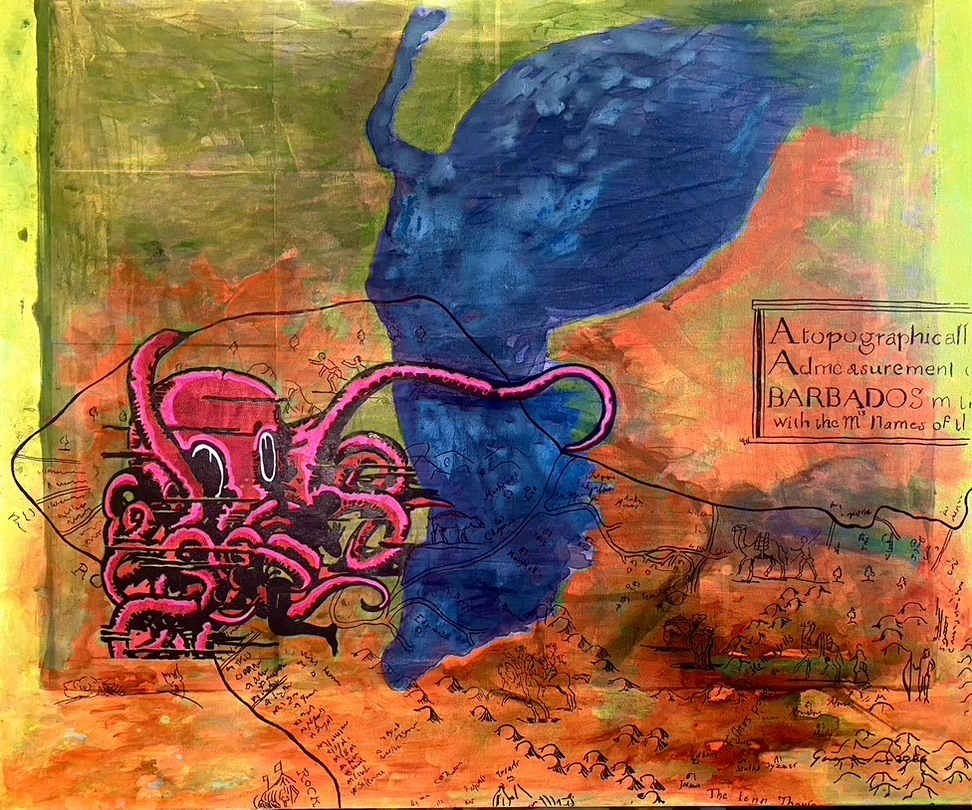
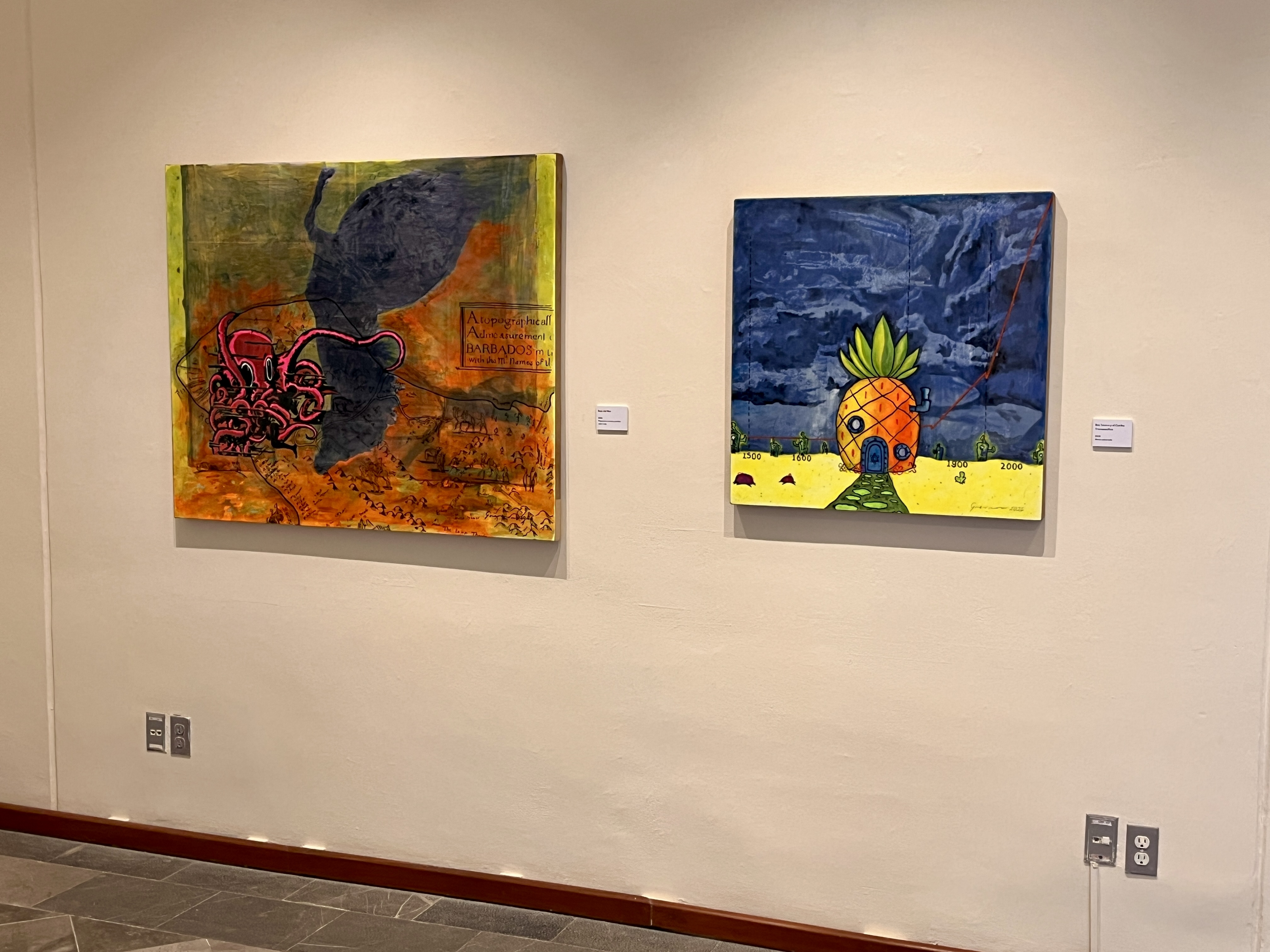
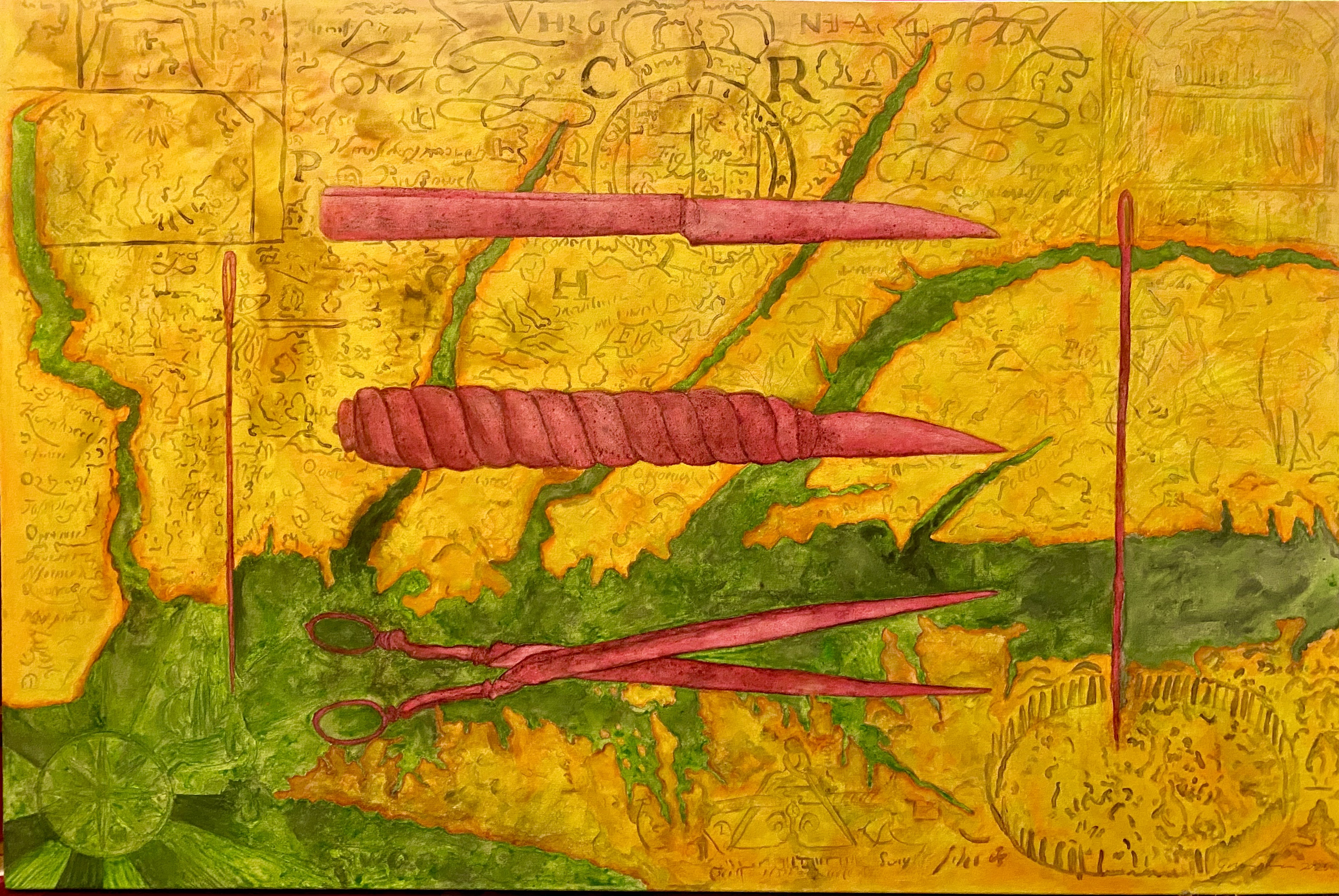
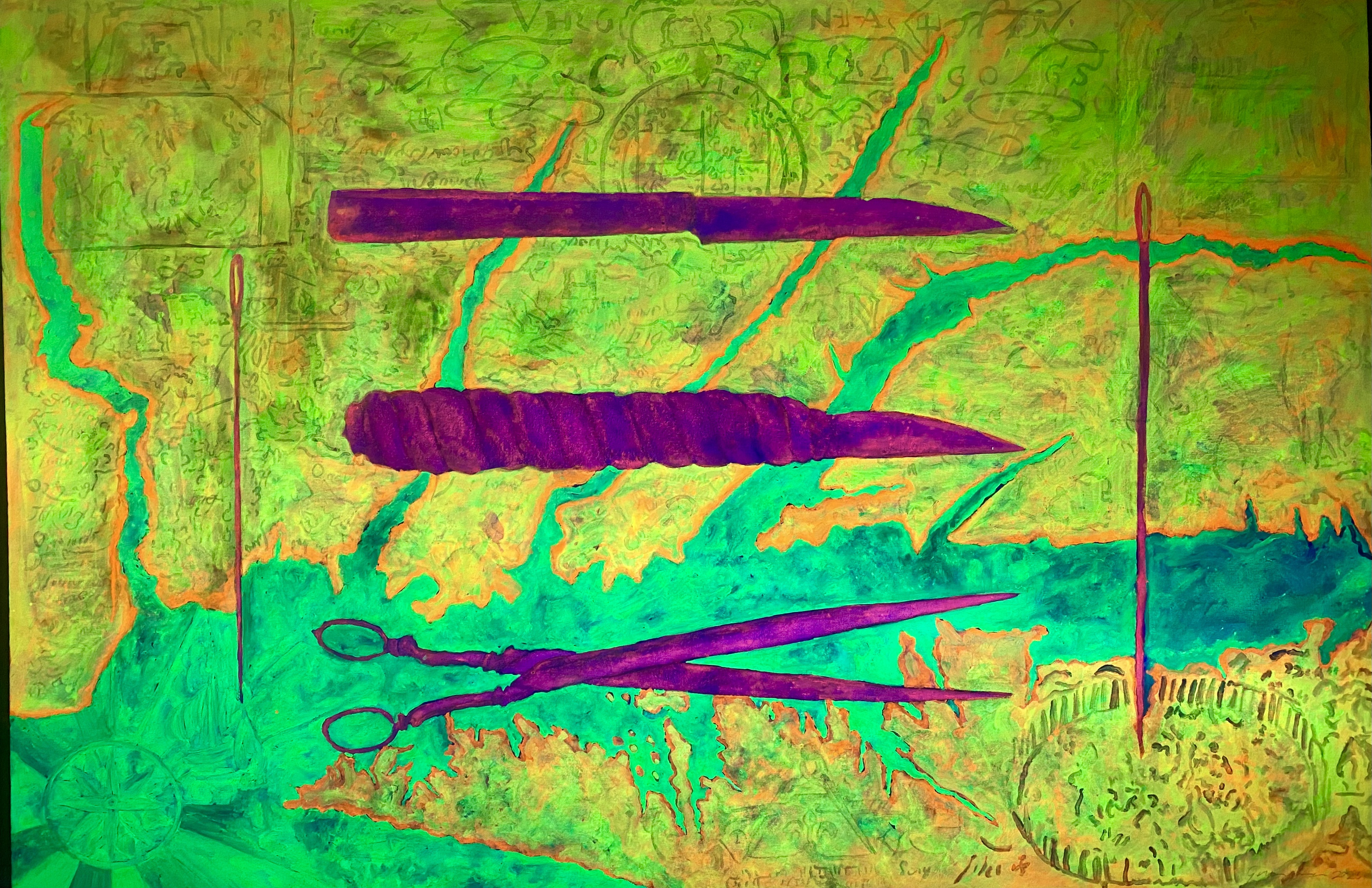
Revolution in the Fictions of the Tropics explores the invention of place through the fictions of ‘Empire,’ contrasting them with the ancestor as a category of insurgent knowledge that makes life possible, sustaining memory, resistance, and cultural continuity across generations. The exhibition begins with a photoluminescent installation based on The Garden of Earthly Delights (2009). Reimagined for this exhibition, the installation examines landscape, panorama, and the historical construction of the tropical. The pineapple appears as a historical symbol of wealth, desire, and exoticization in the painting : Sobre el Valor de la Vida Humana while The Filthy Mouth of Empire, a painting dedicated to Elizabeth I’s addiction to sugar and England’s colonial expansion into the Americas, reflects on the entanglement of sugar, slavery, and imperial power. Drawing on Nicholas Mirzoeff’s call to “see in the dark,” the photoluminescent surfaces reveal that the tropical landscape is neither fixed nor neutral, but a contested field where imperial fantasies, economic desire, racialized violence, and systems of power continue to be projected.
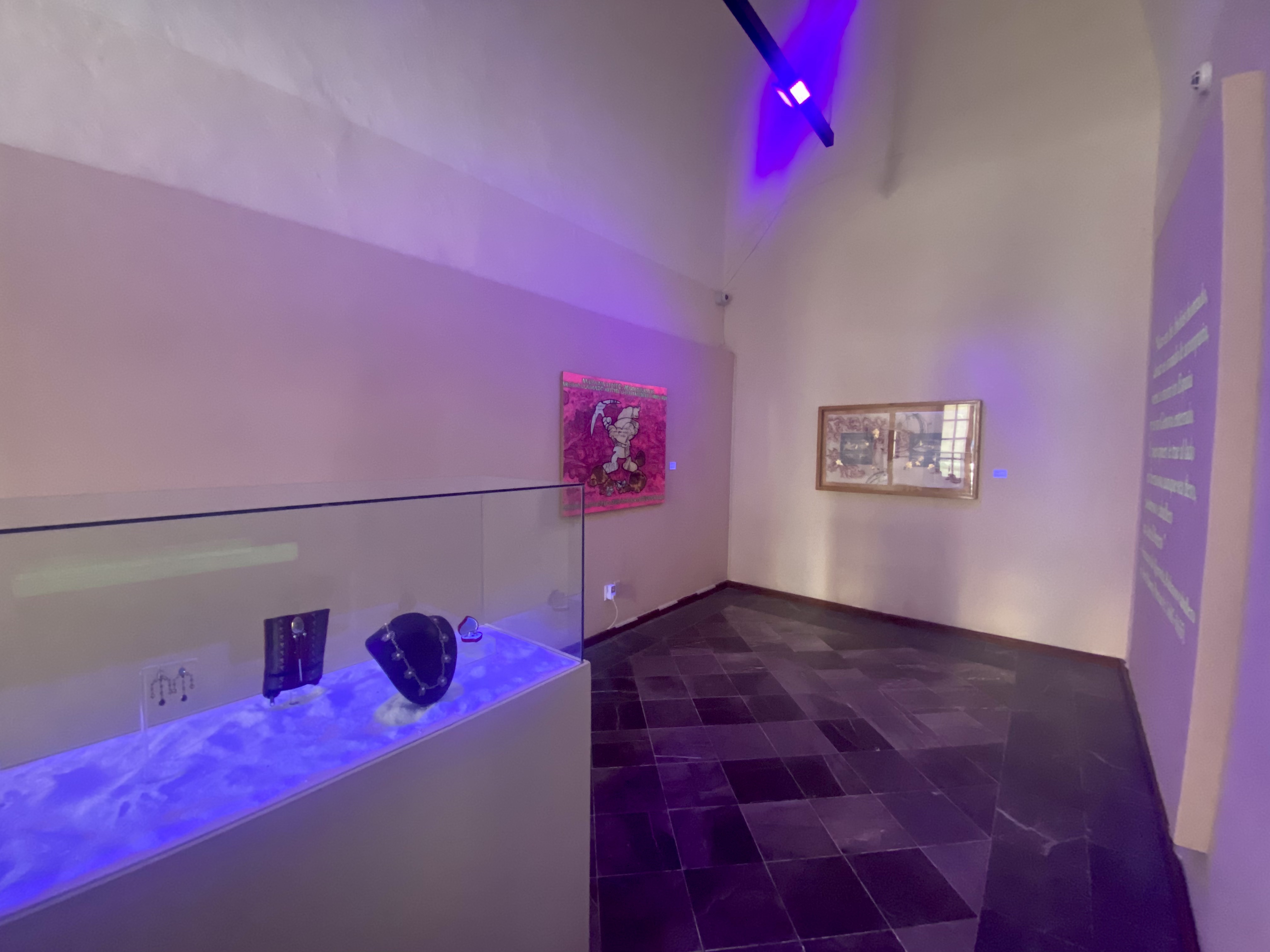
The second gallery, The Mines, is dedicated to Peru and to the work Arquetopia has carried out in the region for more than a decade. It focuses on the history of extraction—particularly silver—and its central role in the formation of the early global economy. The space evokes the extractive systems that transformed the Andean world and the commercial networks that connected the Americas to Europe and Asia, while acknowledging the historical importance of Andean territories in shaping the monetary and financial systems of modernity.
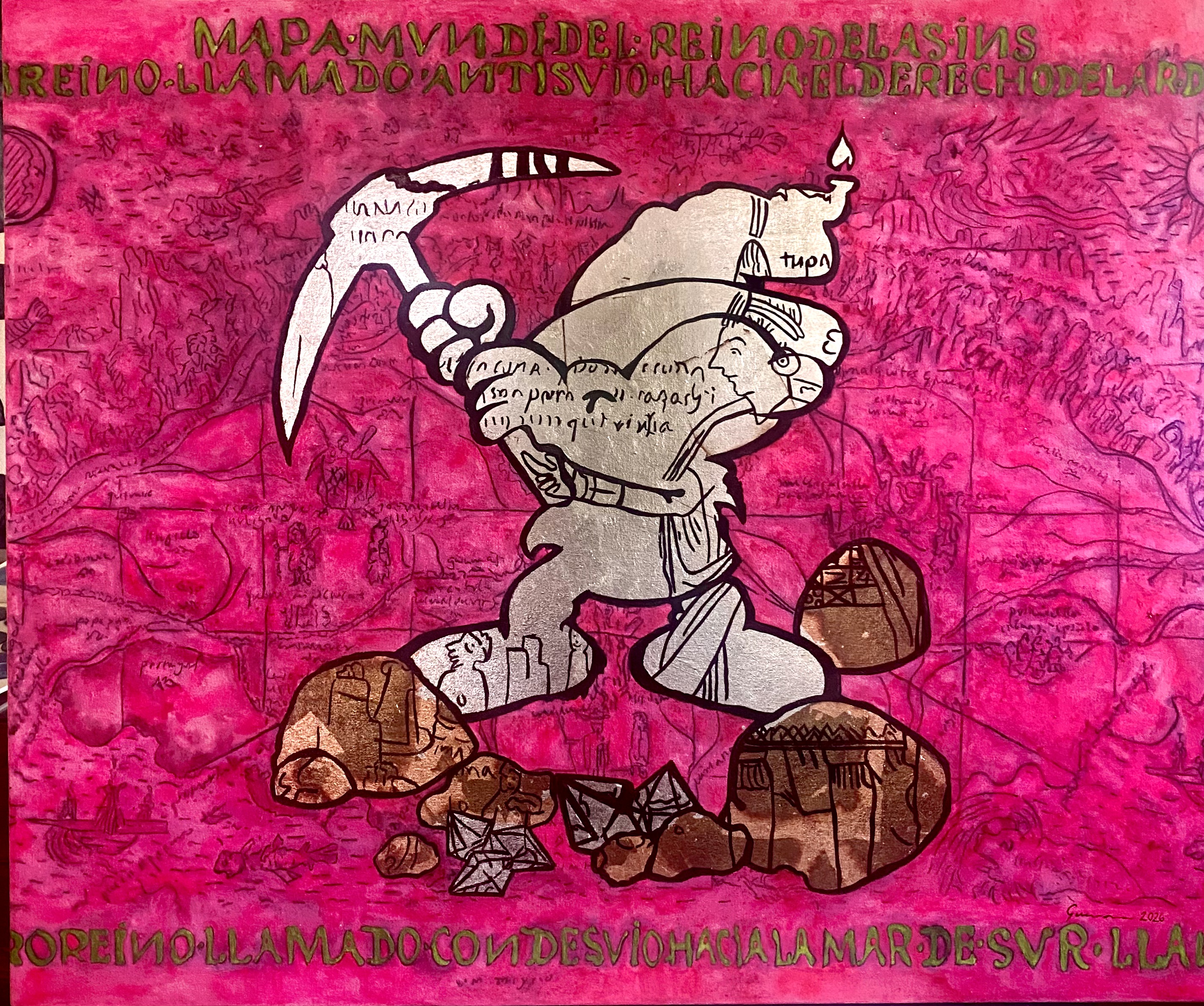
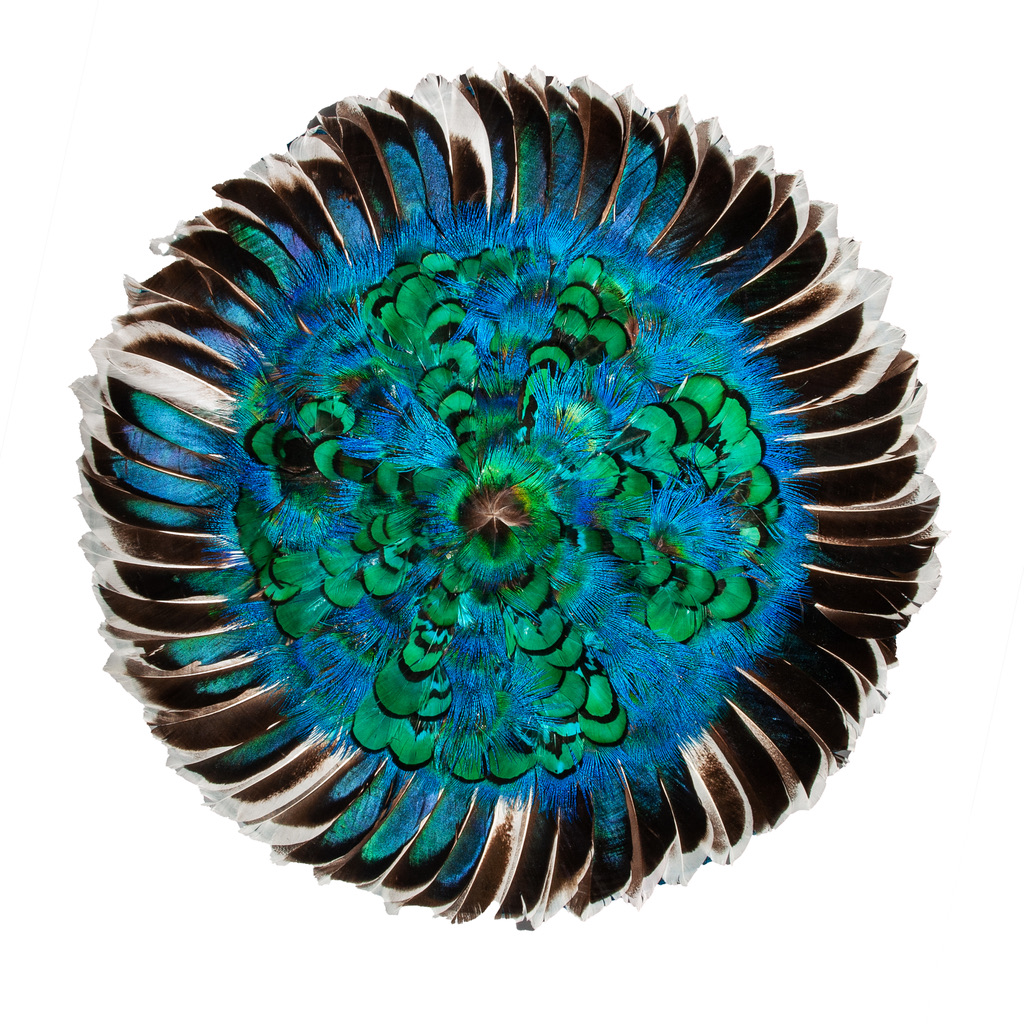
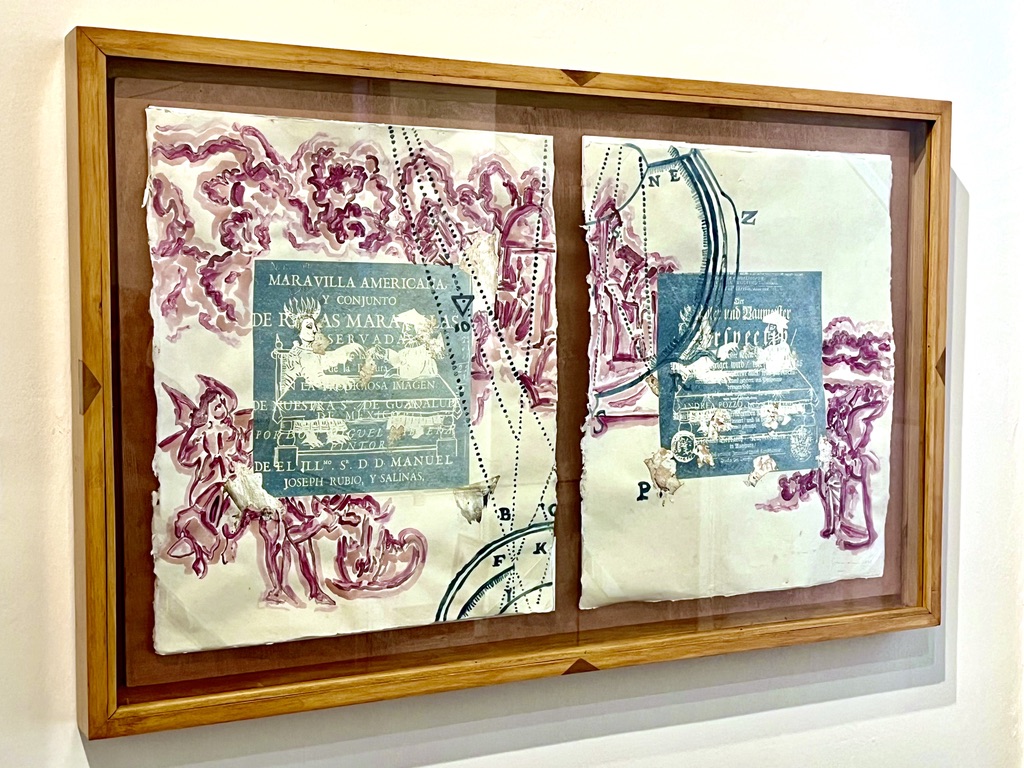
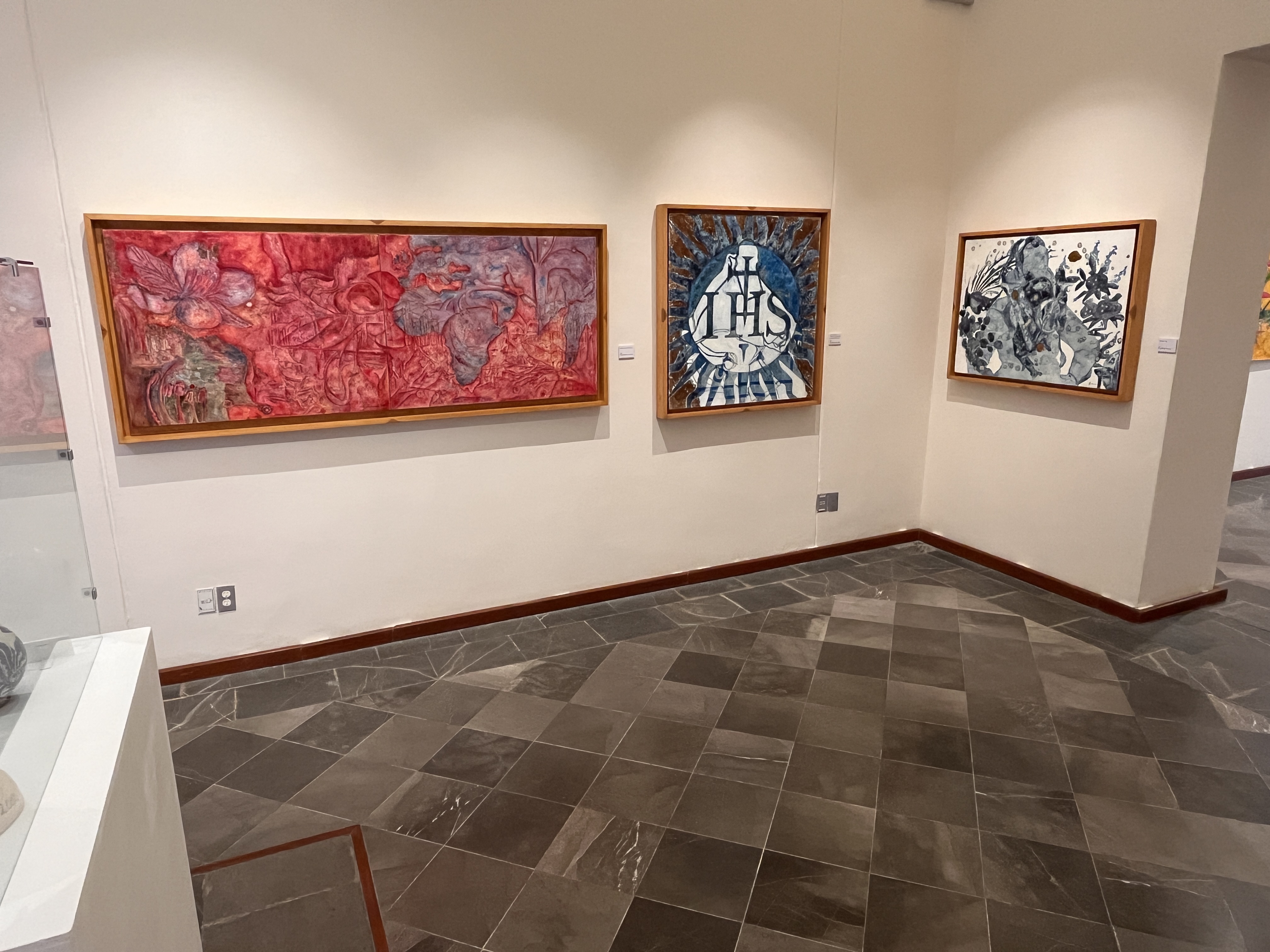
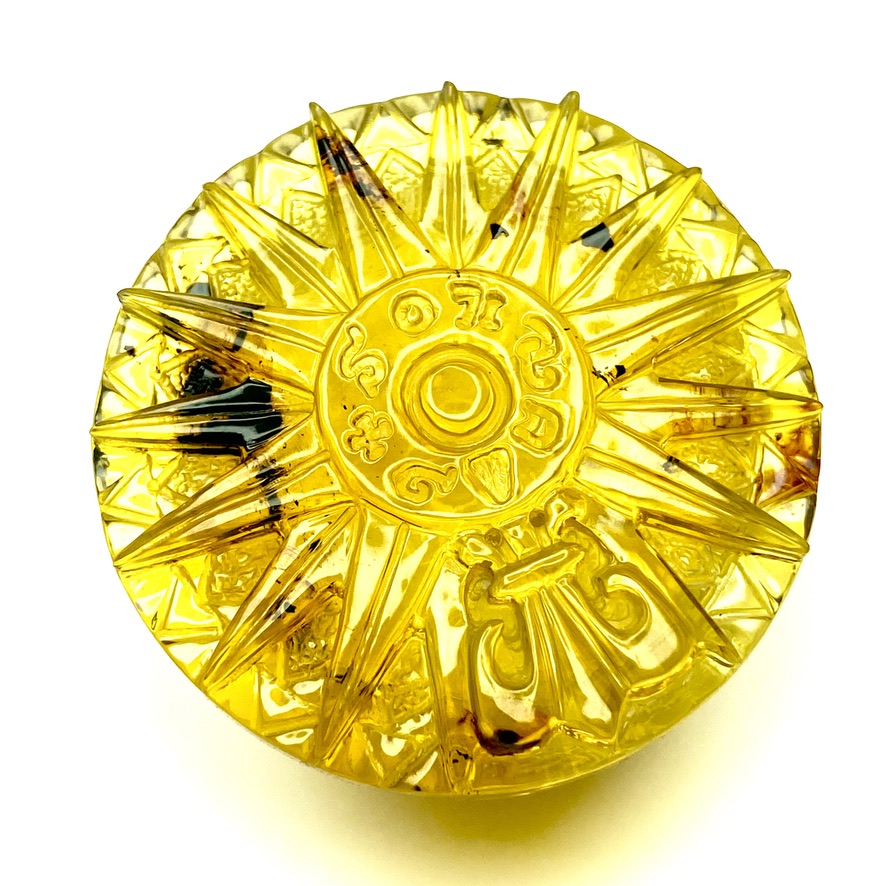
The gallery brings together a featherwork piece on the Dominican Corporation, seven jewelry works exploring the negotiation of royalty, nobility, and violence, a map by Felipe Guaman Poma de Ayala, paintings of huacas, The Mining Smurf, a handwoven poncho from Chinchero that reflects on the relationship between text and textile, and La Ciencia Sin Virtud es Arrogancia (Knowledge Without Virtue Is Arrogance), a print made with indigo and cochineal depicting the encounter between the Jesuits and the Devil. As the entire gallery gradually reveals itself in the dark, visitors are invited to reconsider the hidden histories of extraction, evangelization, labor, and knowledge that continue to shape the modern world.
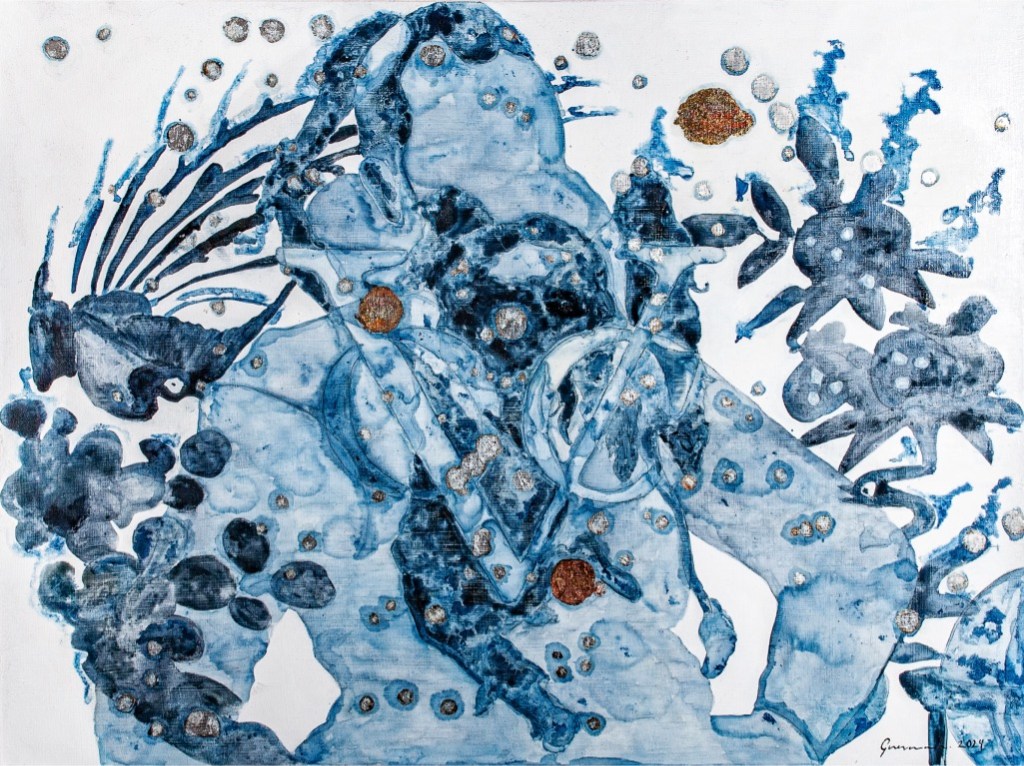
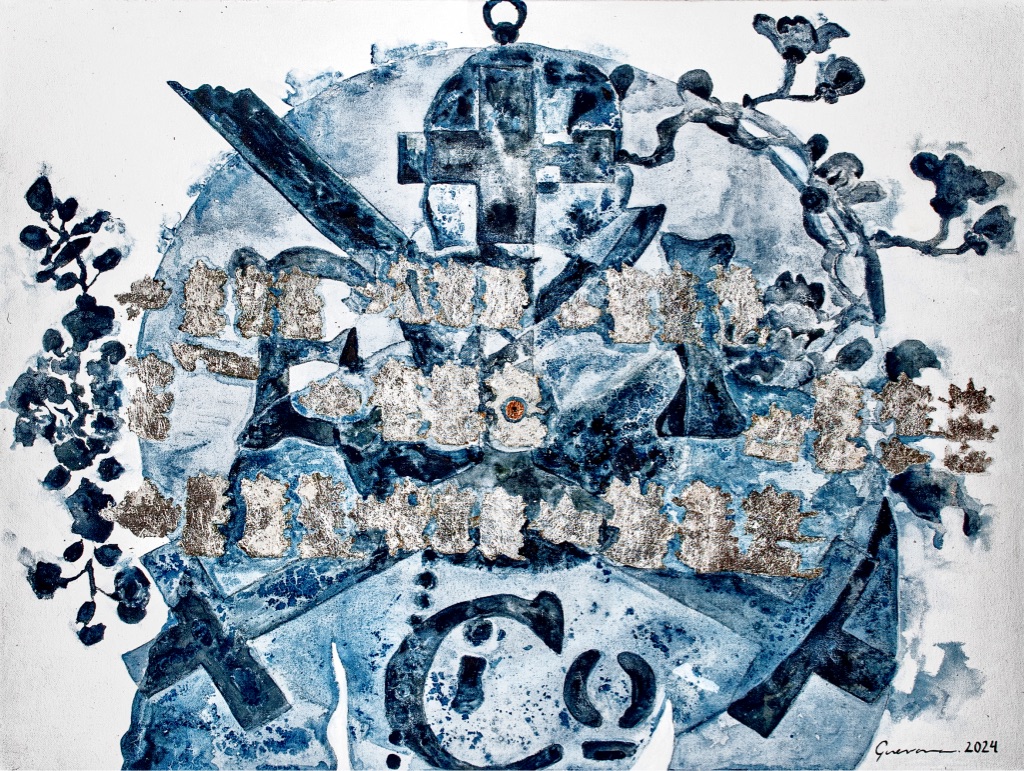
And Everything Burned in Blue is the third gallery, exploring indigo as pigment, ink, dye, Maya Blue, commodity, and system of power. Across the gallery, indigo appears in multiple material forms, reminding us that color has never been innocent but has long been entangled with slavery, extraction, labor, and the production of wealth. Here, the ocean emerges as an infrastructure of circulation through which colonial trade routes, monocultures, and imperial economies were organized.
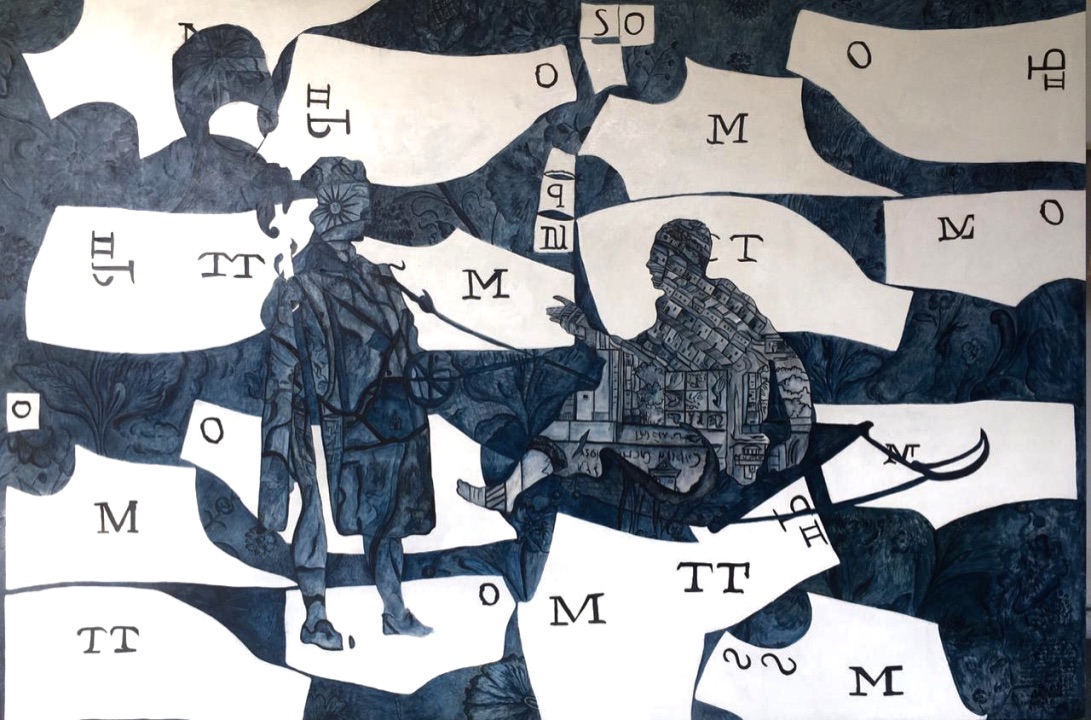
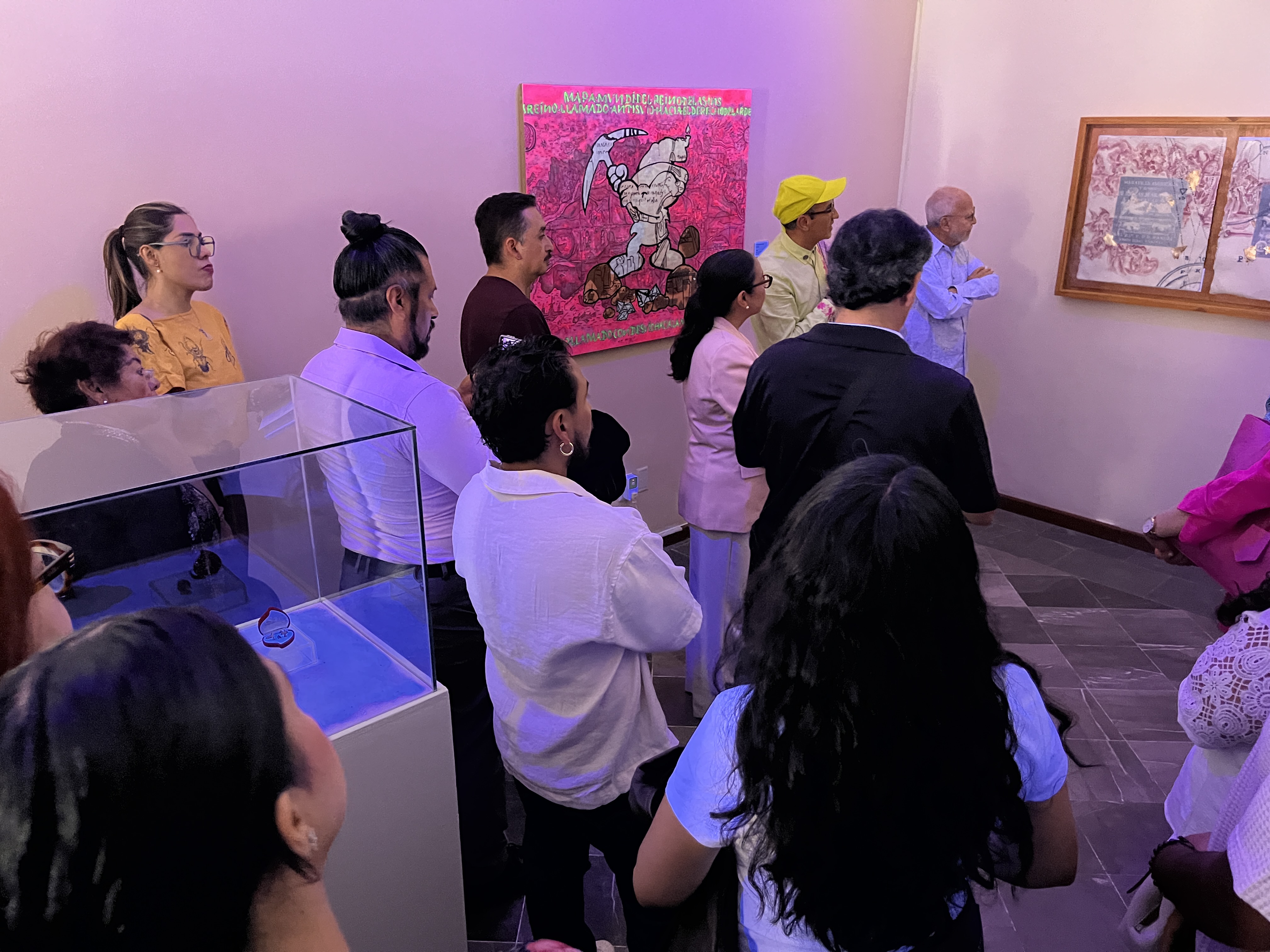
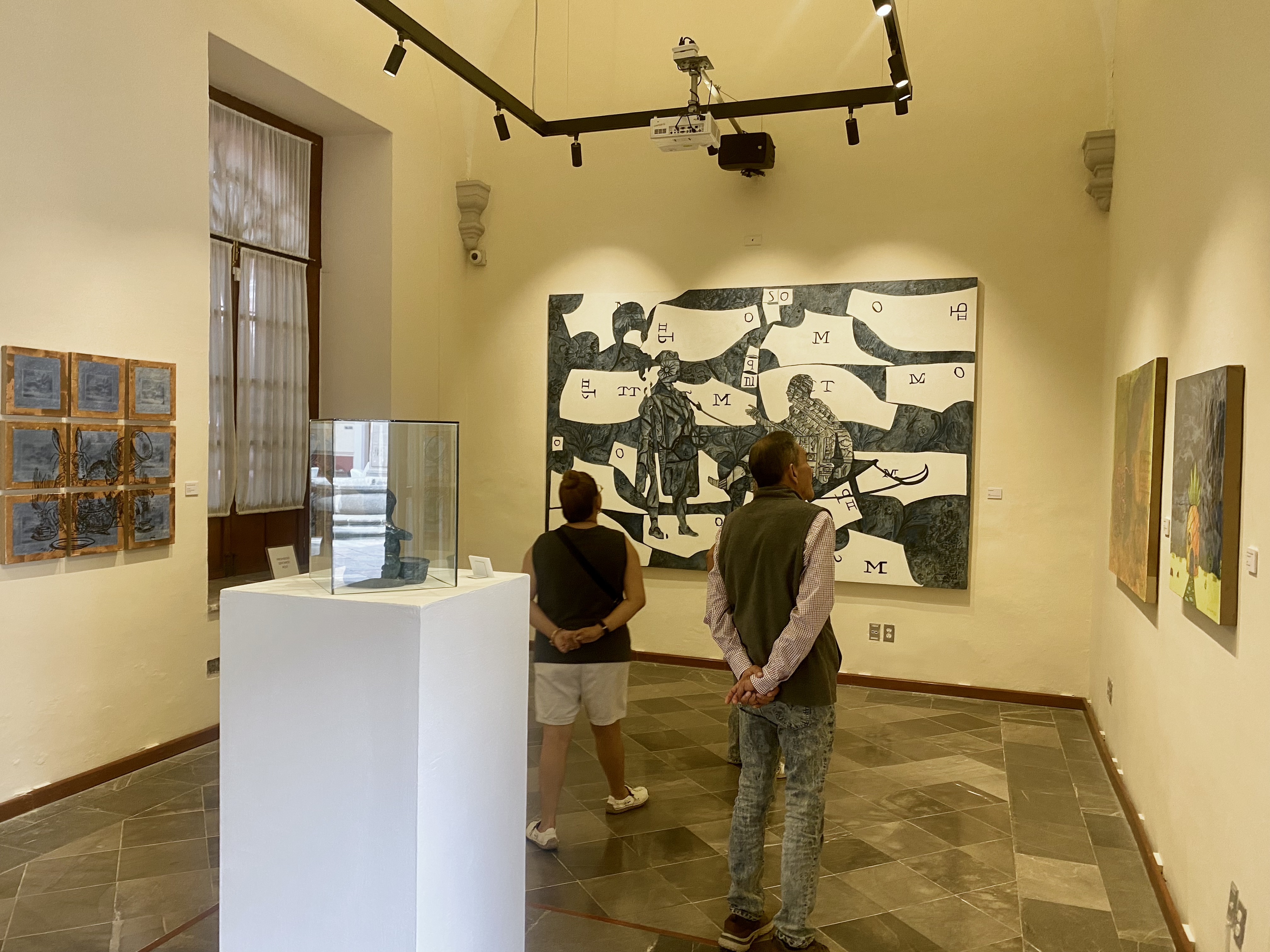
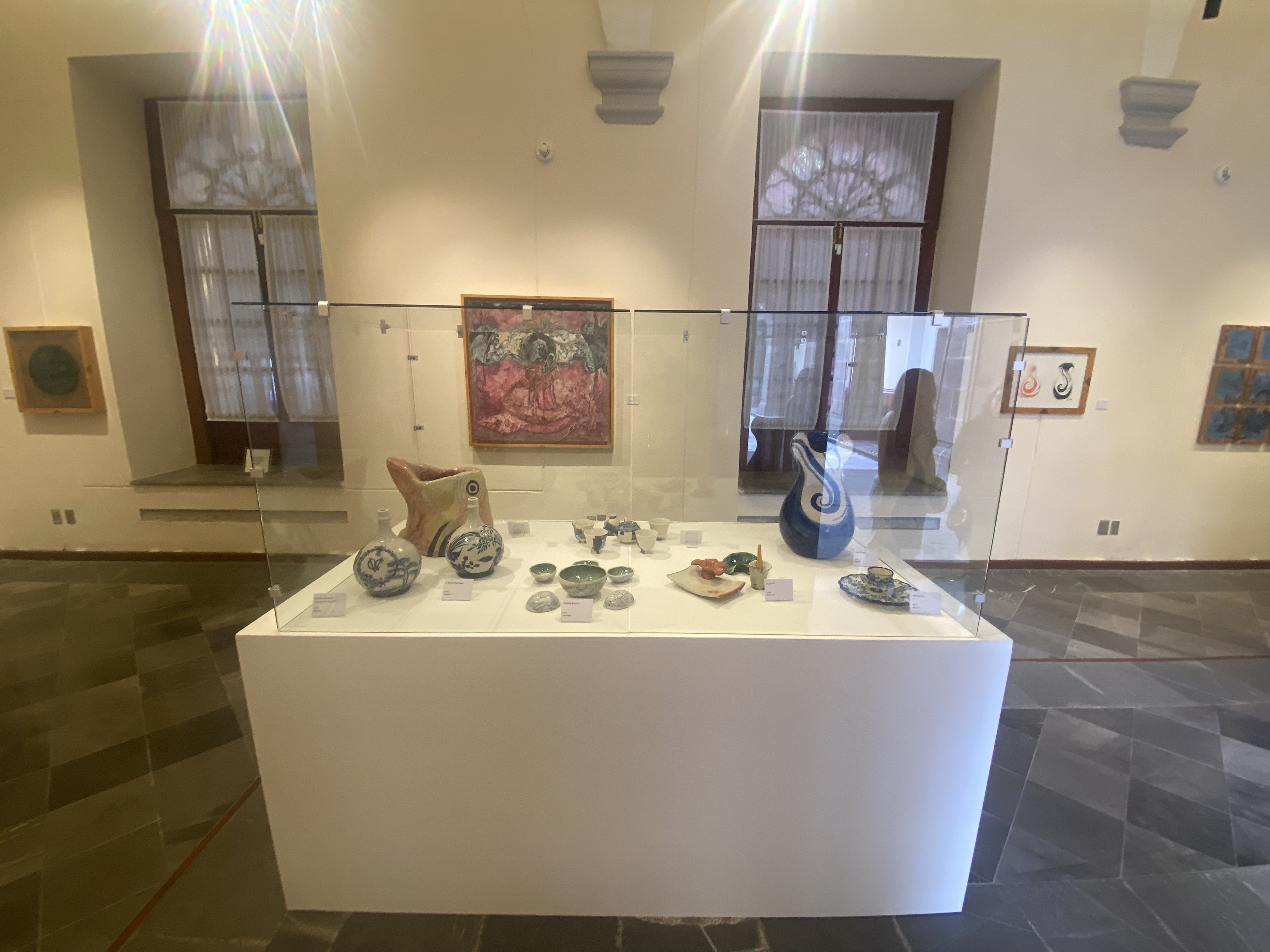
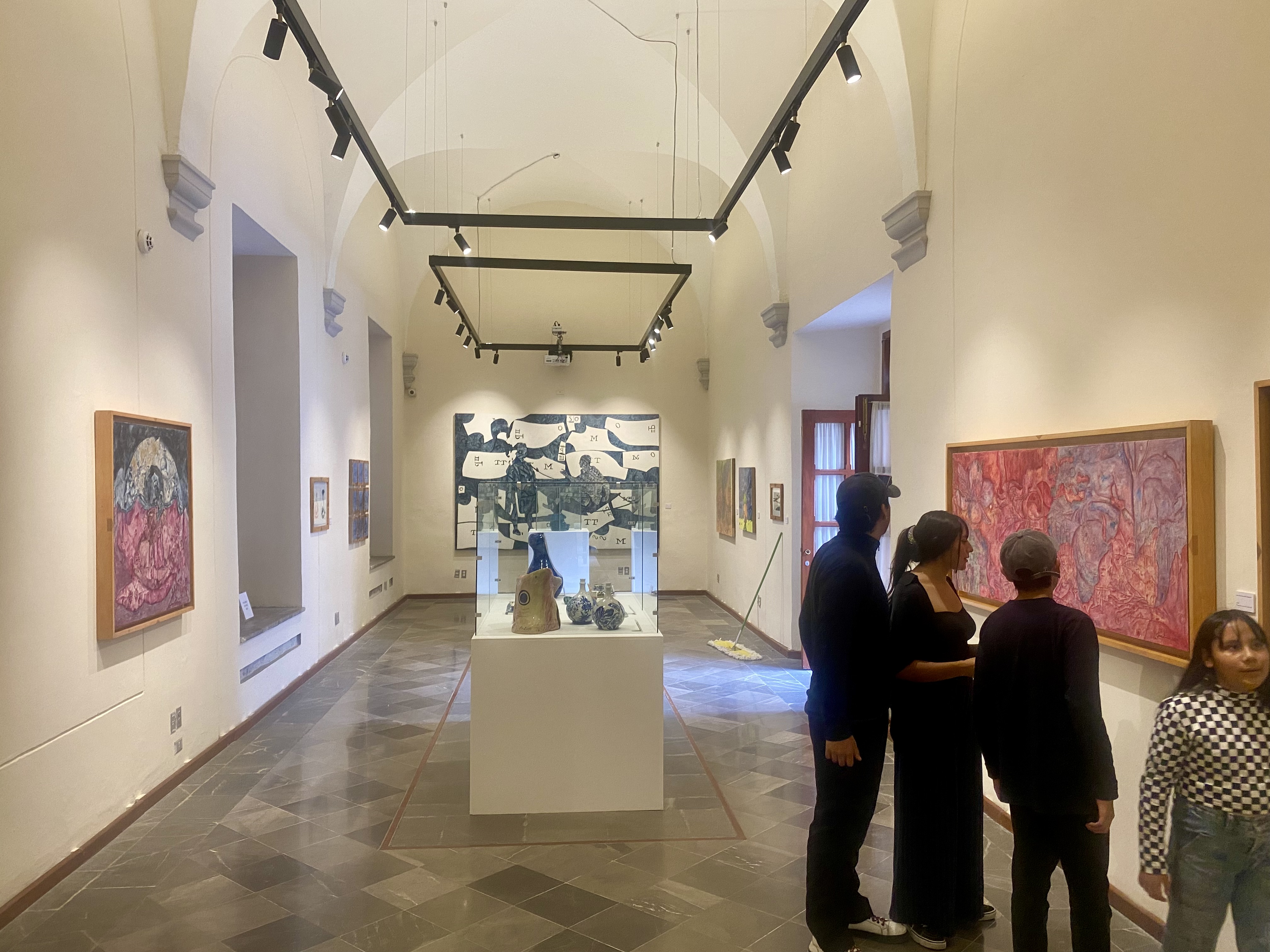
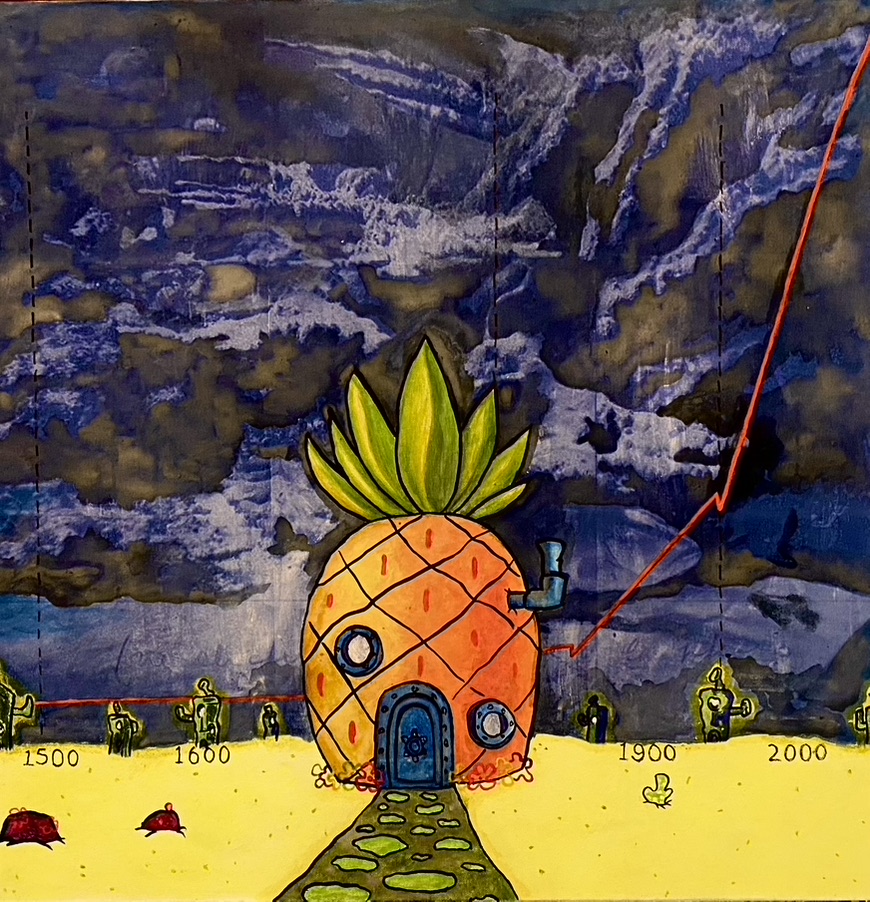
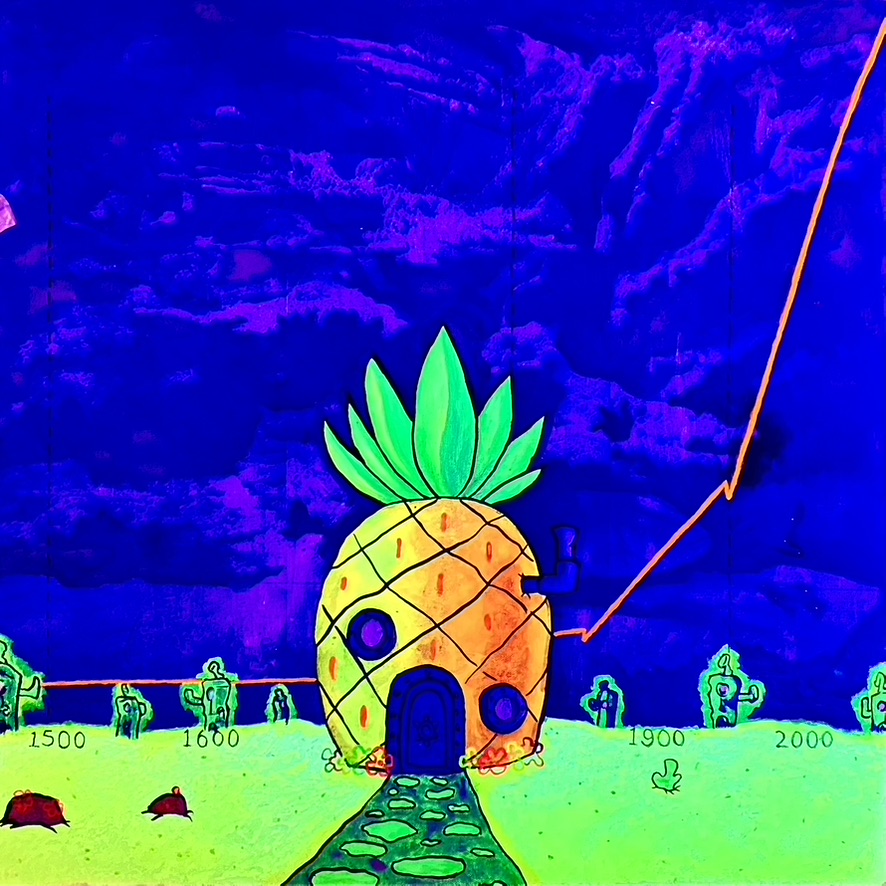
The gallery includes At the Threshold, a painting based on the map of Tenochtitlan and Theodor de Bry’s America, examining the visual construction of conquest and the colonial imagination; Uranometría, based on the Dutch massacre in Solor, Indonesia, connecting the violence of colonial expansion across the Indian and Pacific Oceans; The Route of the Dragon, which reflects on Francis Drake, the East India Company, and the expansion of slavery and English imperial commerce into the Americas; Under the Sea, which revisits the first cinematic image filmed underwater as a meditation on vision, technology, and the ocean as a site of conquest; Coral Wonderland, inspired by the photograph André Breton appropriated to imagine the Caribbean and the sea as a surrealist space, while obscuring the histories of extraction and ecological devastation beneath its surface; and Bos Taurus y el Caribe Transpacífico, in which SpongeBob’s pineapple house likewise incorporates Breton’s image alongside a graph tracing rising global temperatures from the introduction of cattle to the Caribbean in 1493 through 2026, linking colonial livestock, climate change, and imperial ecologies. The gallery also presents a major majolica installation revisiting more than twenty years of research through majolica, Talavera from Puebla, and Japanese porcelain, bringing together ceramic traditions shaped by global exchange and colonial circulation.
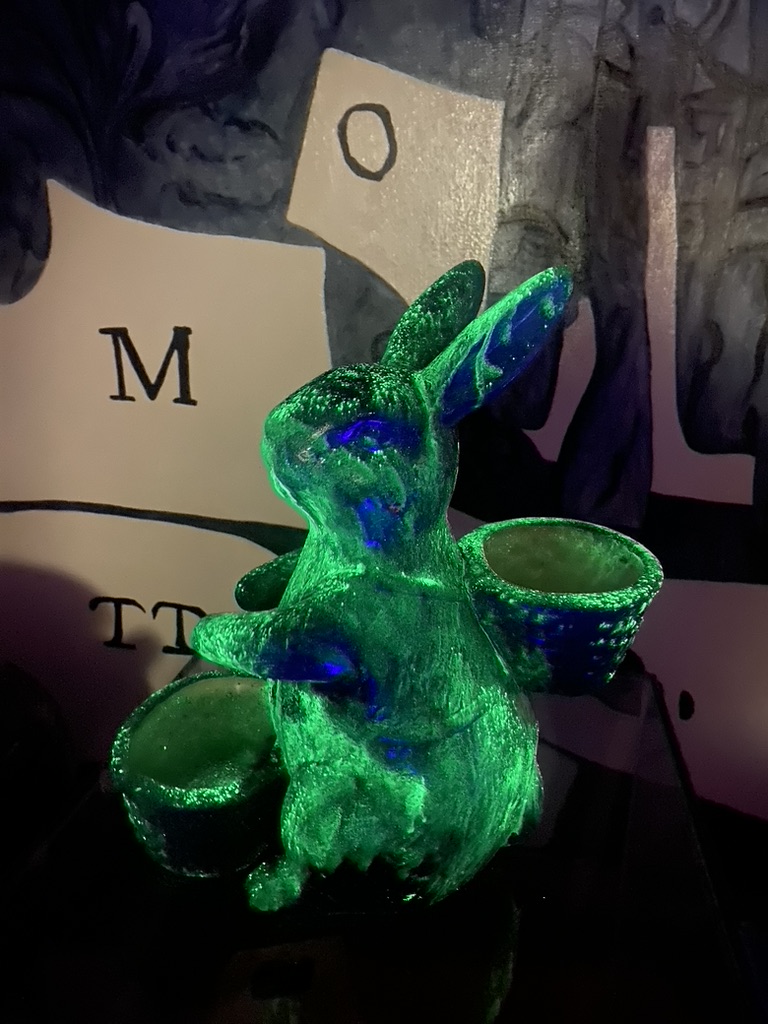
The Heart of the Revolution offers a space for reflecting on non-dominant forms of knowledge and their relationship to the global histories of consumption, mobility, and cultural exchange. At its center is a table installation based on Ritual de Vida (2009), originally produced during a residency at The Land/An Art Site near Roswell, New Mexico, where Francisco Guevara created an entire menu and set of tableware derived from the surrounding landscape. Reimagined for this exhibition, the installation questions modes of consumption, systems of sustenance, and the ways food and territory have been historically organized by “Empire” through global economic structures.
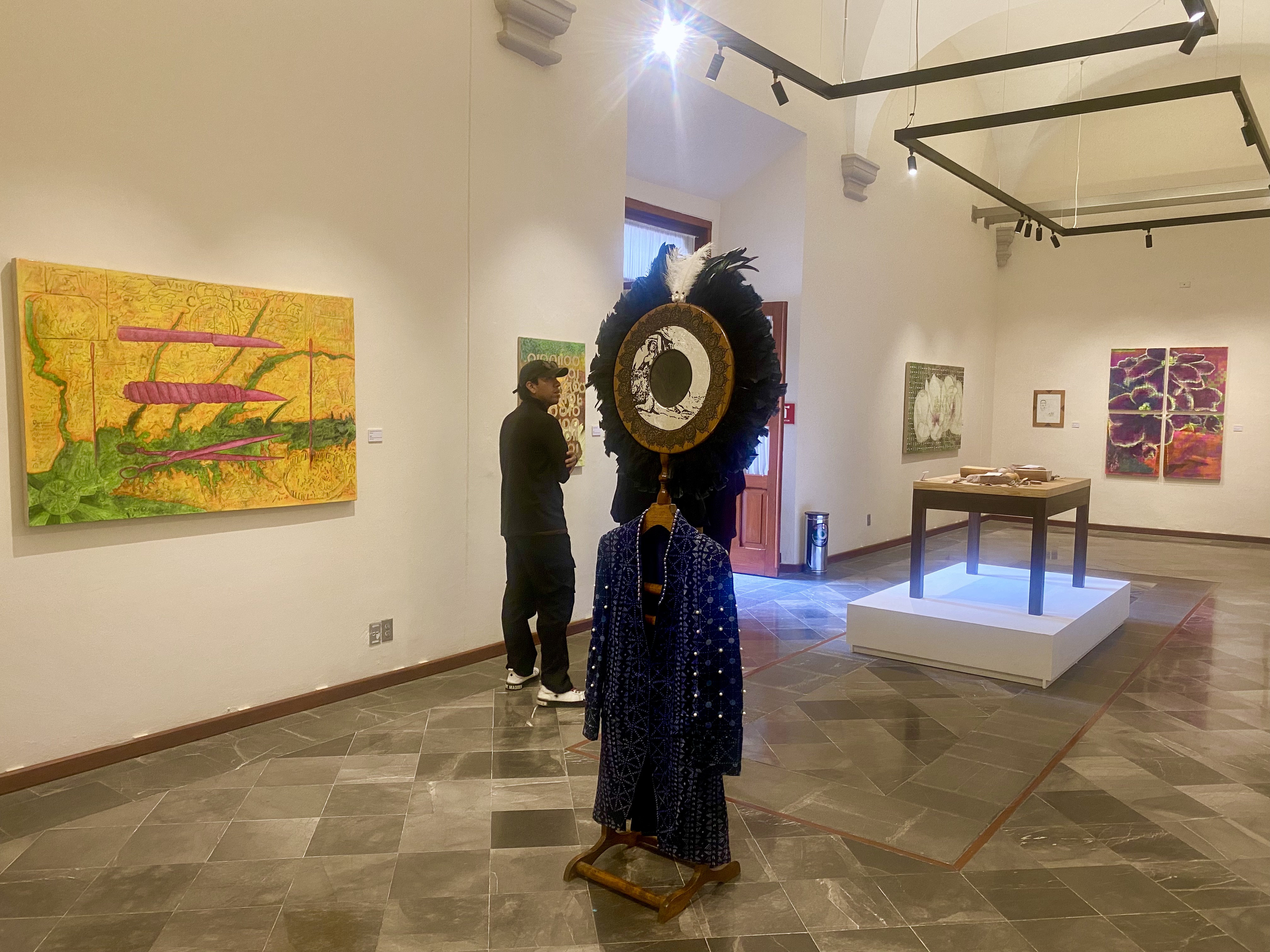
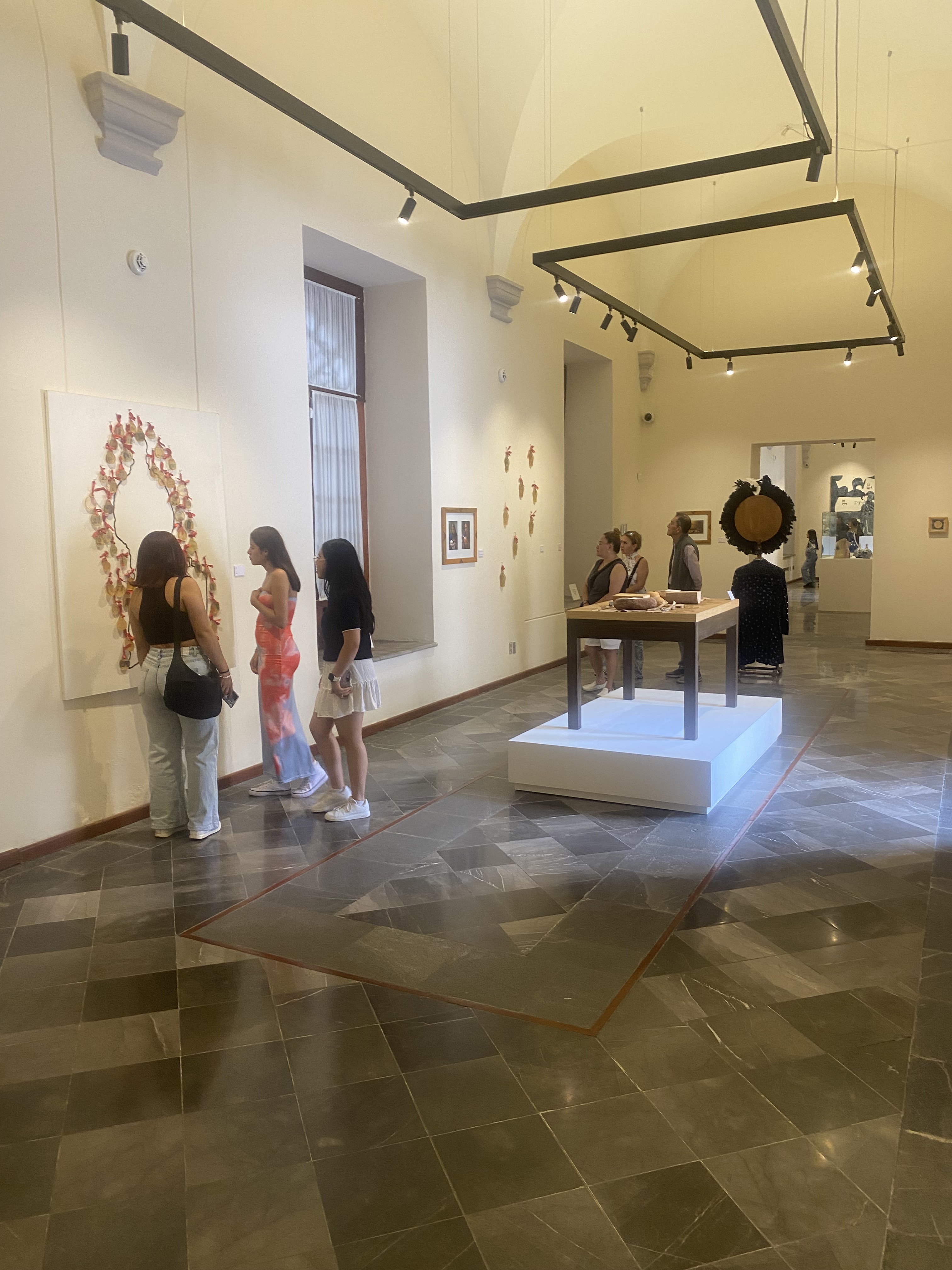
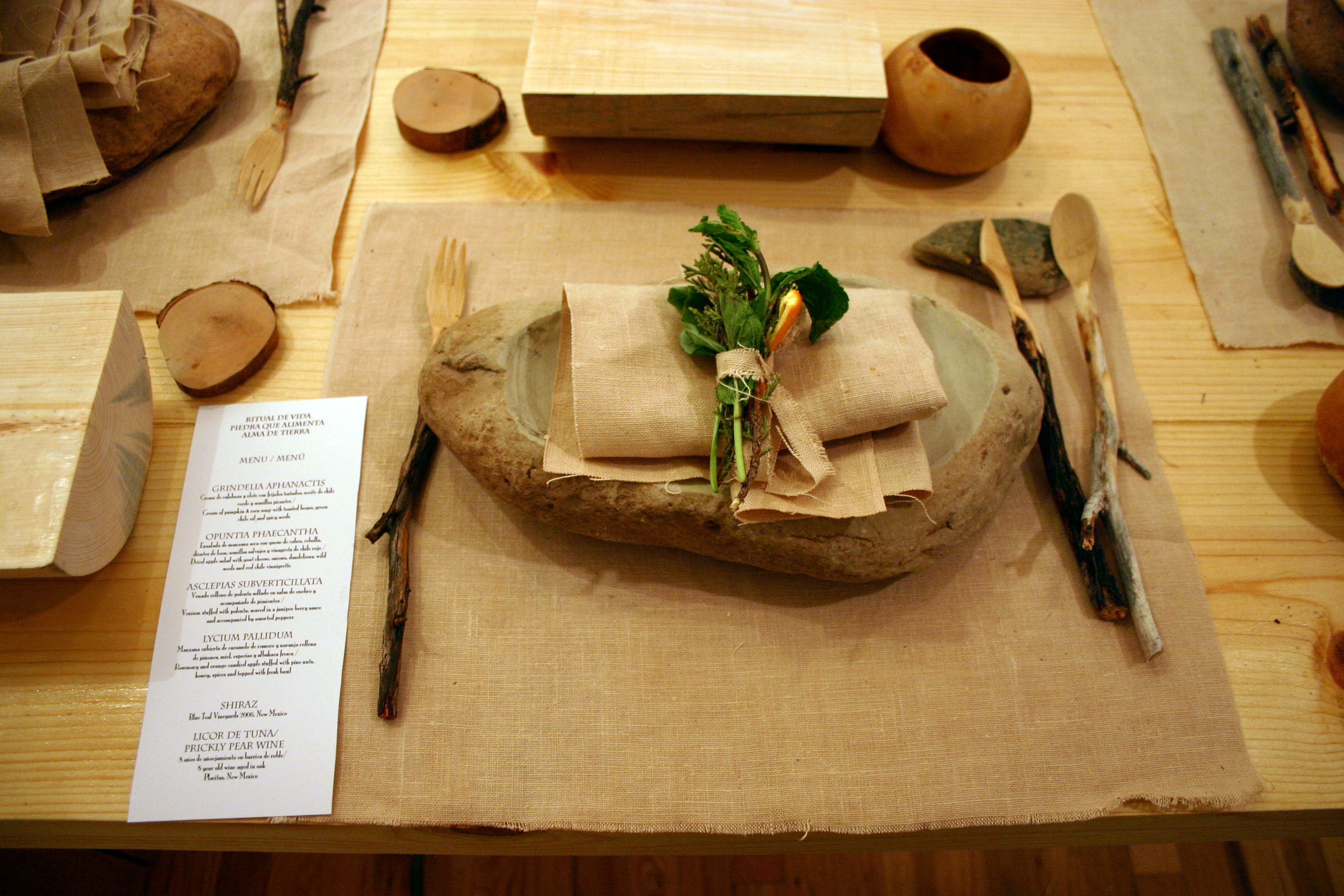
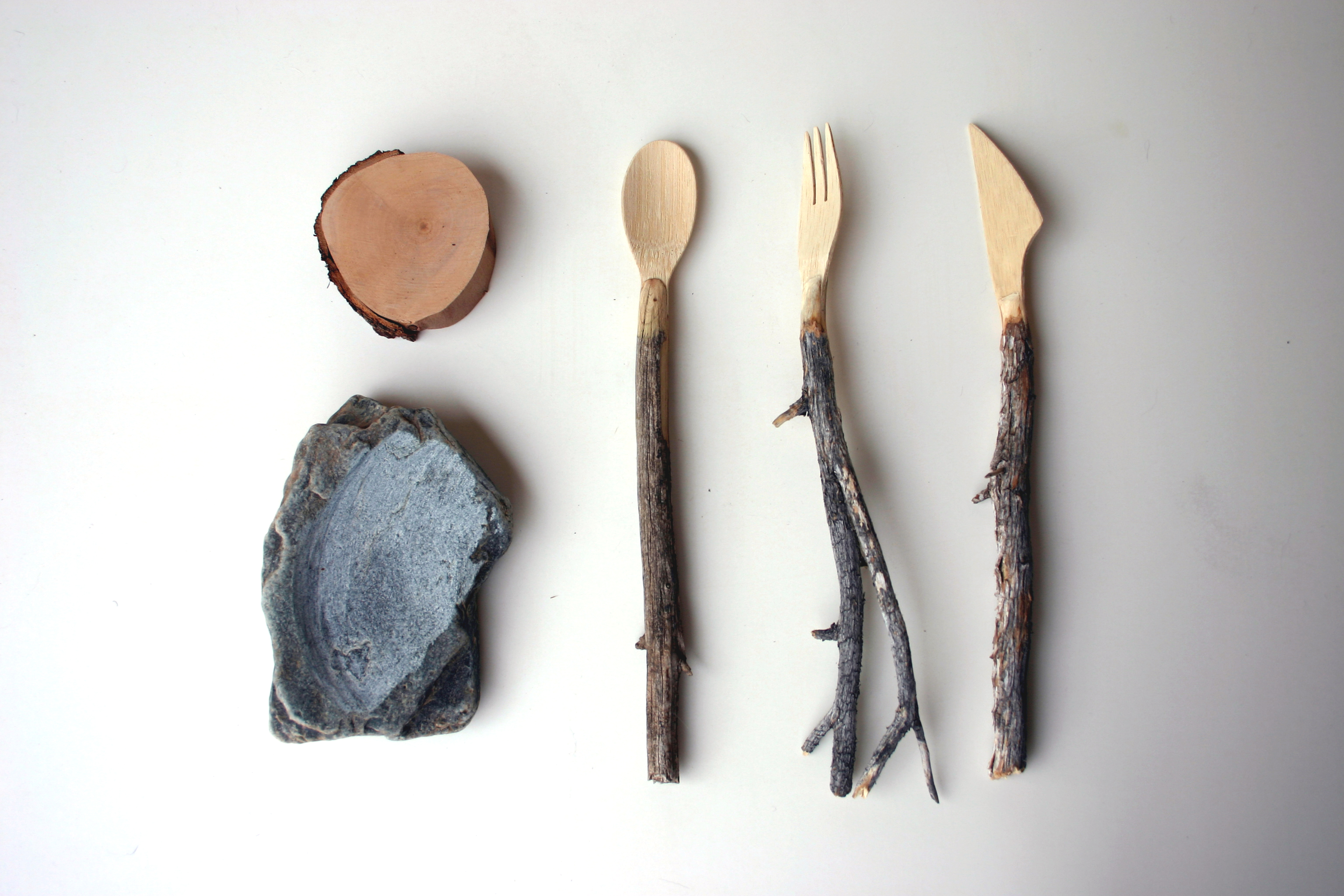
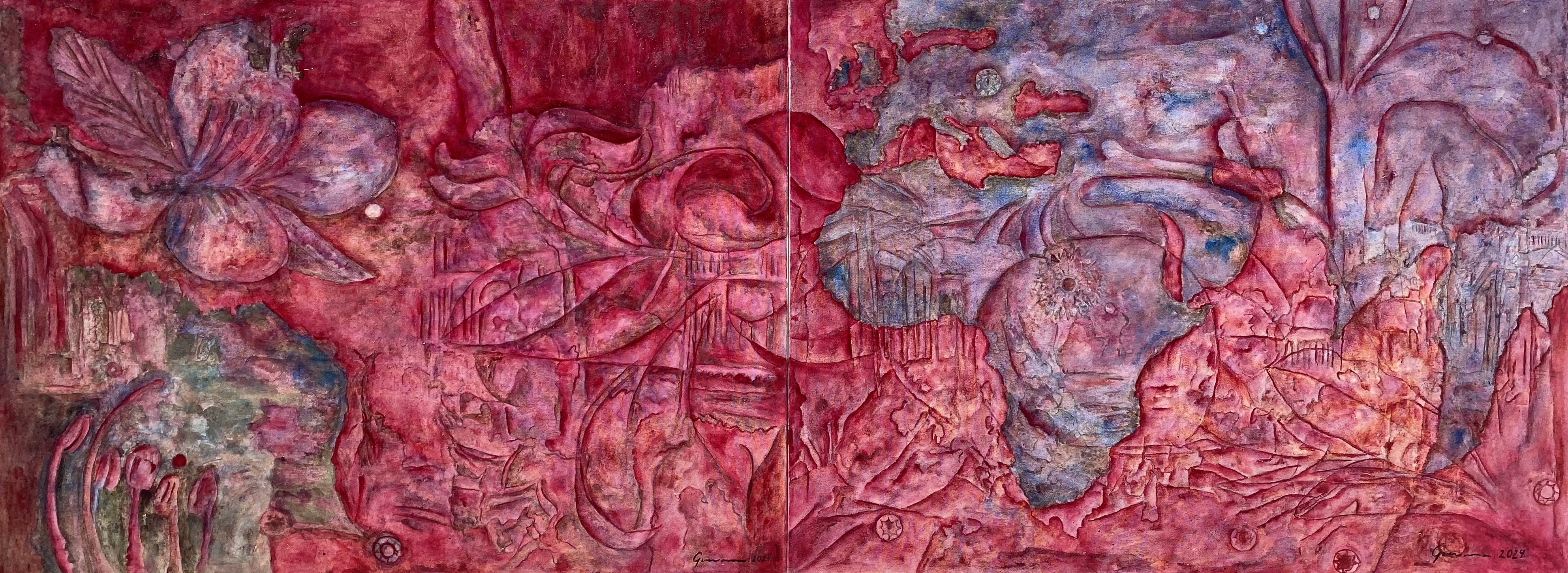
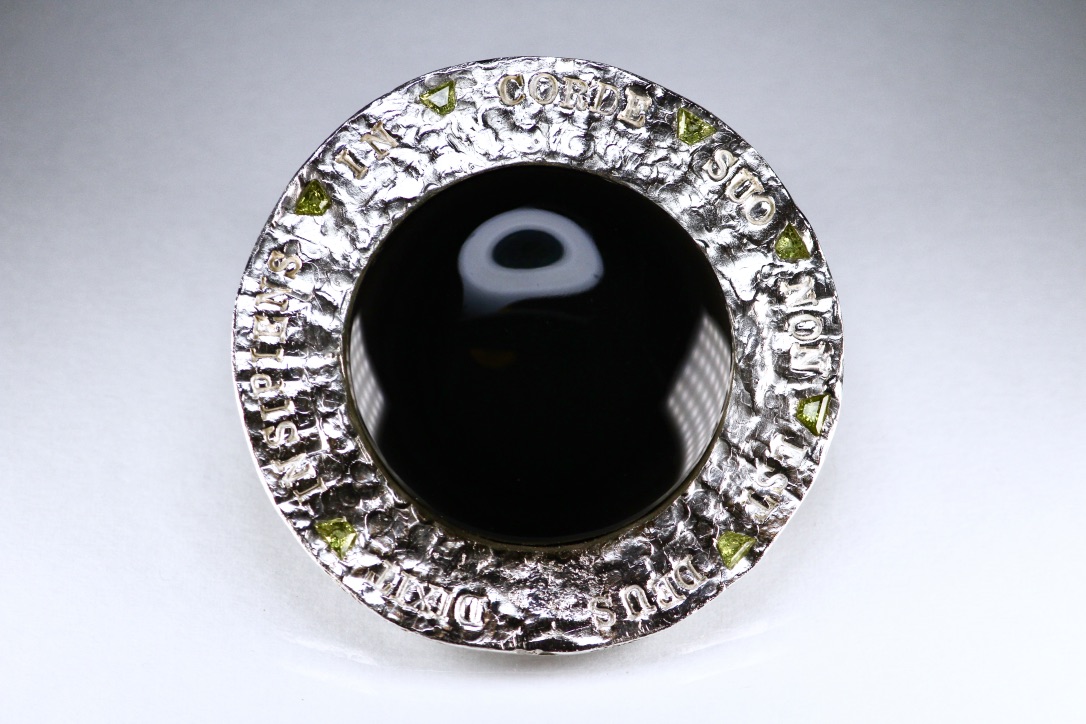
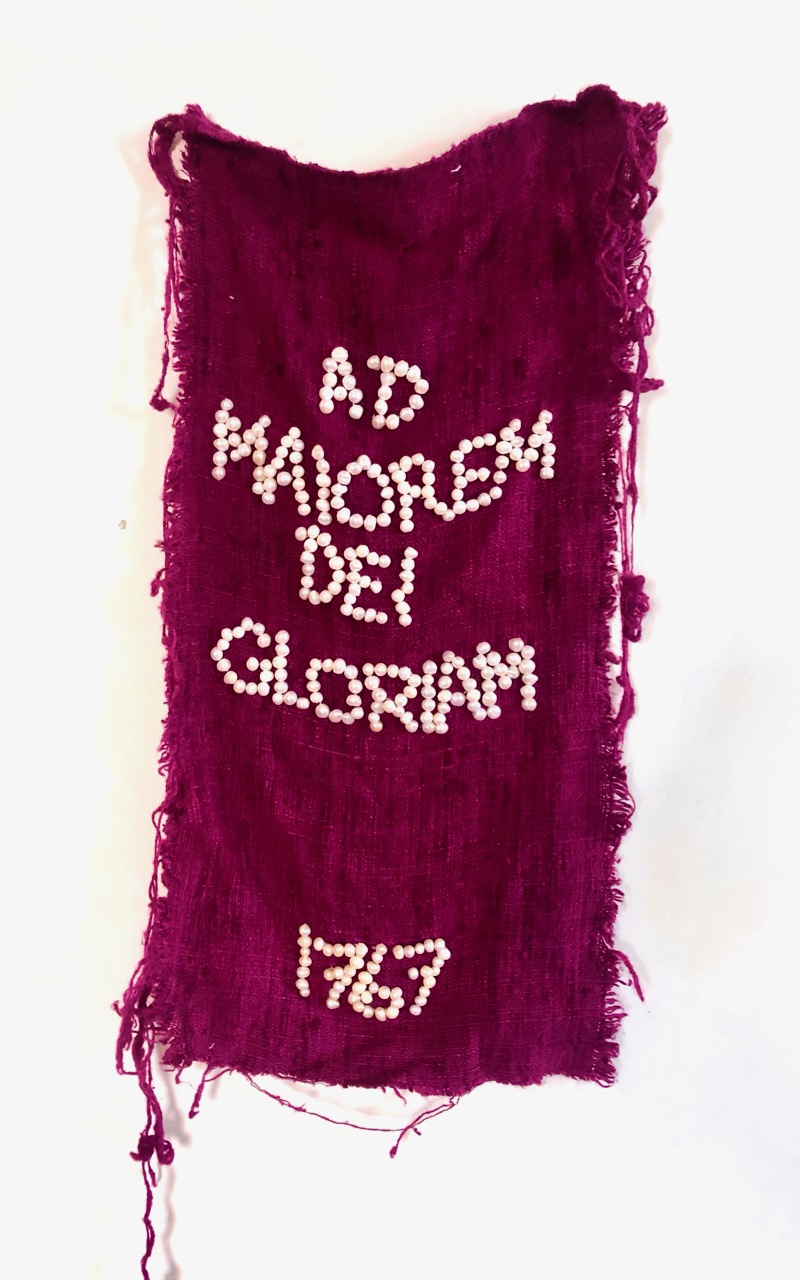
The table is set with handcrafted utensils and ceramics and features an illustration of America alongside the peacock flower (Caesalpinia pulcherrima), The Arteries of Empire, a world map rendered in Brazilian wood pigment, The Rape of Europa, a sculpture based on the Armada Portrait of Elizabeth I, John Dee’s obsidian mirror now housed in the British Museum, and a Macaroni Coat, made from indigo-dyed bogolanfini cloth and pearls, referencing the eighteenth-century Grand Tour and the performance of cosmopolitan identity.
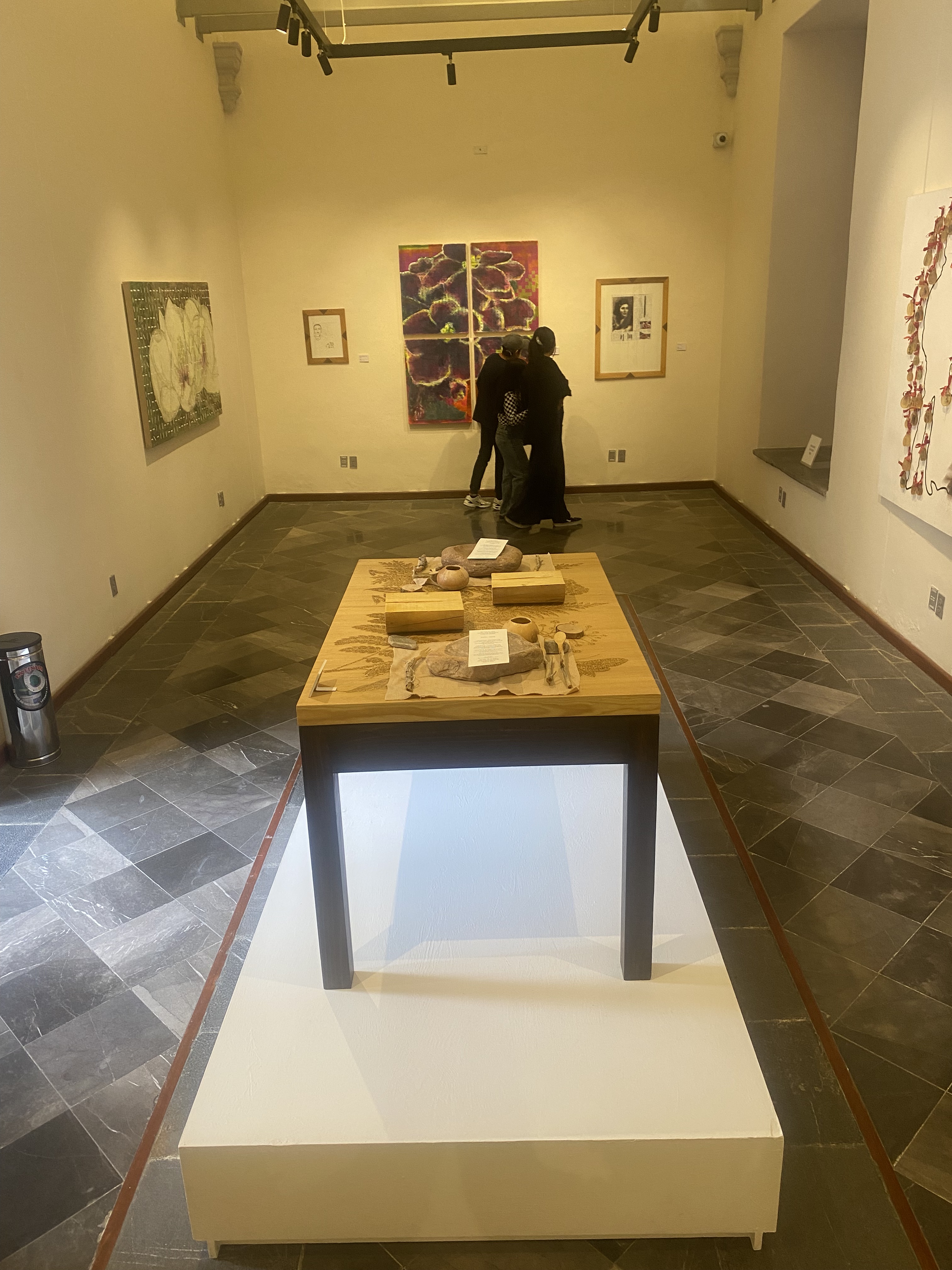
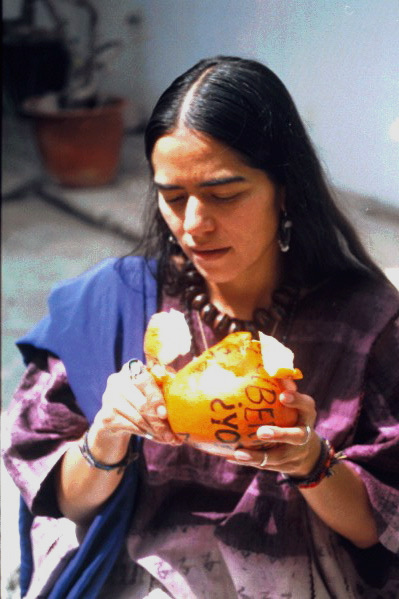
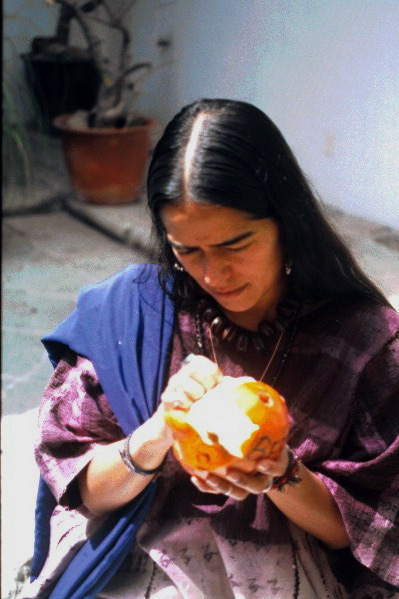
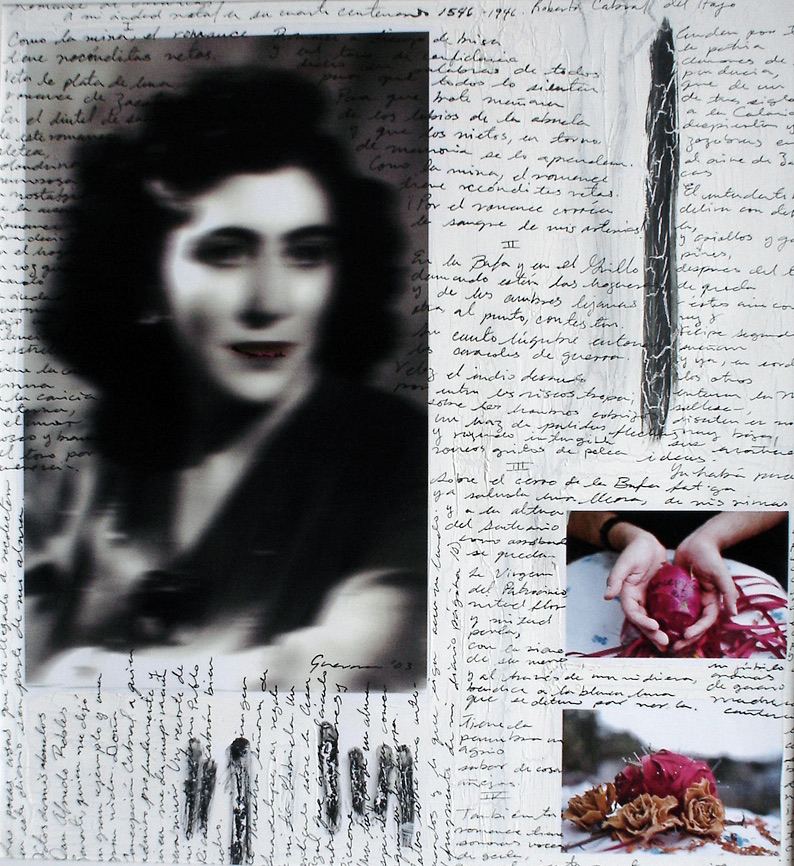
The gallery also incorporates an autobiographical dimension through a series of portraits honoring ancestors as a category of insurgent knowledge and love as obligation. Portraits of Lila Downs, Dolores Olmedo, Concepción Cabral, Guadalupe Robles, tracing a genealogy of care, mentorship, and intellectual formation. Together, these figures ask how one might learn to “see in the dark,” proposing knowledge not as accumulation but as an ethical practice rooted in memory, affection, and responsibility. Dedicated to the relationships that have shaped Guevara’s trajectory as both artist and educator, The Heart of the Revolution presents love as obligation and knowledge as method—insurgent categories that challenge hegemonic narratives and sustain alternative forms of existence, learning, and transformation.
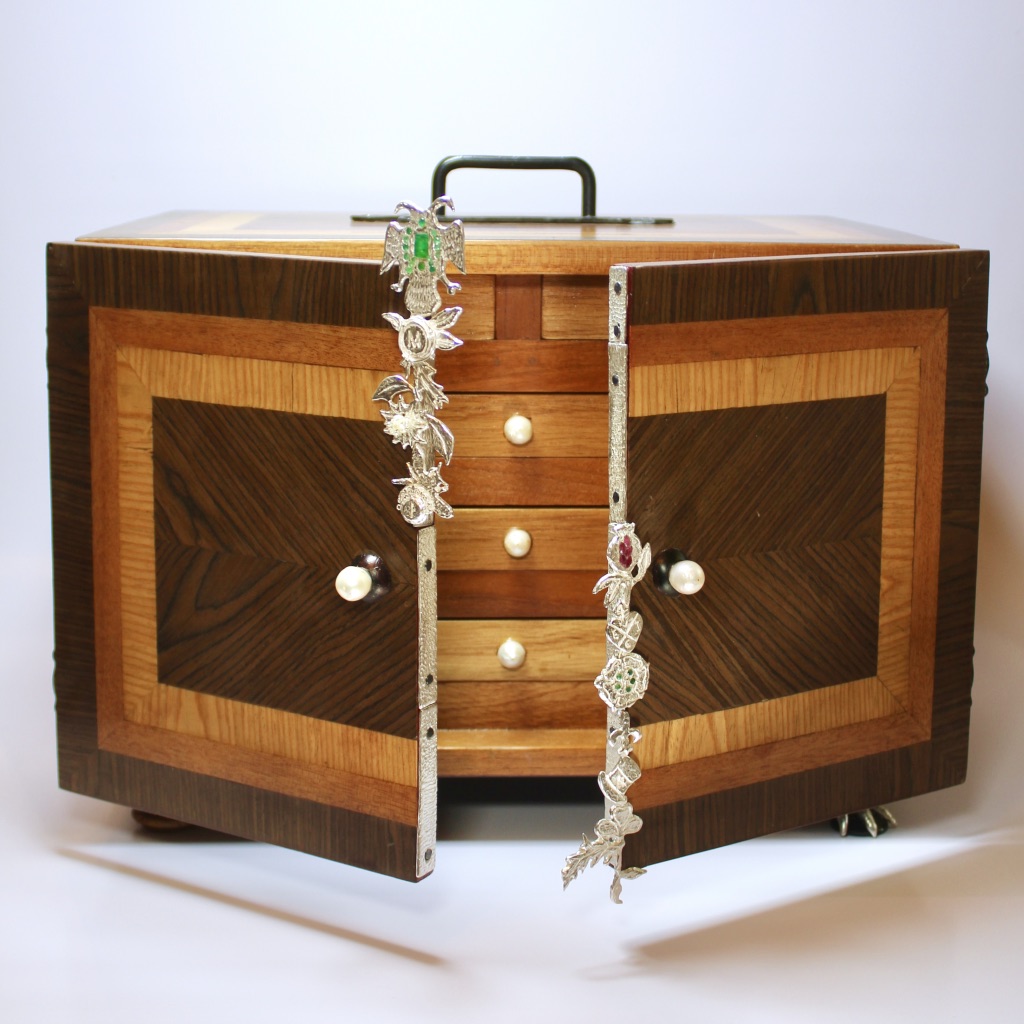
The Bank, or Sacristy of Horror examines the intertwined histories of finance, religion, and modern rationality through the form of a monumental altarpiece and installation inspired by Quentin Matsys’ The Money Changer and His Wife (1514), one of the earliest European paintings to foreground banking and monetary exchange. Dedicated to René Descartes, the work reconsiders him as a foundational figure in the epistemologies of conquest and extermination, transforming the Cartesian dictum Cogito, ergo sum into Cogito, conquiro, ergo sum (“I conquer, therefore I am”). Rather than celebrating reason as universal, the installation asks how systems of knowledge became instruments for classifying, measuring, and governing both people and territory.
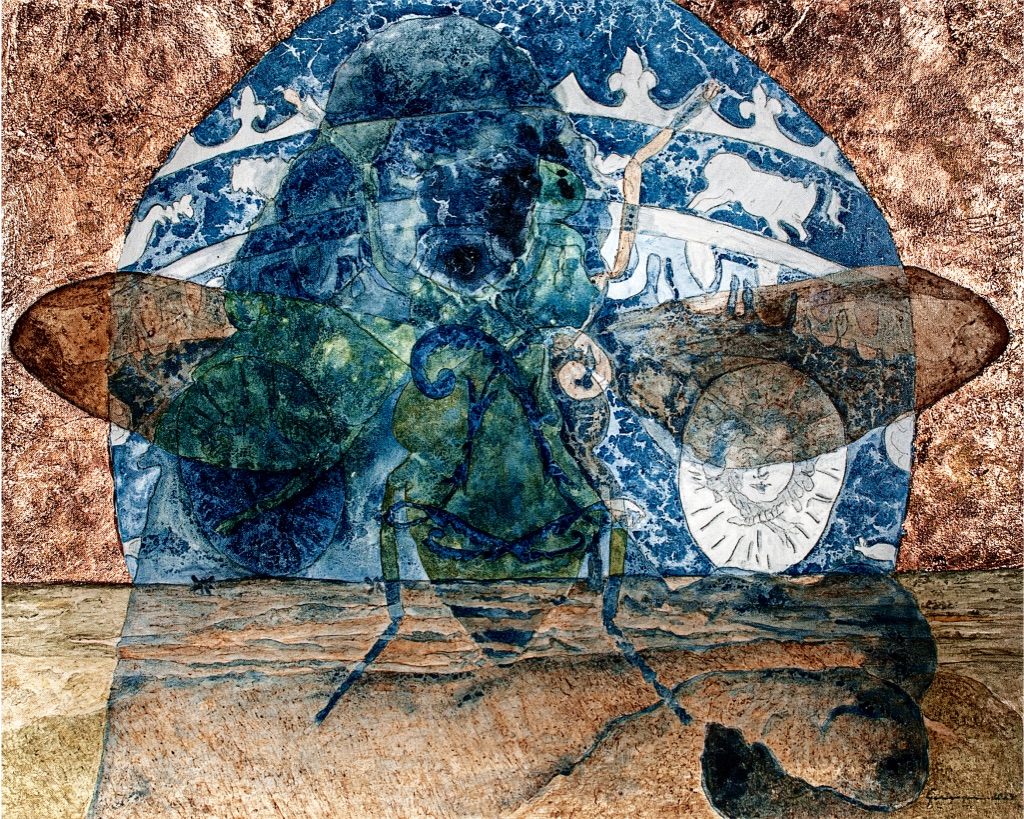
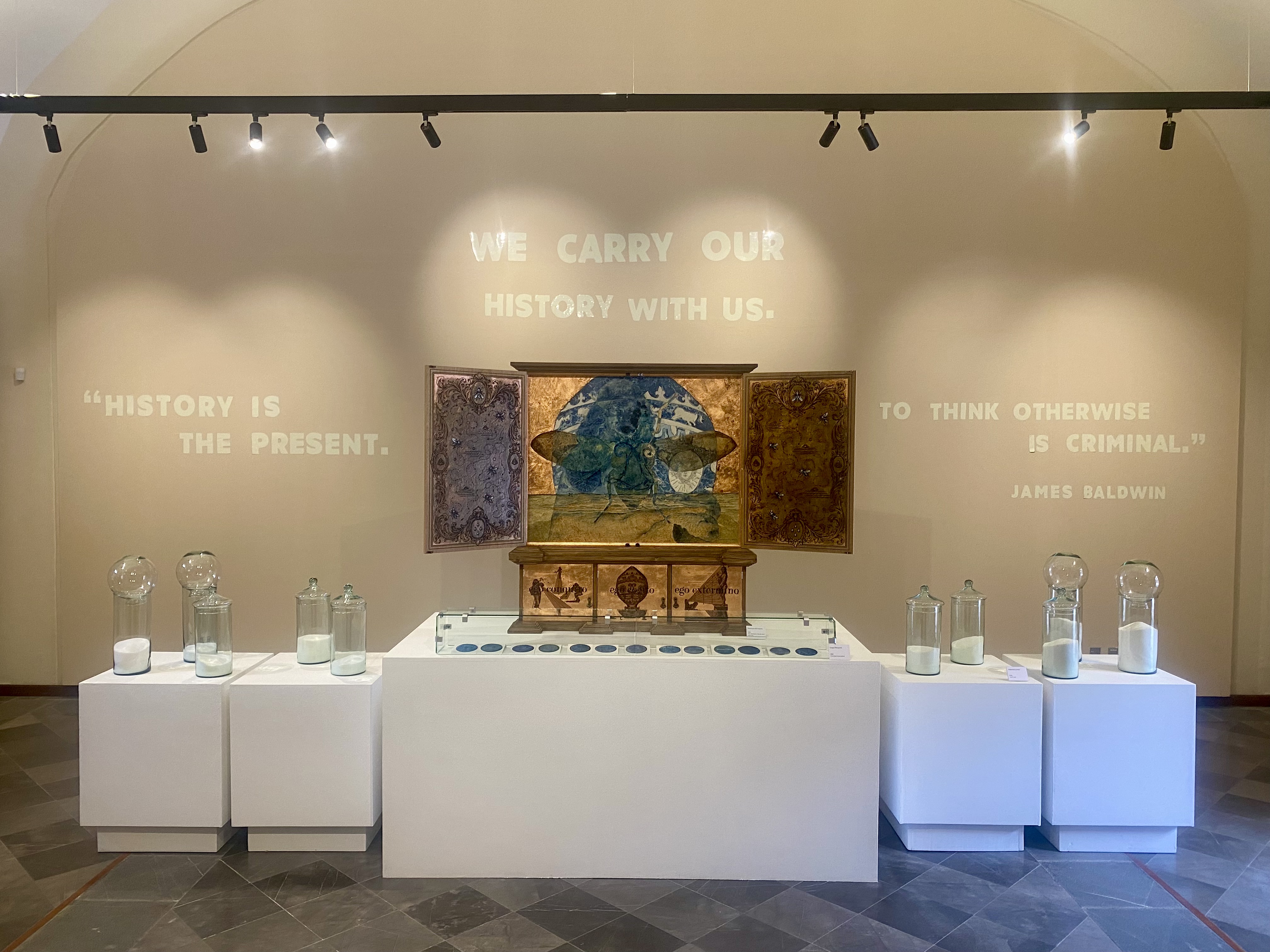
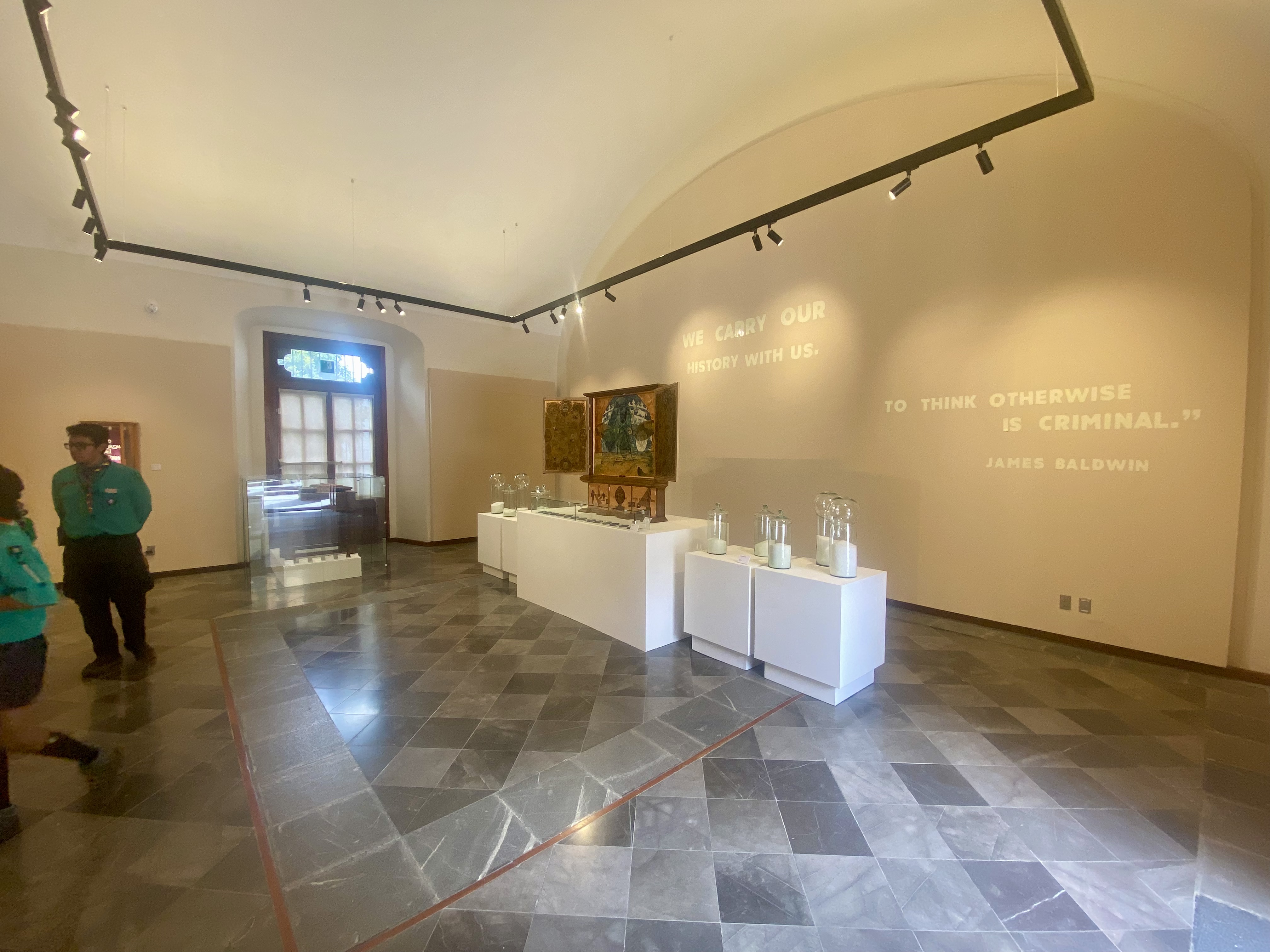
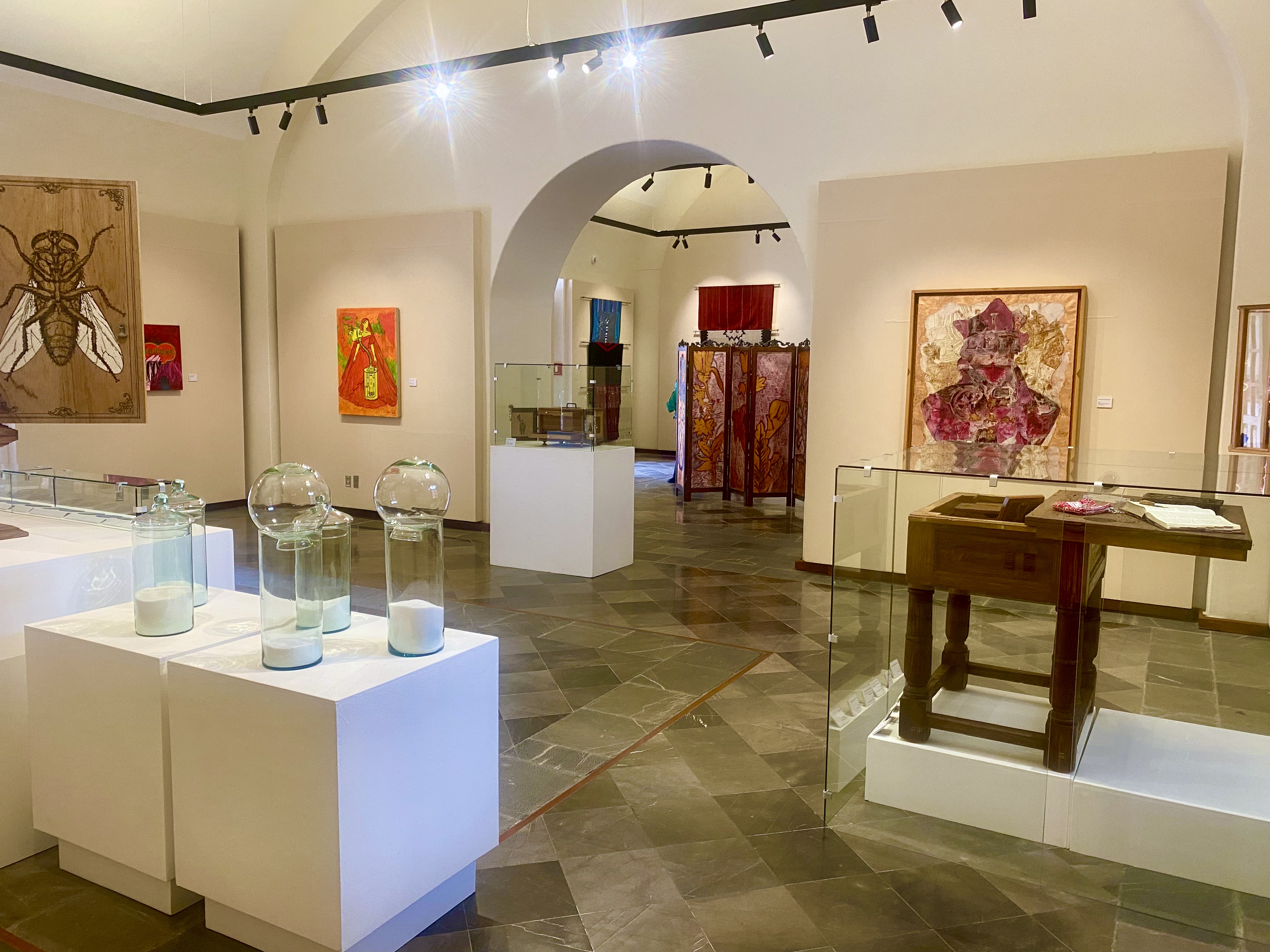
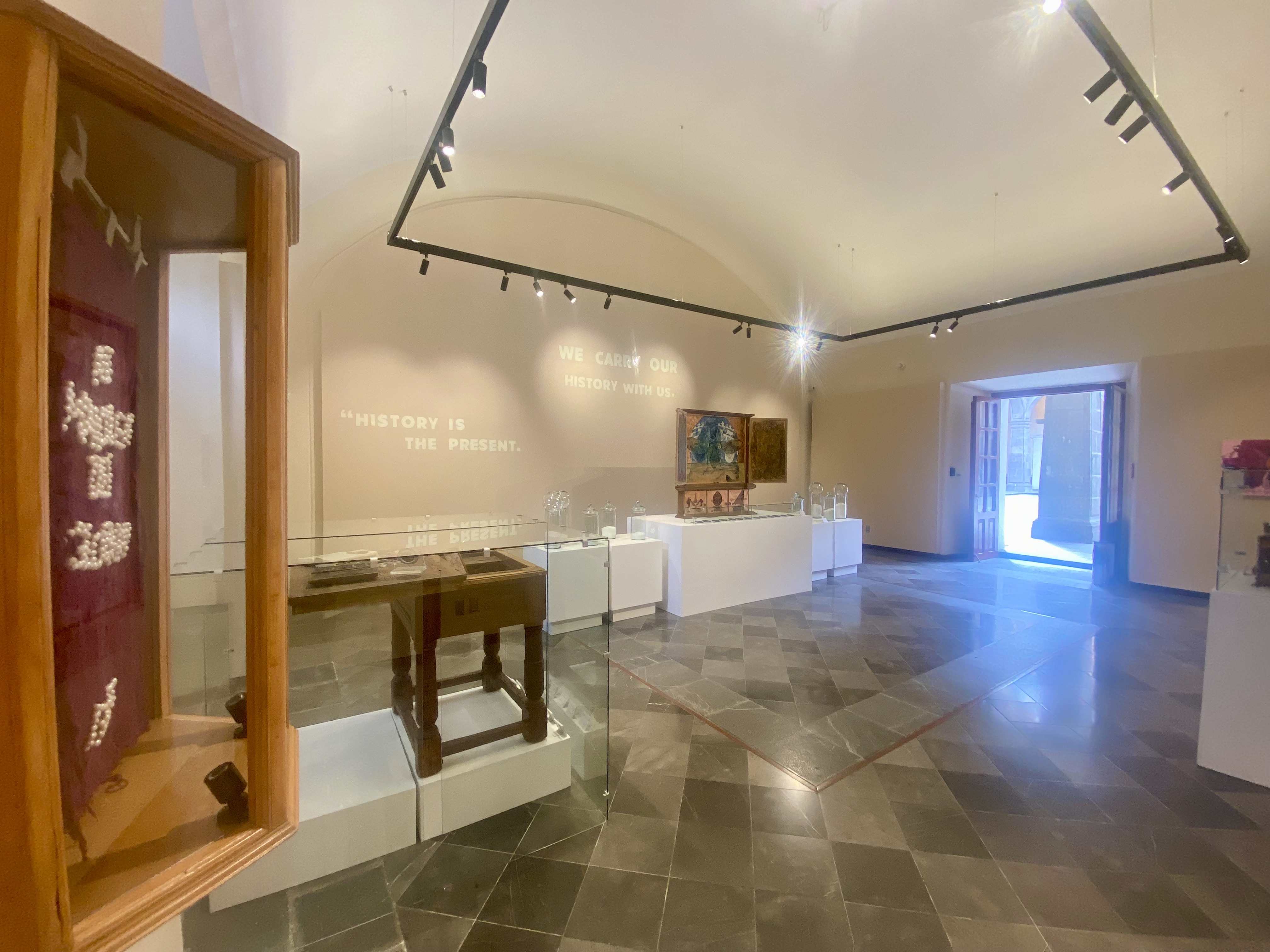
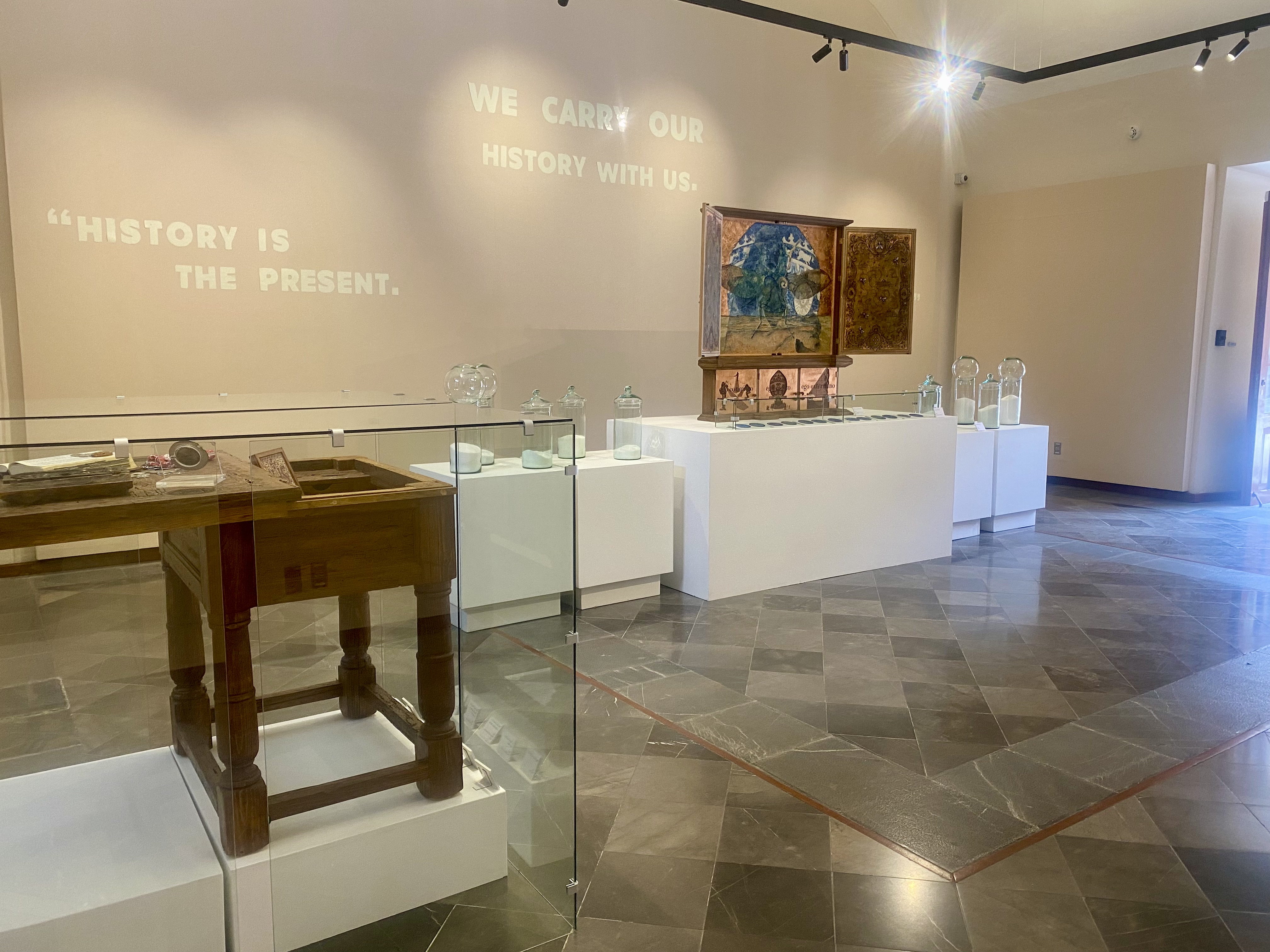
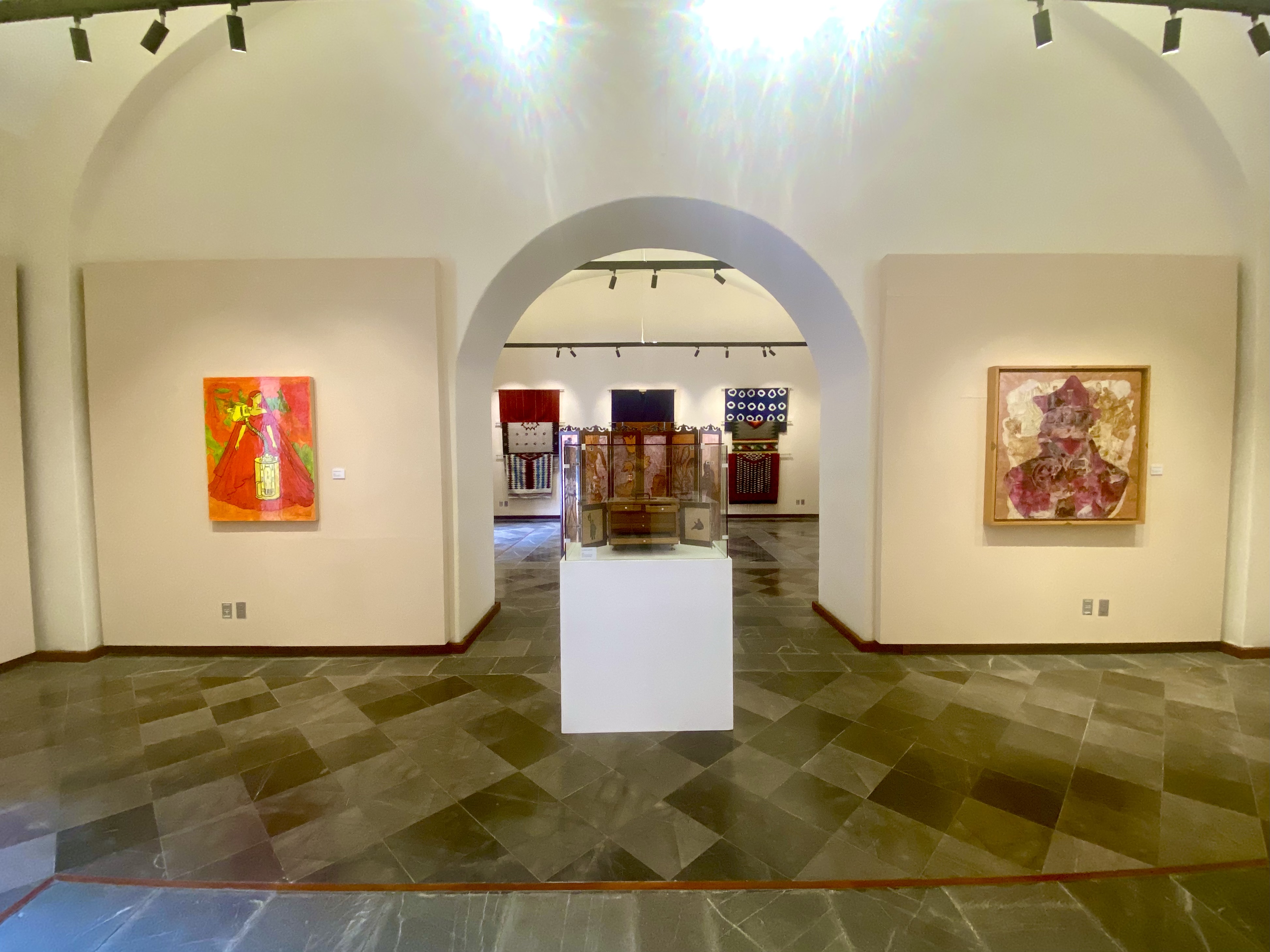
The altarpiece incorporates references to the fly Descartes is said to have observed while conceiving the Cartesian coordinate system, together with the insect’s feeding and excrement patterns, the Montgolfier hot-air balloon, and the invention of the panorama. These seemingly disparate references trace the emergence of modern technologies of vision, measurement, circulation, and control, revealing how observation itself became a political instrument. Conceived as an homage to Kirsten Pai Buick’s methodological approach in Race as Object Lessons, the installation treats objects as historical evidence through which coloniality, race, and capitalism become materially legible.
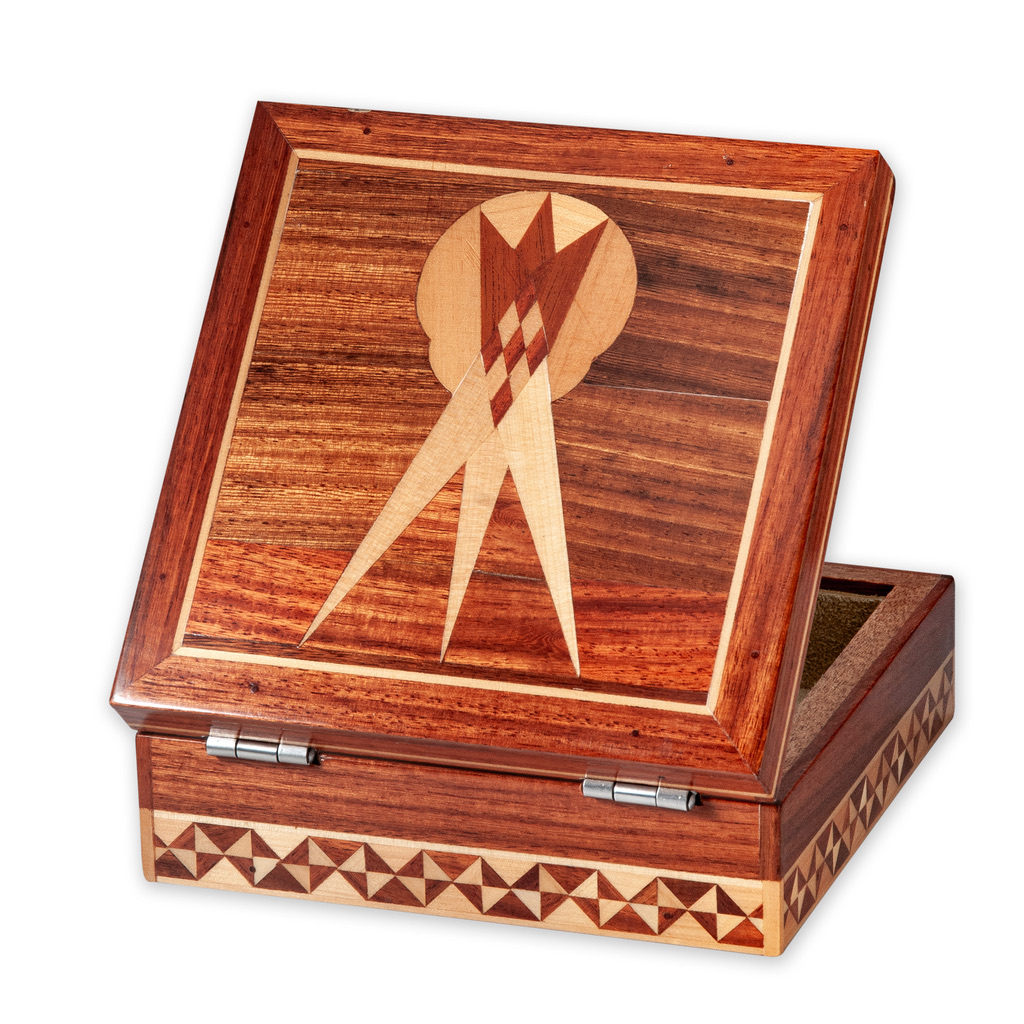
Behind the altarpiece, ten glass jars of salt frame the work like a financial retablo. Each bears the logo of a Mexican bank associated with the legacy of the FOBAPROA bailout—including Banamex, Bancomer, Serfin, Bital, Inverlat, and Banco del Atlántico, among others. Salt recalls the etymological origins of the word salary, while simultaneously serving as a measure of the disproportionate relationship between wages and the interest paid by millions of Mexicans. The jars suggest that contemporary finance has become a new moral order, in which extraction persists through debt, credit, and banking rather than colonial tribute.
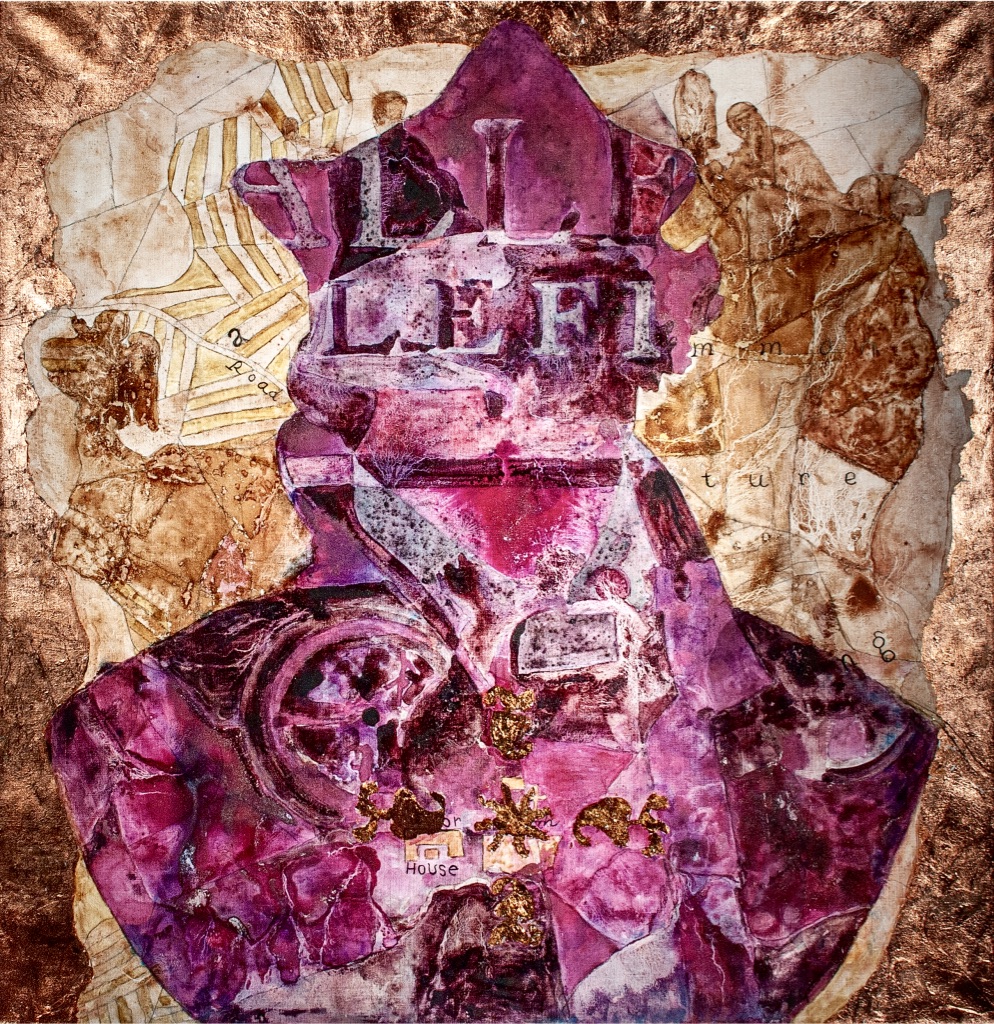
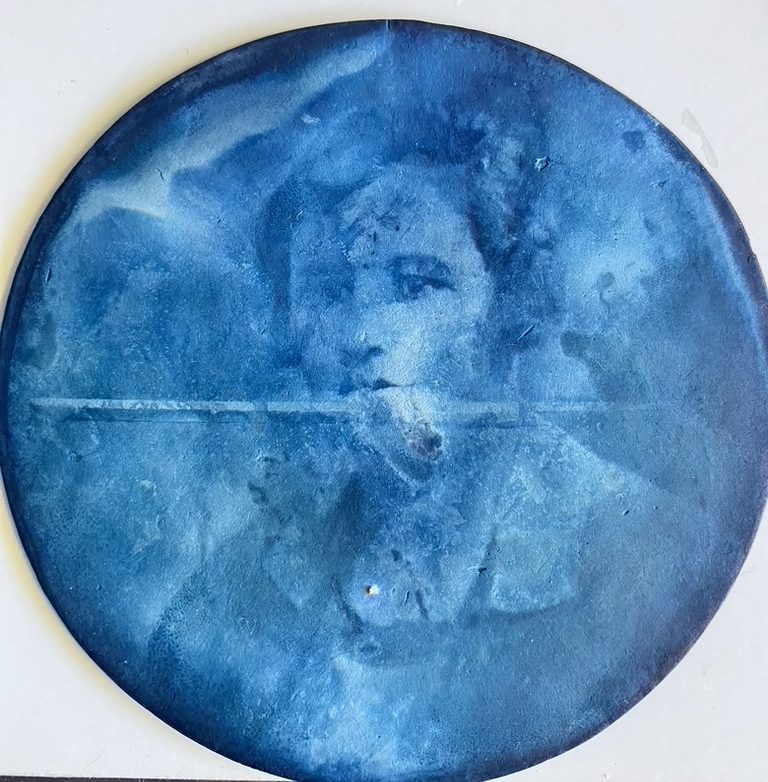
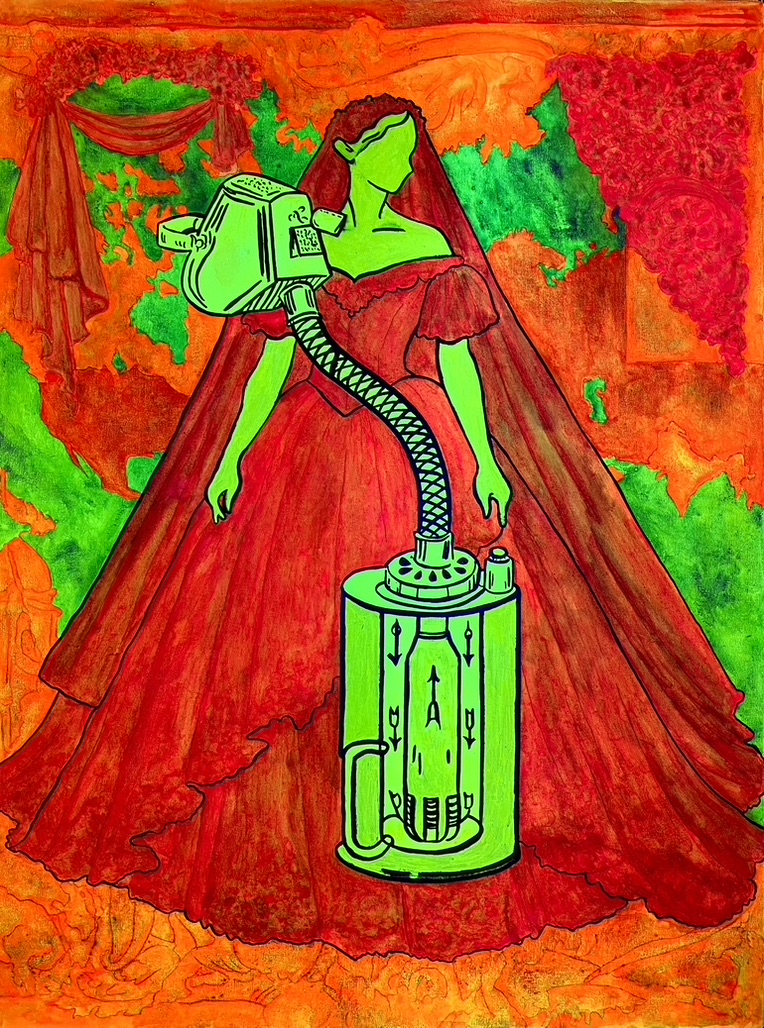
The gallery then turns to the religious institutions that helped consolidate these economic networks of knowledge, commerce, and administration during the early modern period. References to the British Empire, the witch hunts, and the persecution of heresy reveal how religious authority, finance, and scientific reason converged to produce regimes of surveillance, discipline, and structural violence. The witch hunts are presented as a decisive moment in the historical invention of the modern body, transforming it into an object of regulation, gendered control, and state power. These themes unfold across a constellation of works, including fifteen communion wafers made from porcelain and cyanotype, and El Velo del Hábito, a painting reflecting on Queen Victoria’s dependence on formaldehyde-based medicine. Together, these works reveal how religion, finance, science, medicine, and empire evolved as mutually reinforcing systems, laying the ideological foundations for the final gallery’s inquiry into the invention of the body, gender, and the nation.
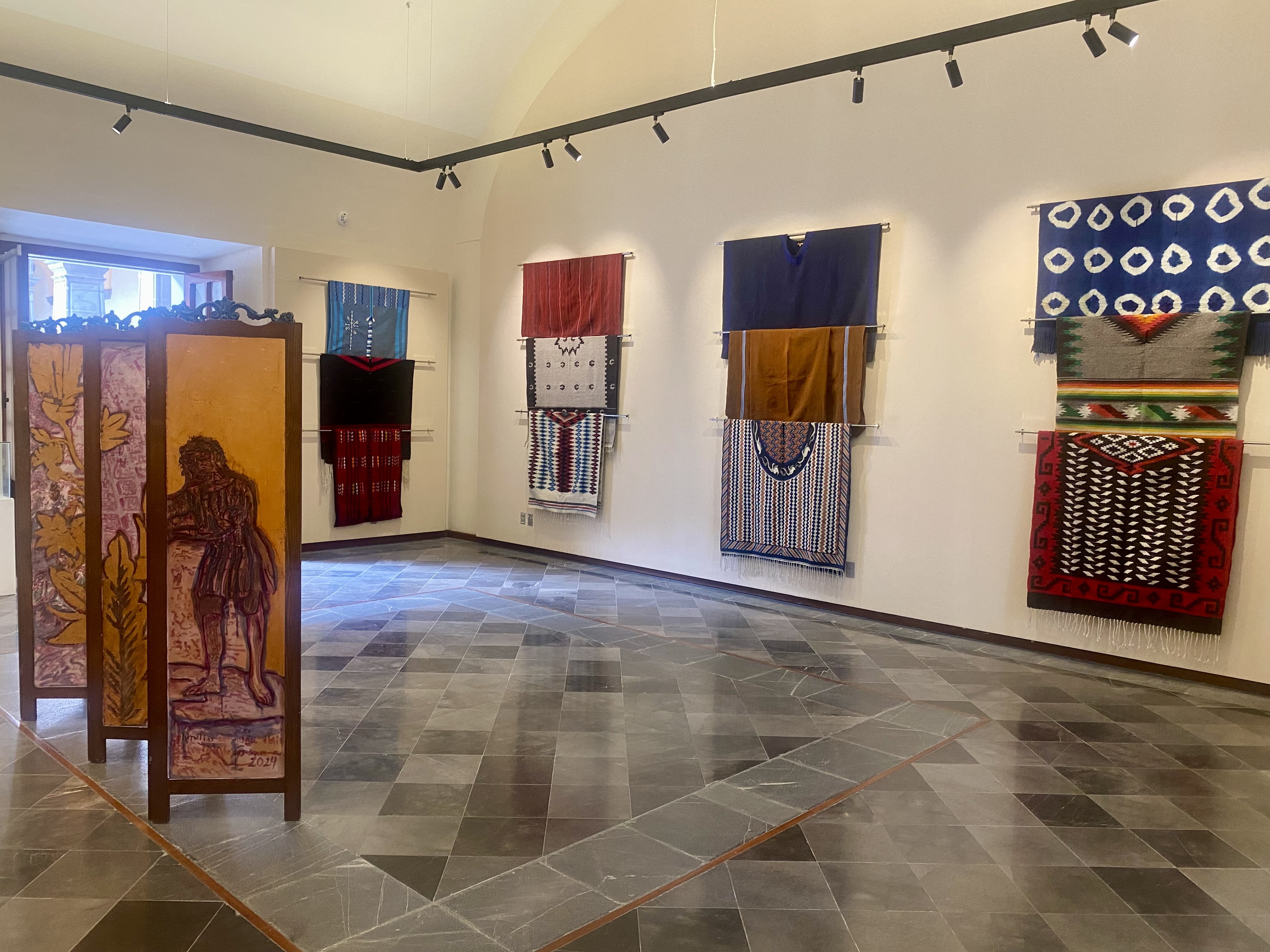
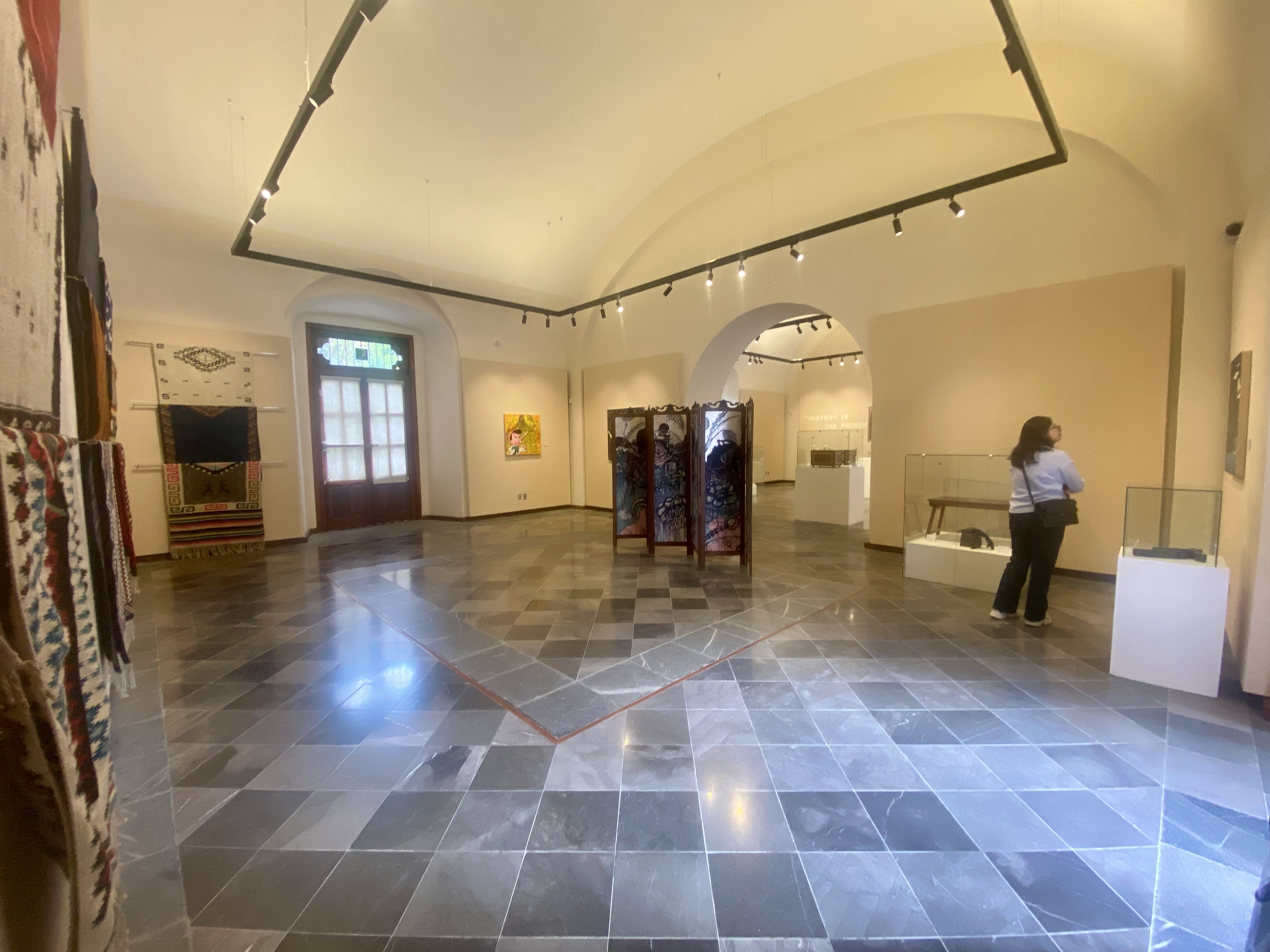
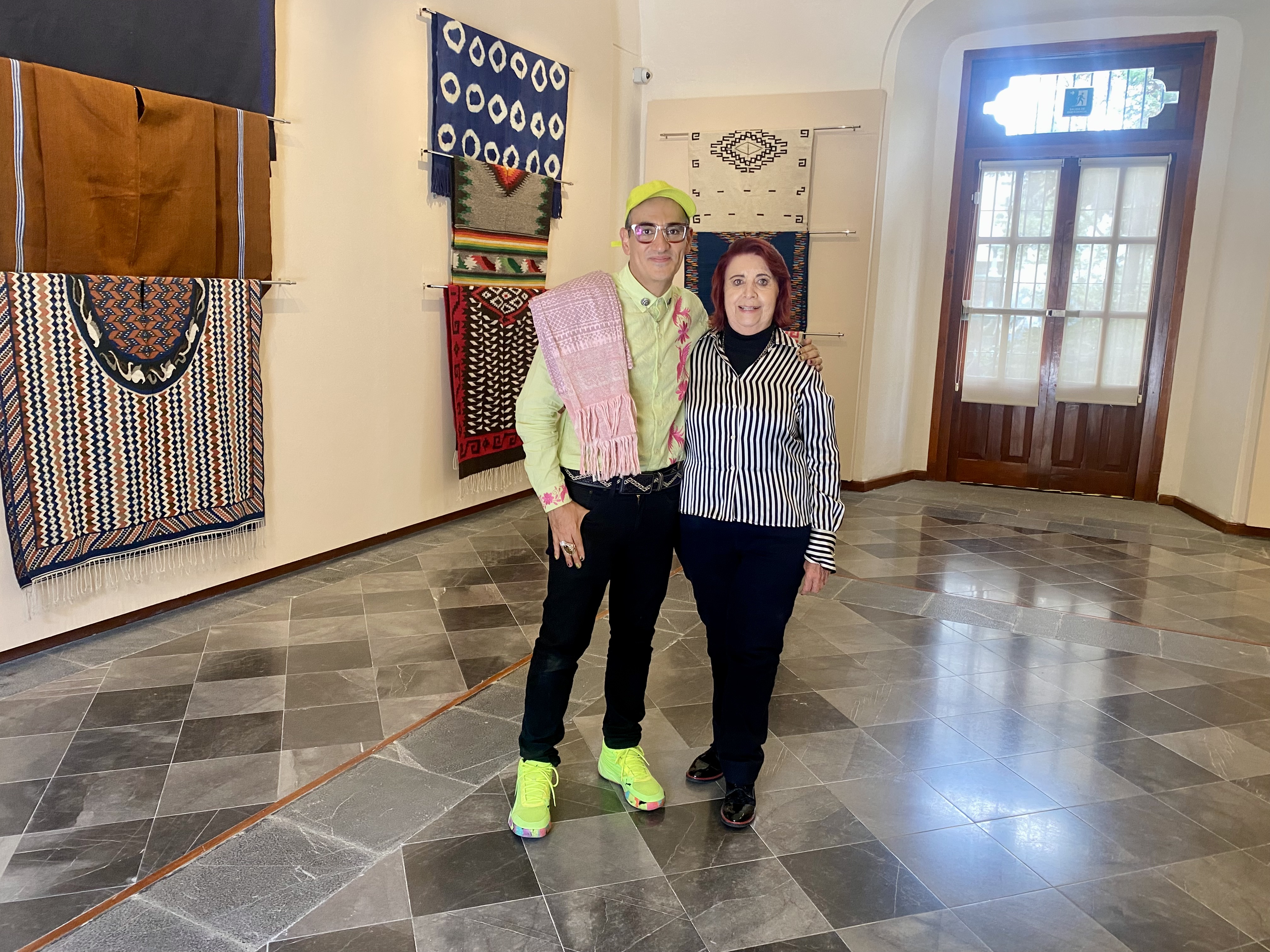
Beyond Body, Beyond Nation concludes the exhibition with a reflection on the historical invention of the body and place, asking how both have been constructed through the intertwined histories of empire, representation, and identity. At its center is an installation of handwoven ponchos from across Latin America, all owned and worn by Francisco Guevara in everyday life. More than ethnographic objects, the ponchos embody implication, movement, and resistance, suggesting that knowledge is something we inhabit and carry with us. As RuPaul famously remarked, “We’re all born naked, and the rest is drag.” Here, clothing becomes both performance and archive, while textiles remind us that text and textile are intertwined technologies of memory, mobility, and cultural survival.
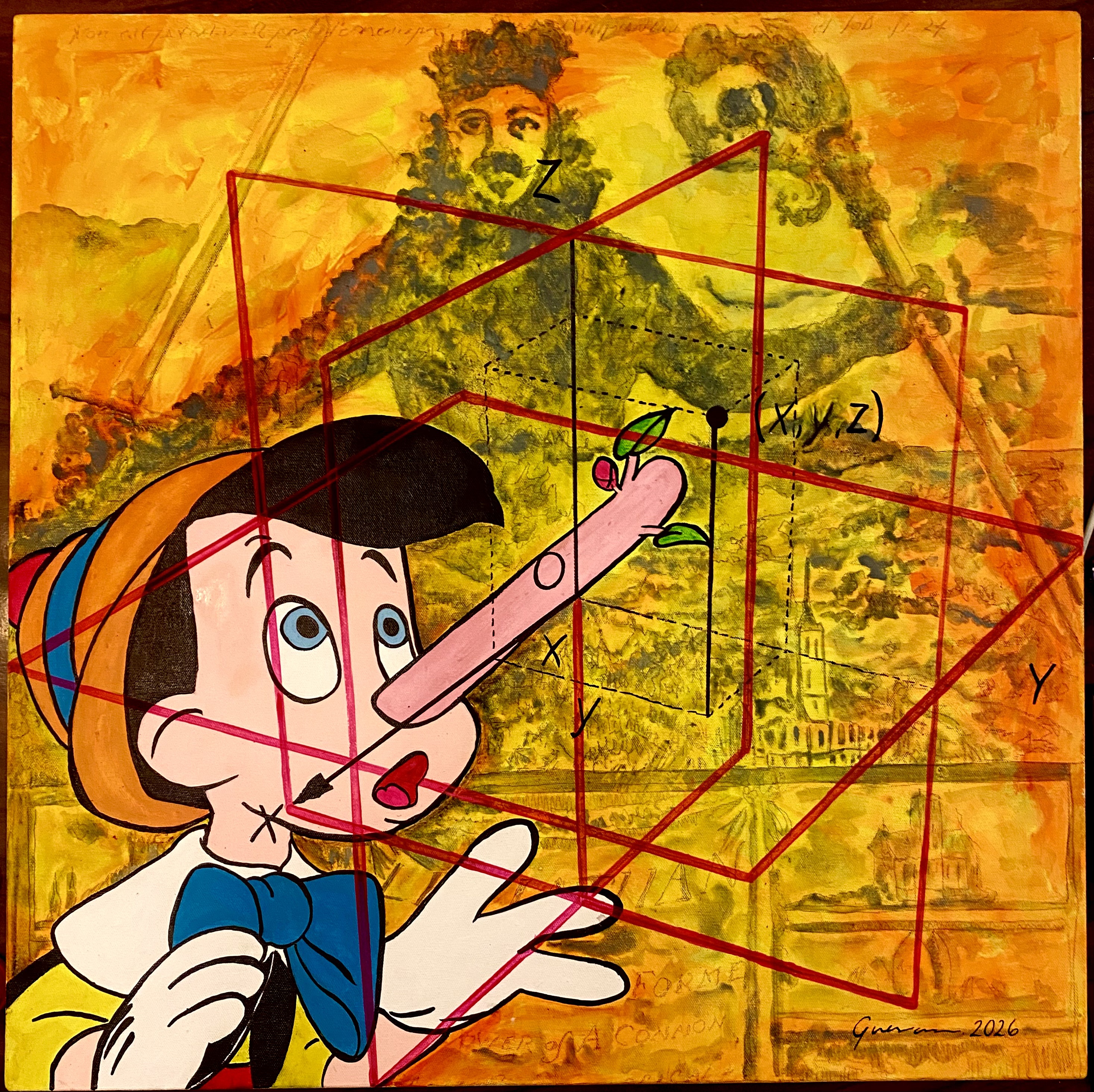
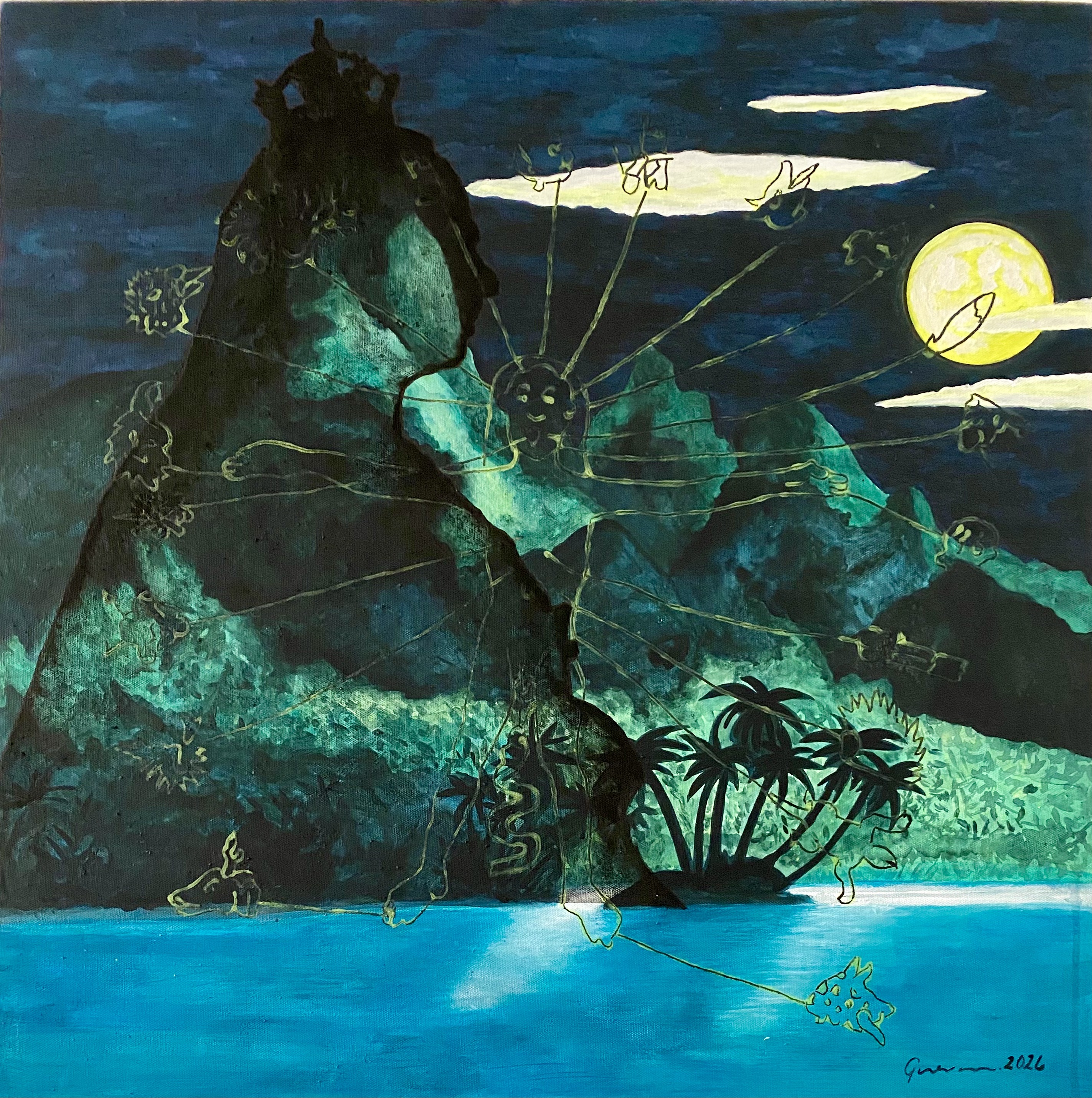
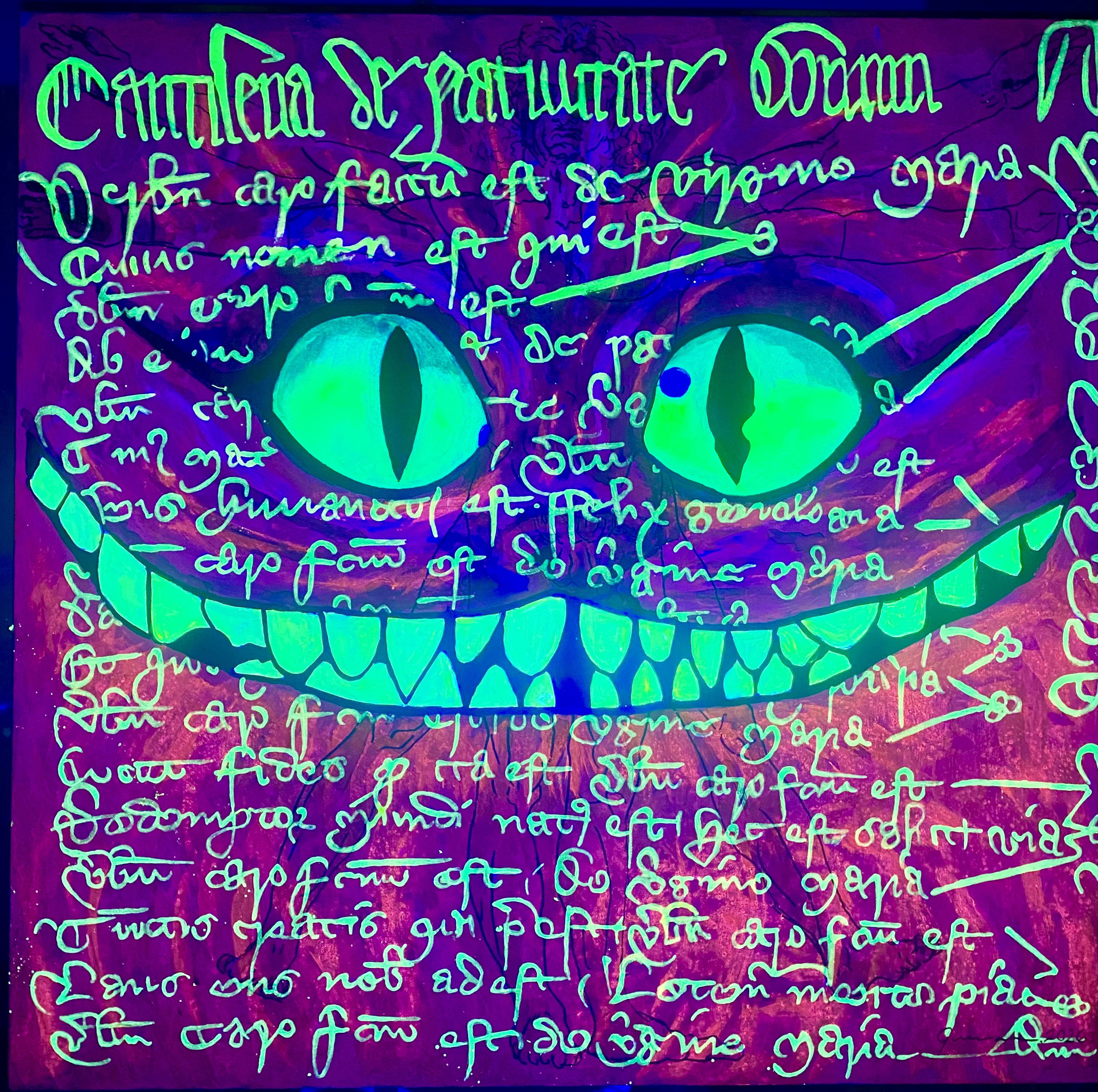
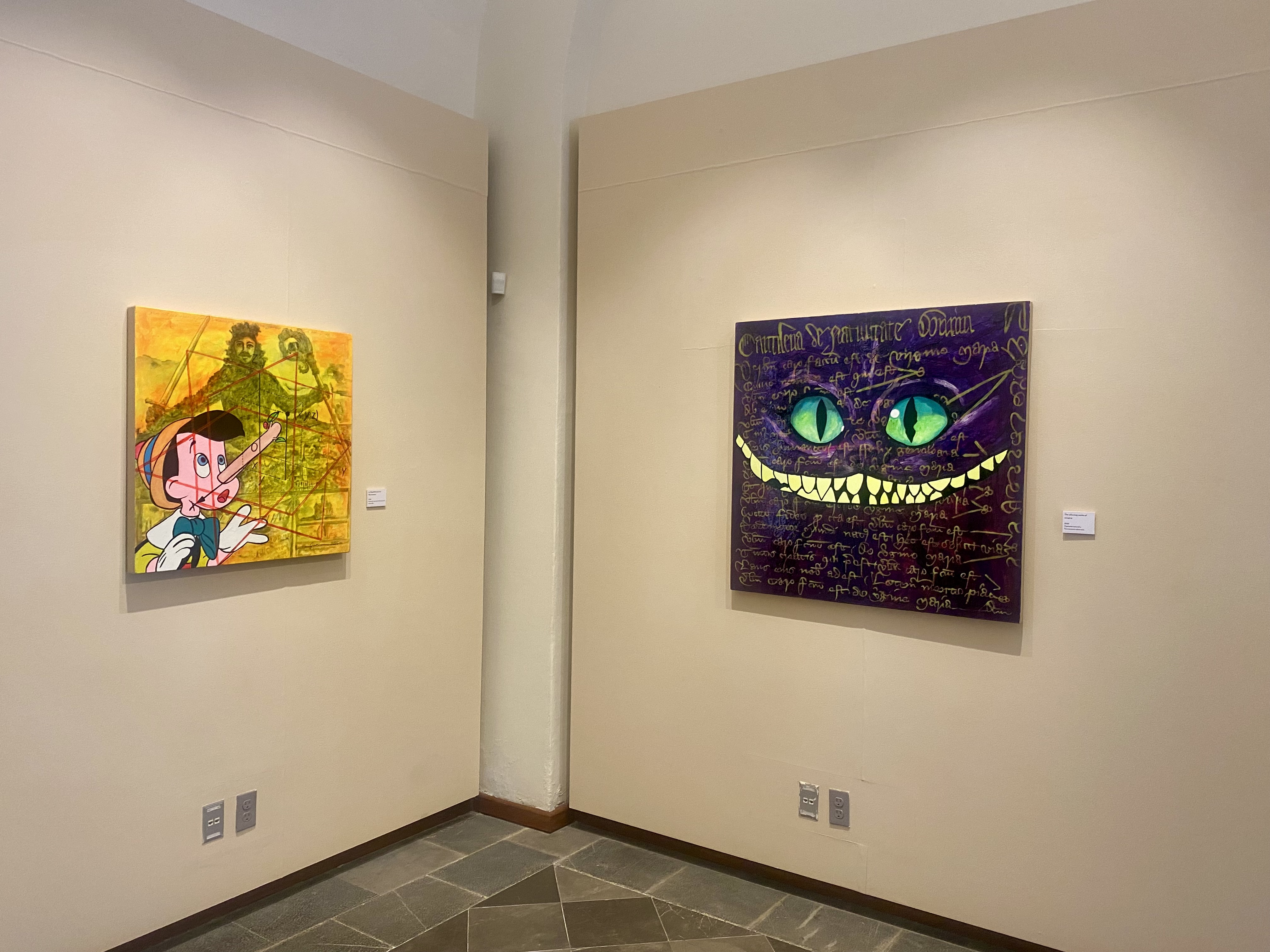
The gallery also presents a series of paintings examining the invention of the body and place through the visual culture of empire. Drawing on figures such as Alice in Wonderland, Peter Pan, Pinocchio, and Snow White, the works interrogate nineteenth-century constructions of gender, childhood, innocence, civilization, and the tropical. The series includes The Alluring Smile of Empire; Adverse Possession, which juxtaposes the silhouette of Queen Victoria with the imagined tropical landscape of Peter Pan; La República de las Marionetas (The Republic of Marionettes), which places Pinocchio in dialogue with Hobbes’s Leviathan to examine the fabrication of obedient political subjects and the relationship between sovereignty, discipline, and the modern nation-state; and The Fruit of the Tree of the Knowledge of Good and Evil, which brings together Snow White, the global history of the tomato, and the papacy’s implication in slavery and colonial expansion to question innocence, temptation, and the moral foundations of empire. Together, these works reveal how children’s literature, landscape, and popular imagery became powerful instruments in the invention of both the modern body and the places through which empire imagined, ordered, and governed the world.
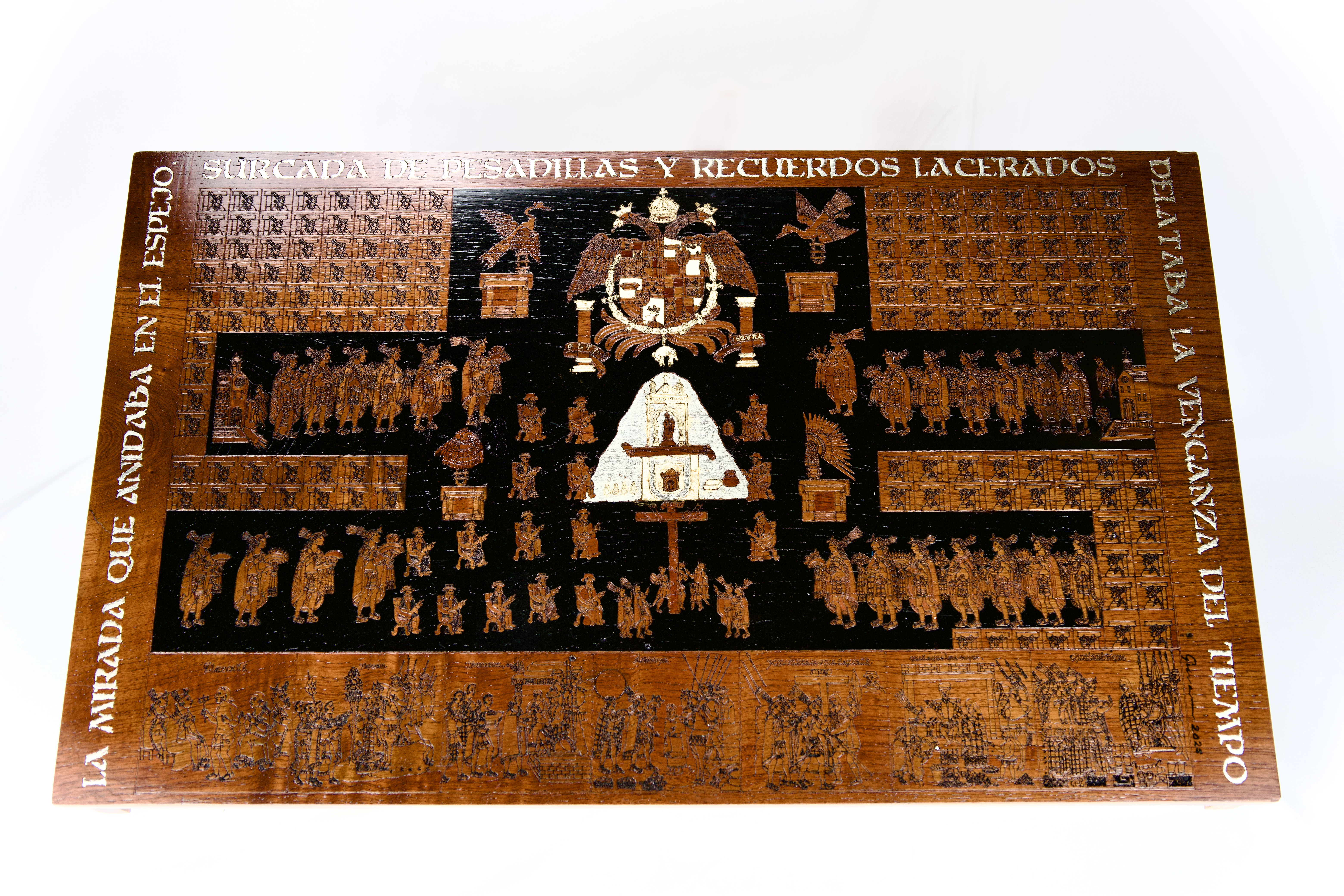
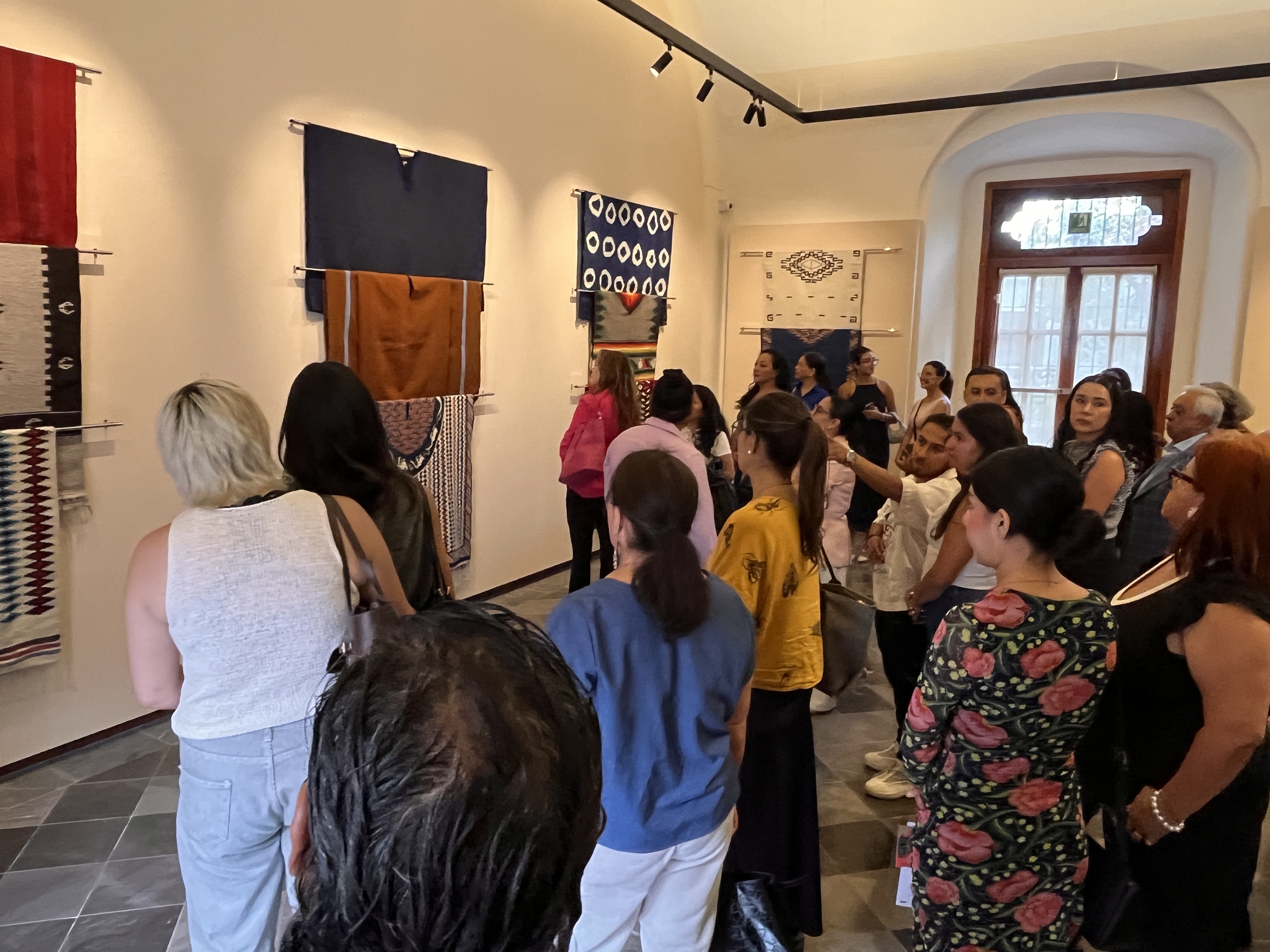
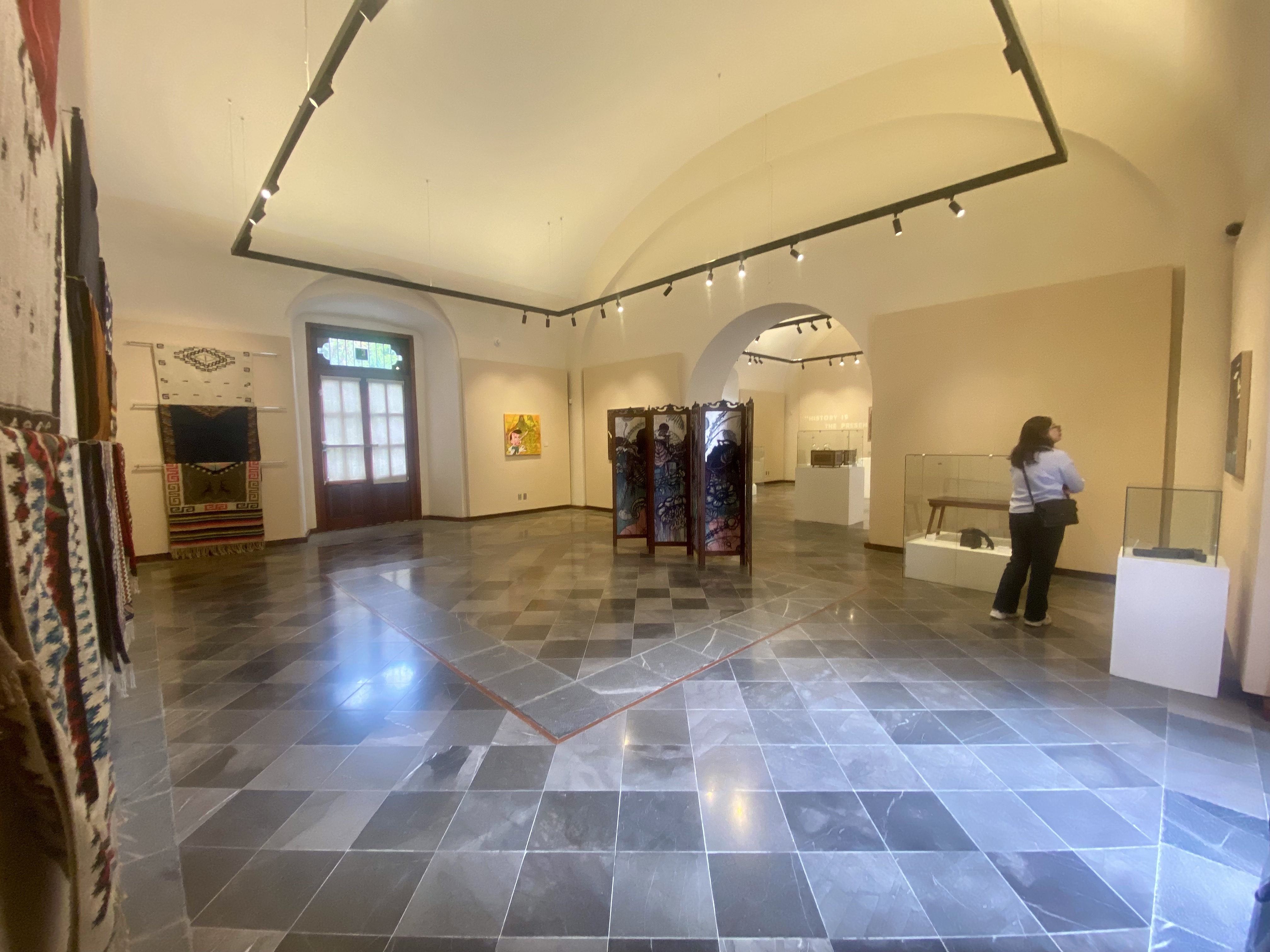
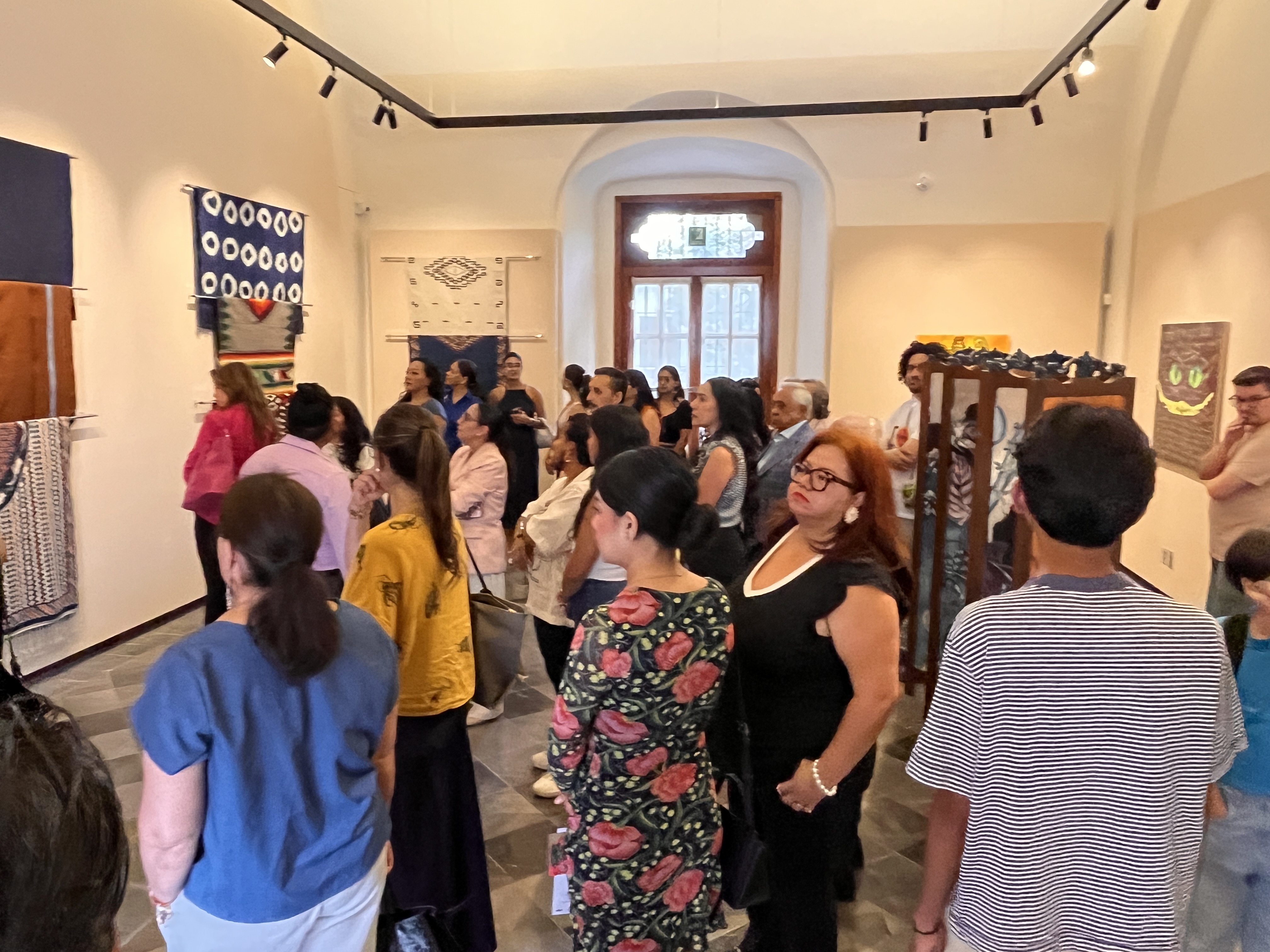
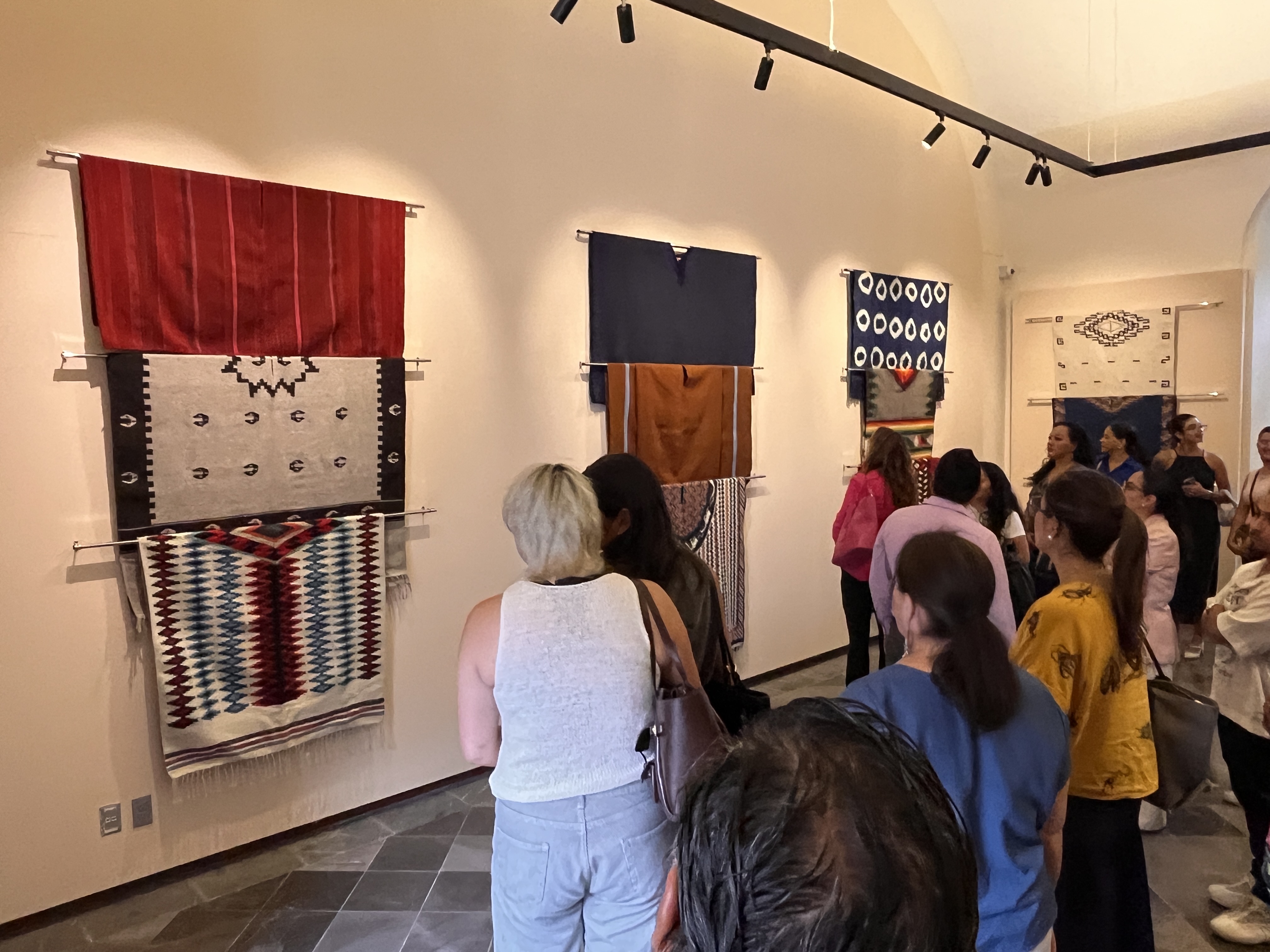
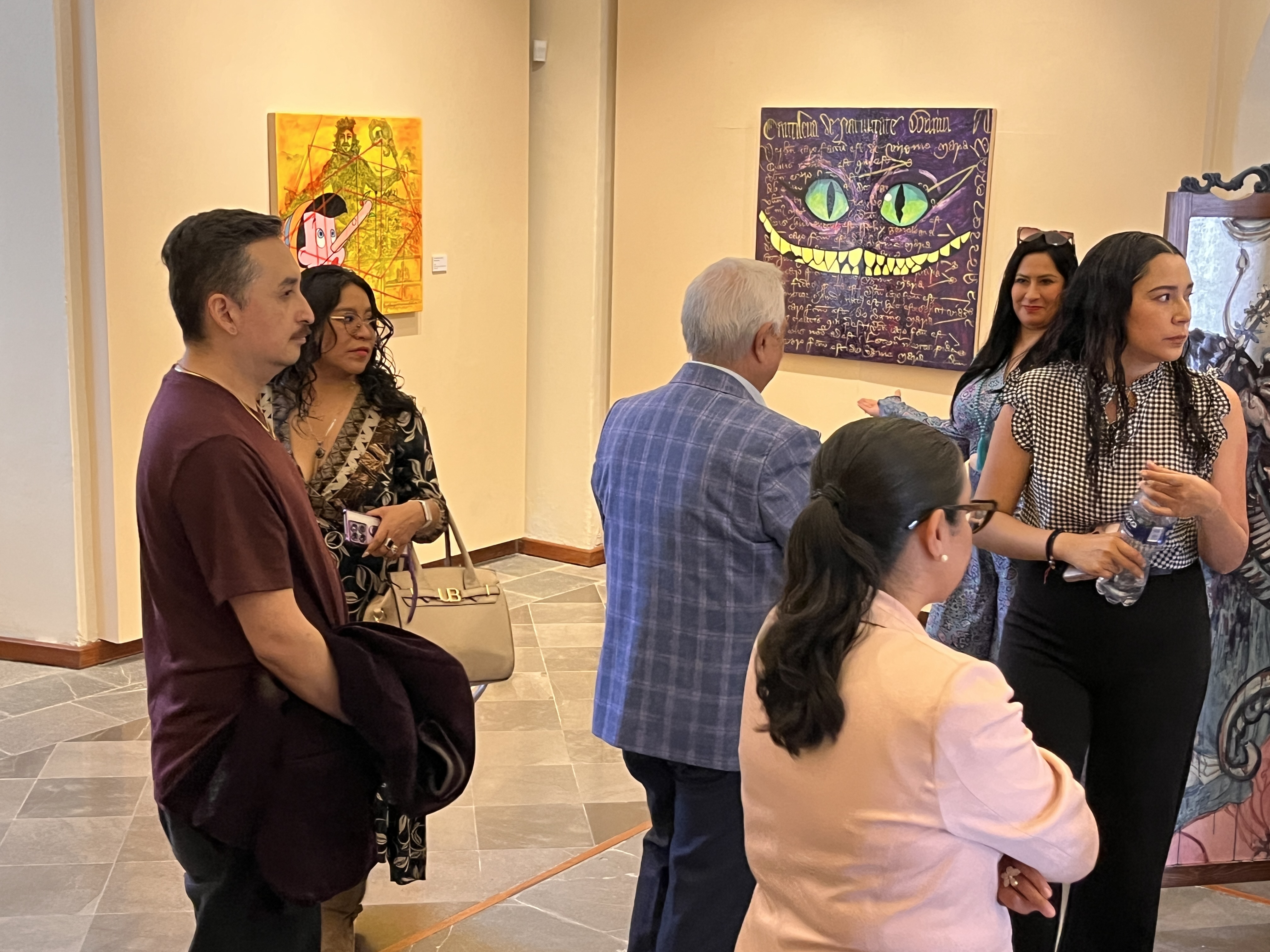
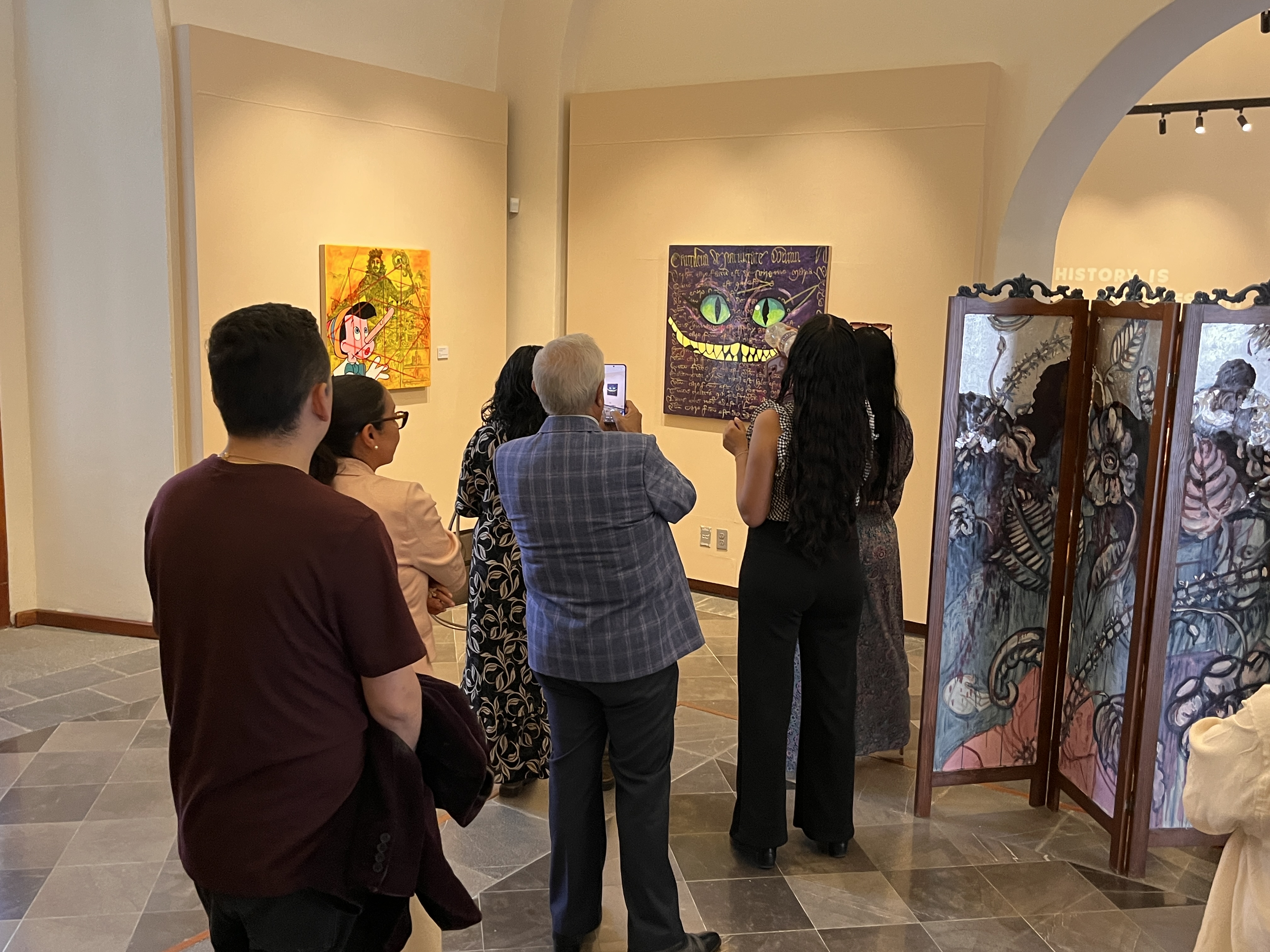
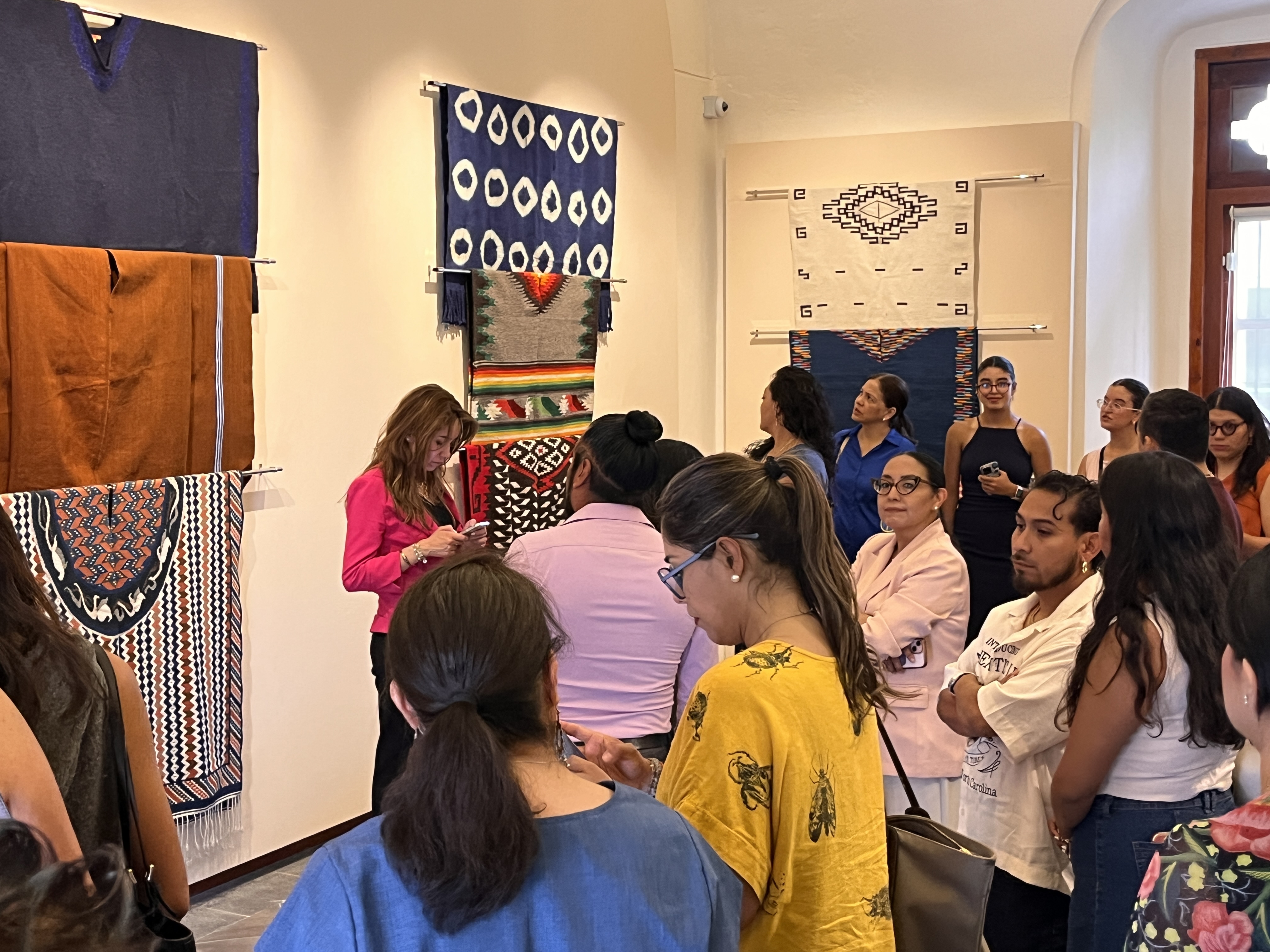
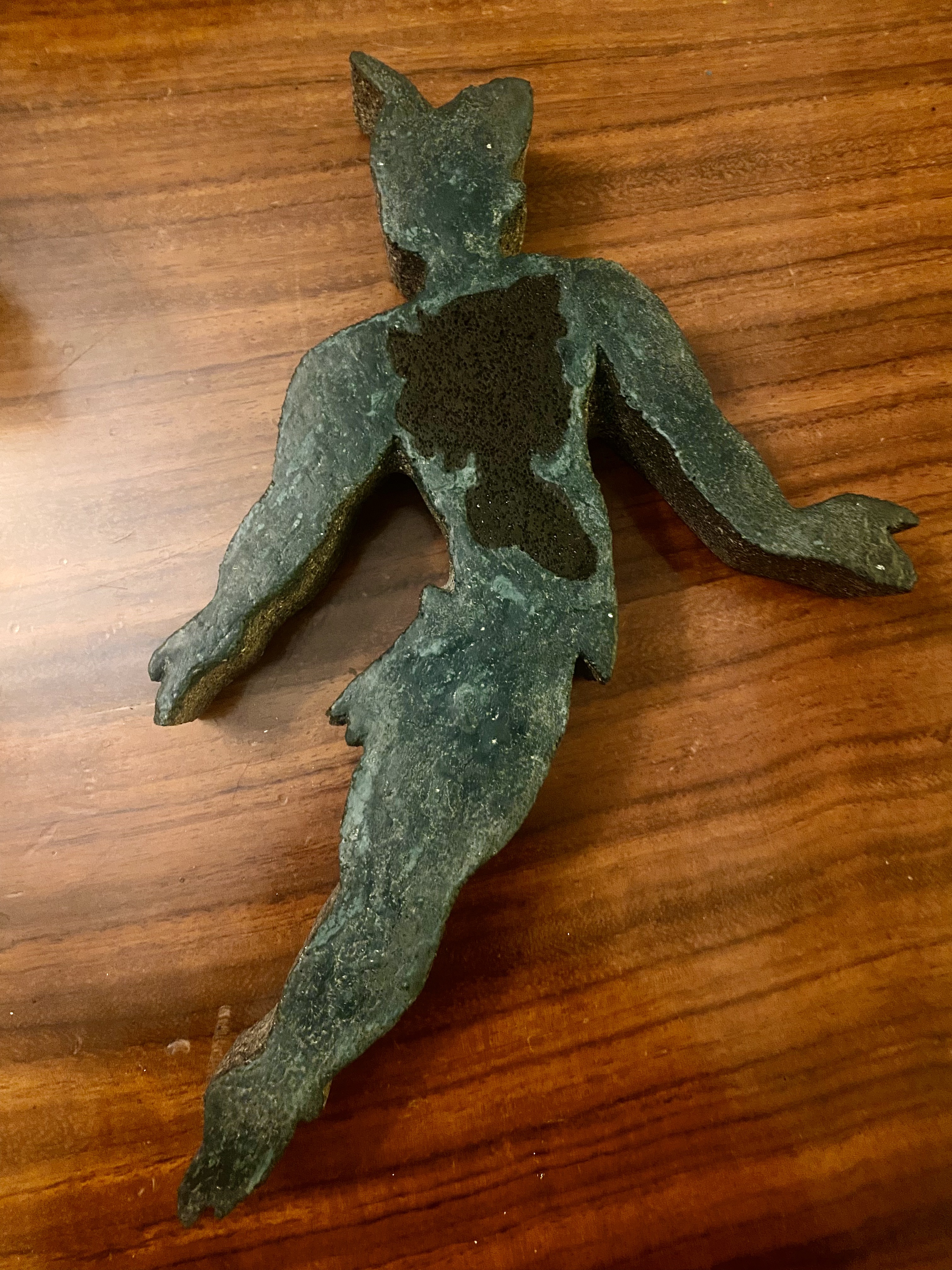
Alongside these paintings, the gallery turns to non-dominant forms of knowledge and technologies of memory through Libro Espejo, a bufete inspired by the estrado and based on the Lienzo de Tlaxcala; Bajo el Hábito, la Conquista, a bronze sculpture that reflects on extermination; and the Codex Borgia, presented as the base upon which the installation rests. Rather than functioning as historical references, these works propose alternative systems of representation, transmission, and remembrance that challenge the narratives of empire. The Codex Borgia grounds the gallery conceptually, framing extermination not as a completed historical event but as an unresolved condition whose legacies continue to shape the present. Together, these works affirm the persistence of non-dominant epistemologies and invite other ways of understanding body, place, and existence beyond the categories imposed by nation and empire.
MUSEUM PROGRAMMING
- GUIDED TOURS
- CONVENIENGS
- LECTURES
ARQUETOPIA
Arquetopia is not a museum or cultural center, nor is it a house for art. It is an unconventional space of disruption that centers mobility as the origin of the ethical problem and violence in the processes of artistic production, especially in Mexico and Peru. Its programs draw from diverse global knowledge and experiences, creating intersections to challenge perspectives and ways of seeing, particularly those that prioritize beauty over thought, aesthetics over responsibility, or irony over awareness.
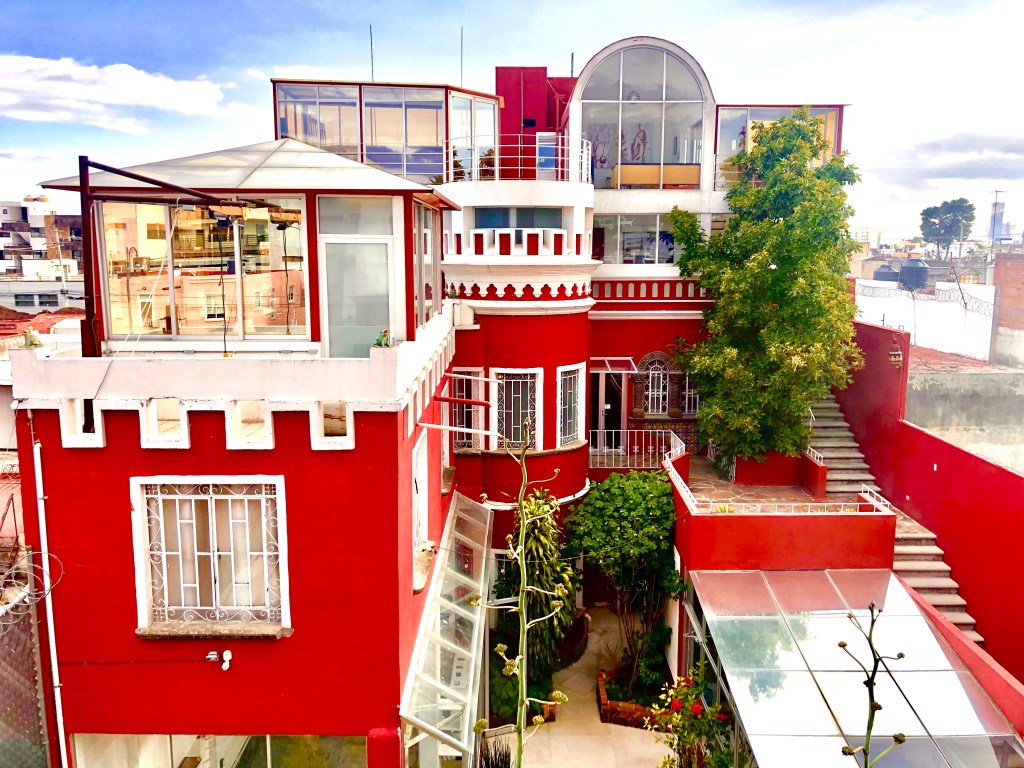
On its 15th anniversary, Arquetopia positions itself as the anti-residency, distancing itself from the exploitation that art often promotes and reimagining the artist as an agent of change. However, an agent of change is not the creative genius inspired by nature, nor the one who views social changes with suspicion, only to benefit from its abstraction and representation. Rather, they are the persons who daily seeks new forms of coexistence without losing sight of the injustices occurring around them.
This compels us to recognize, that the only viable path is the anti-colonial one, rooted in reciprocity and collaboration, challenging relationships between class, geography, and species, and consistently referencing colonialism while actively opposing neo-imperialism. Community must be understood as more than a place to visit or an extension of landscape, and under no circumstances can it be evaluated or rated based on customer satisfaction. Reciprocity entails questioning ourselves critically while extending a hand generously to walk together into the unknown.
This is how Arquetopia celebrates its fifteenth anniversary, reaffirming its commitment to remain a critical, dynamic, and creative space where ethics always take precedence and the responsibility to challenge racism, sexism, and classism is shared with artists.
Are you interested in collaborating? Contact us here http://www.arquetopia.org/
EMBASSY PROGRAM ARQUETOPIA
FRANCISCO GUEVARA | ARTISTA Y CURADOR
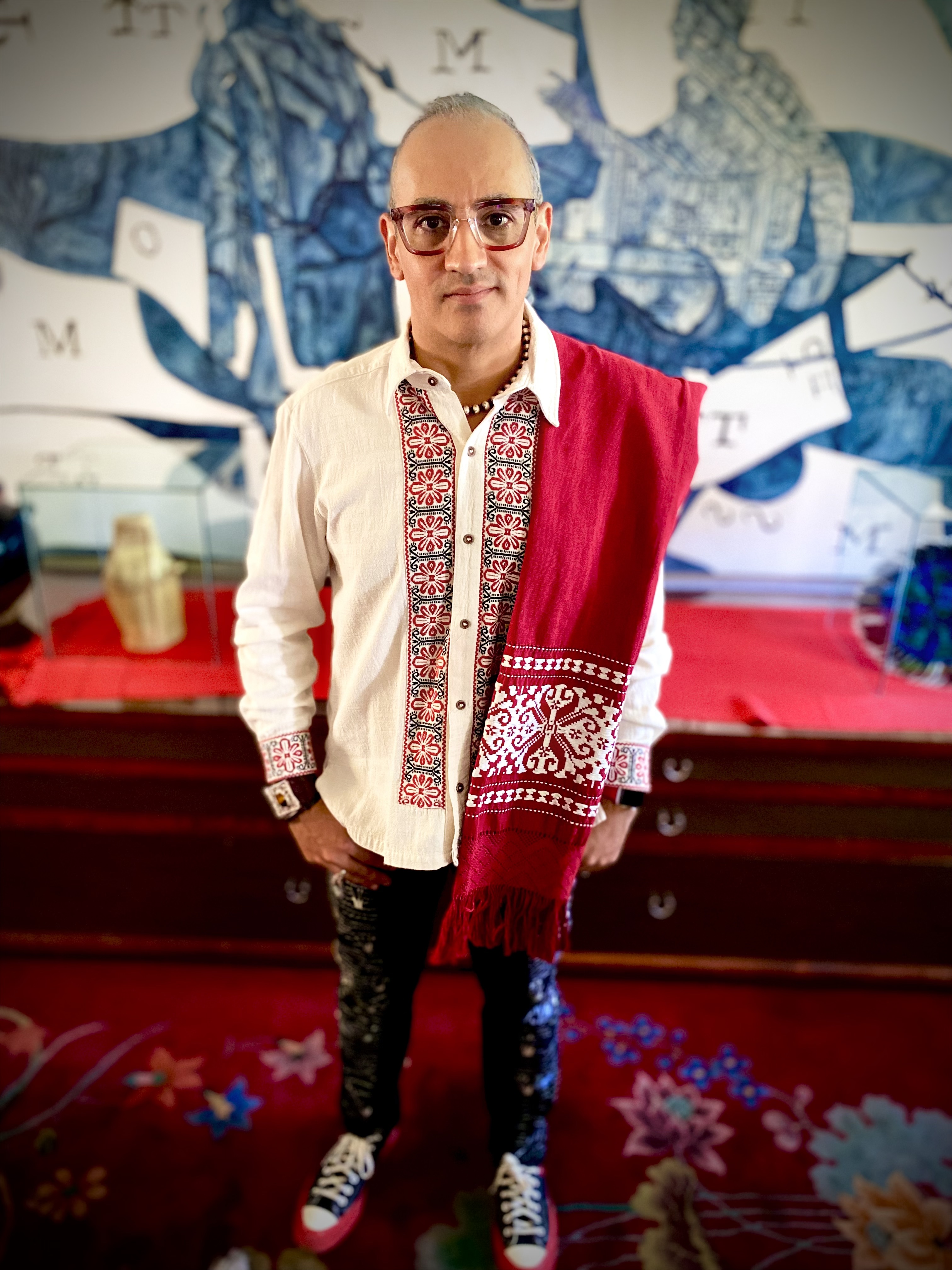
Francisco Guevara is a visual artist and independent scholar whose conceptual practice reveals the entanglements between art, power, and the writing of art history. His work examines how violence is produced through the construction of identity and the body, using materials that carry both historical and ethical weight. Working across painting with organic pigments, installations involving food, and the use of precious materials such as feathers, silver, and gemstones, Guevara explores how visual culture shapes our perception of history, beauty, and society.
In 2025, Guevara celebrates twenty-five years of artistic practice. He has exhibited widely in solo and group shows internationally. His most recent exhibitions—Omens of Empire at GARCO, Treasures of Adverse Possession at the Consulate of Mexico in San Francisco, Ethos of Transfiguration at the Museo Universitario Casa de los Muñecos (BUAP), and De lo Bello a lo Invisible at the Museo José Luis Bello y González—have renewed interest in his work, particularly for its collaboration with museums and permanent collections to explore themes of coloniality, color, and the ethics of extraction. His work is part of major public and private collections including Museo Jumex, Museo Dolores Olmedo Patiño in Mexico City, the Salma Hayek–Pinault Collection, and the Margrethe II Collection in Denmark.
Guevara studied Law at the Escuela Libre de Derecho, International Relations at ITAM, and Art at BUAP and the Universidad del Claustro de Sor Juana. Early in his career, he was mentored and supported by the renowned collector Dolores Olmedo Patiño. He later completed postgraduate studies in Development Cooperation Project Management (UNED, OEI, and CIDEAL), Cultural Management and Communication (FLACSO Argentina), and earned the Ferrán Adrià Chair diploma from Universidad Camilo José Cela. He is currently pursuing studies in Art Historiography at the University of New Mexico under the mentorship of Dr. Kirsten Pai Buick.
Guevara is the co-founder of Arquetopia Foundation, an internationally recognized nonprofit arts foundation with sites in Puebla, Oaxaca (Mexico), and Cusco (Peru). Since 2009, Arquetopia has fostered social transformation through educational, artistic, and cultural programs. Guevara specializes in anticolonial ethical models applied to cultural ecosystems and in the analysis of contemporary artistic practices. His essays, critical texts, teaching methods, and lectures have been disseminated internationally and translated into several languages. His work spans international cooperation, alternative economies, intangible heritage, and visual arts education.
SPONSORS AND COLLABORATORS
Arquetopia Foundation and International Artist Residencies


Hola Paco,
First and foremost, congratulations! I am extremely proud of this great exhibition.
I lost track, probably because shortly after my solo show, when I returned back to Brazil,. we moved. From Rio to Sao Paulo. But I remembered you had planned an exhibition in Rio. One of your series with the Mexican Embassy (or government). I wonder how that went; just curious.
Best! Miguel