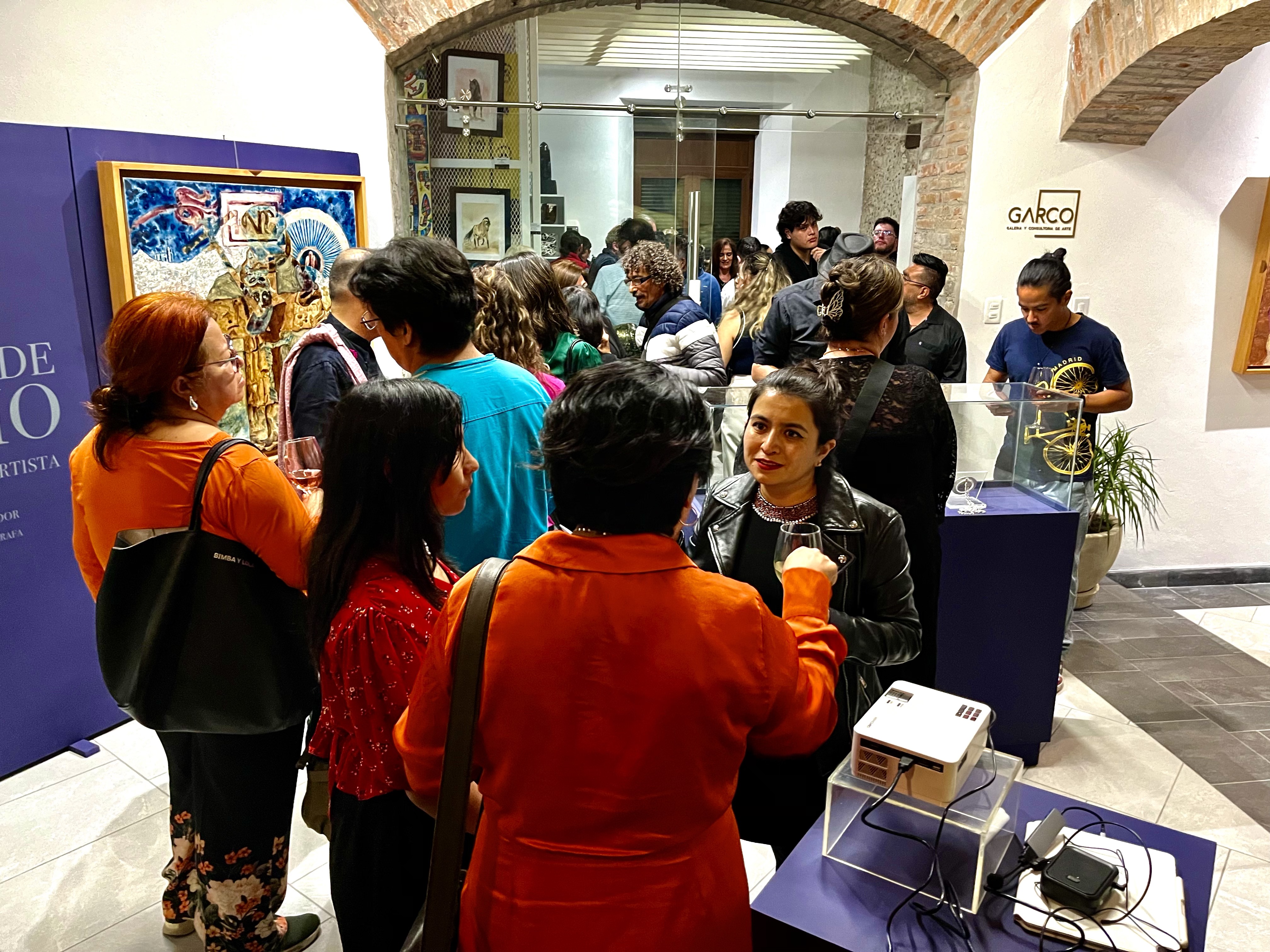
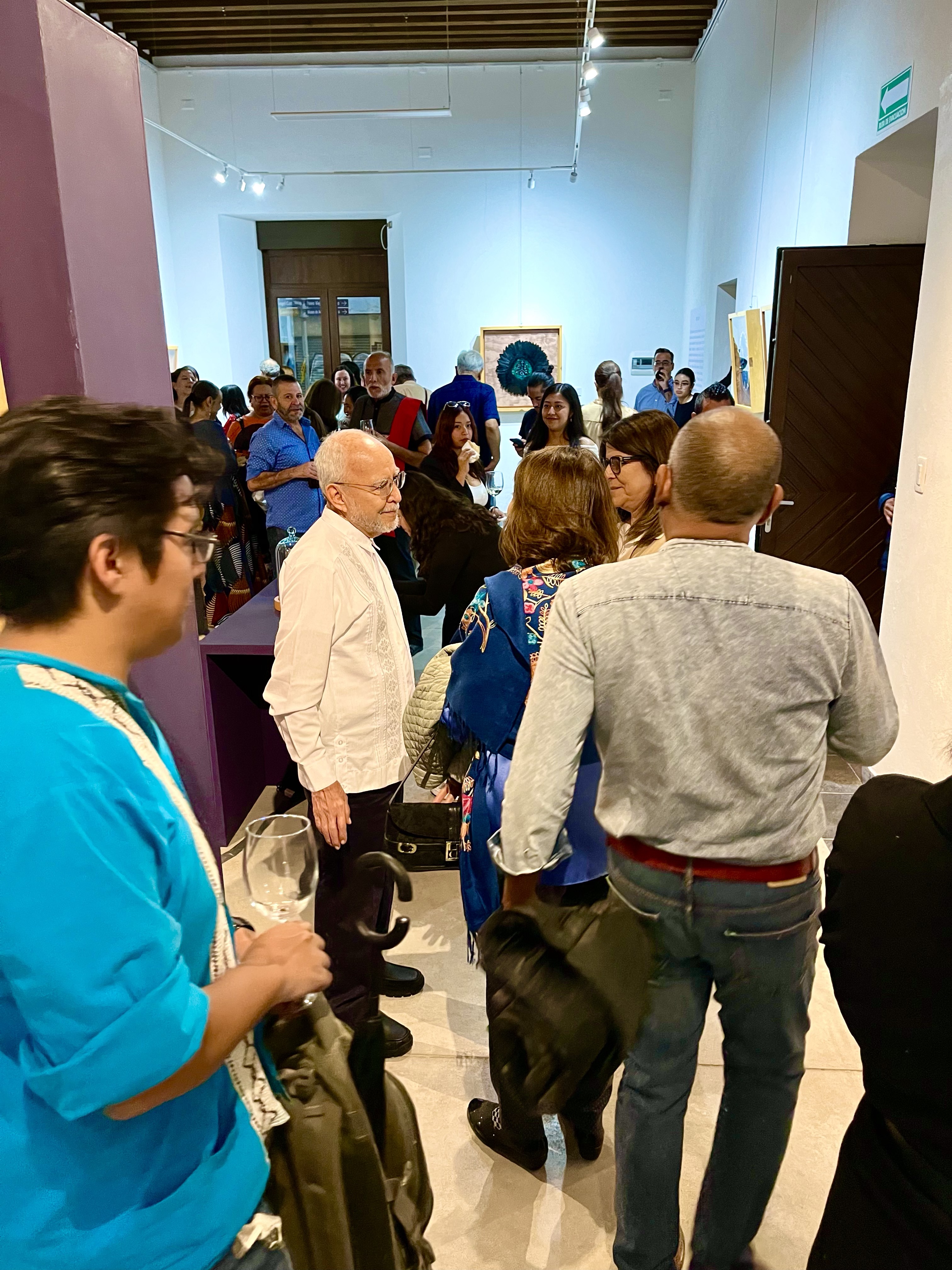
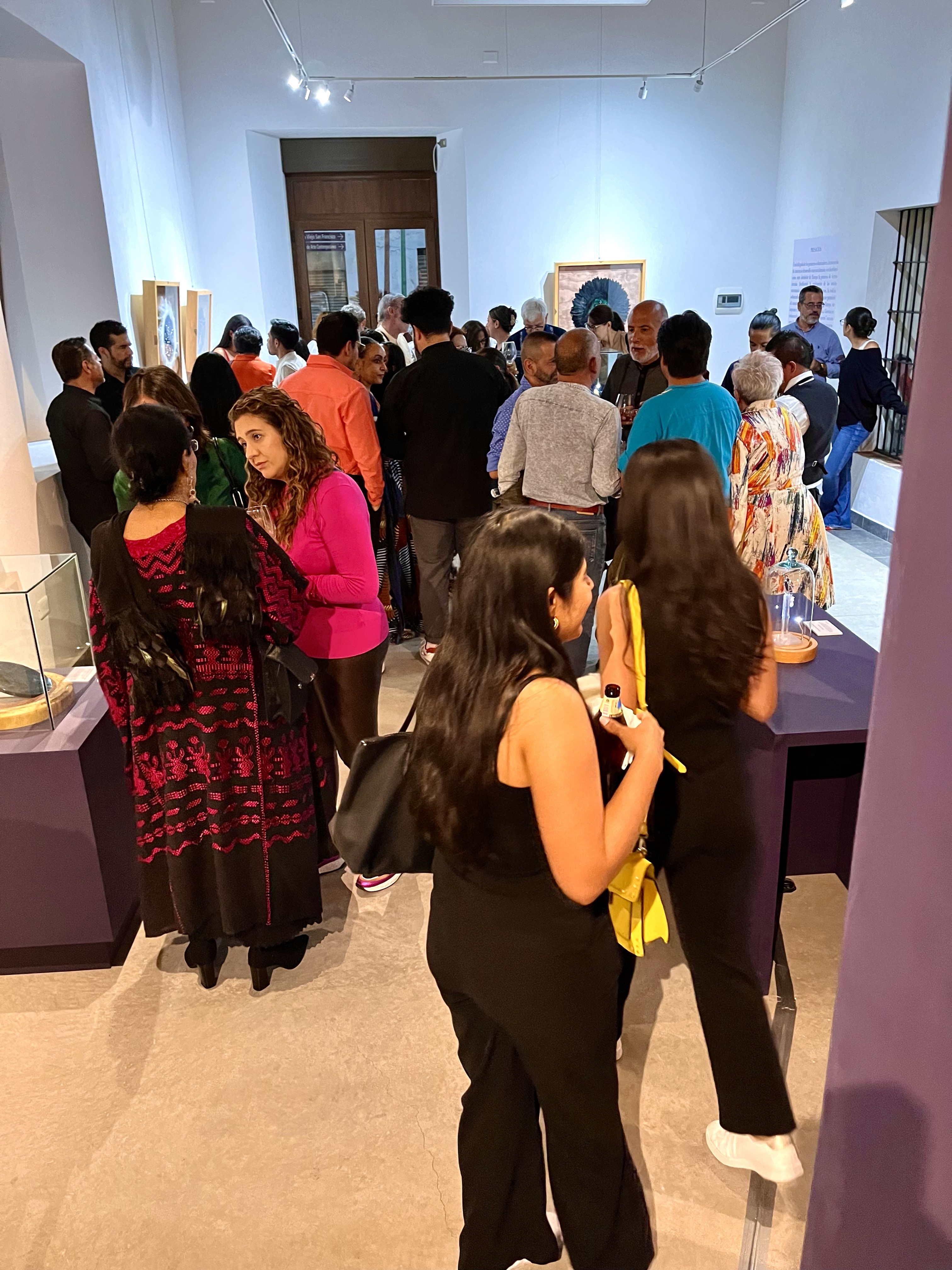
OPENING RECEPTION
FRIDAY AUGUST 9, 7:00 PM TO 10:00 PM
GARCO GALERÍA Calle 2 Oriente #1402 (esquina 14 Norte), Barrio de la Luz, Puebla, Pue. 72377.
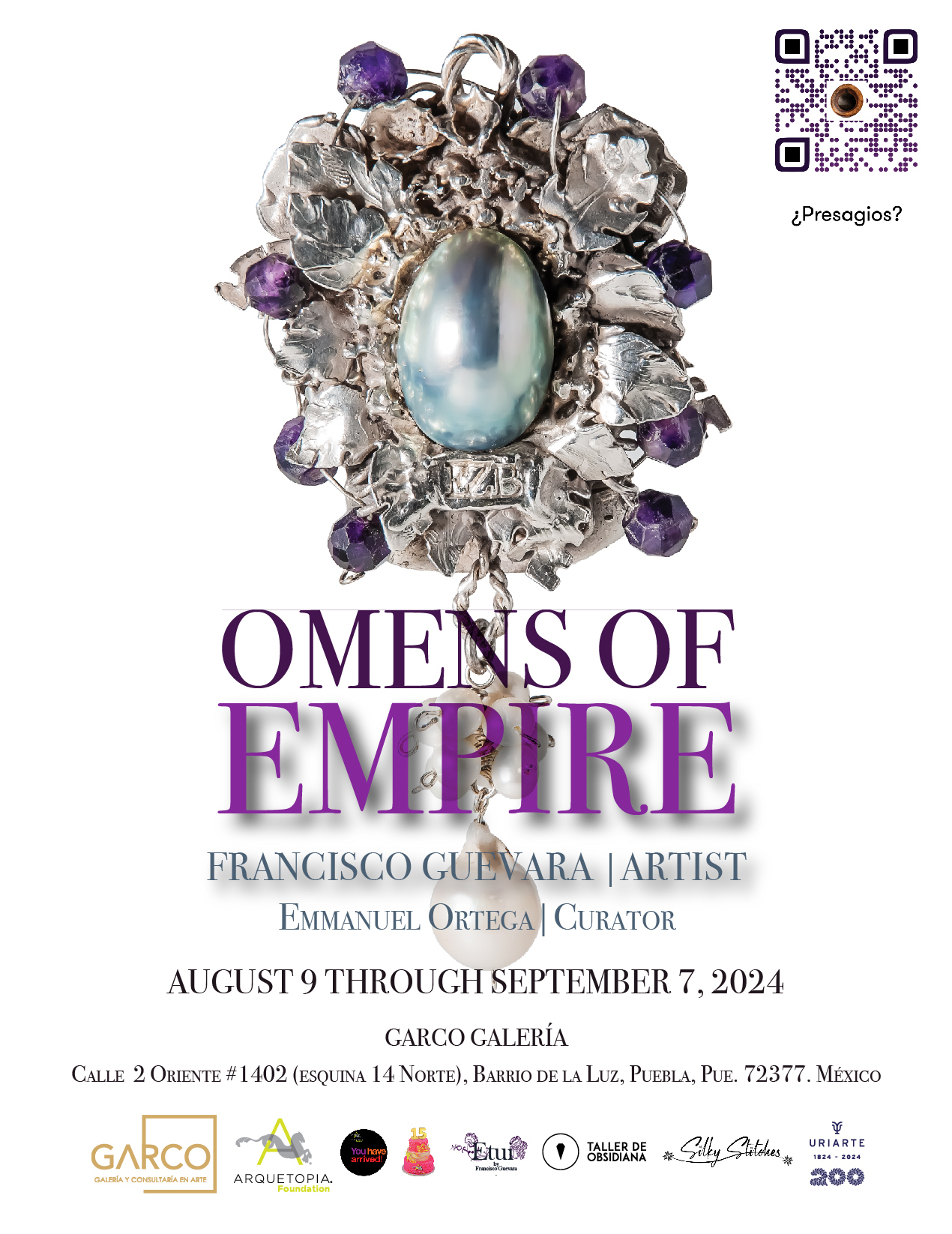

The materiality of Empire is intrinsically linked to the violence that engendered it. In Omens of Empire, Francisco Guevara explores the visual, material, and historical intersections that shape imperial narratives, presenting them in three chapters: Origin, Omens, and Violence. In this exhibition, Guevara questions the idea of personal aesthetics through selected materials, such as indigo, cochineal, and silver, revealing them as historical goods and their potential for accumulating wealth extracted from the American continent through violence and colonial labor. The origin of Empire is unveiled in the omens and materializes in the violence that becomes normalized in daily life through visual culture. Guevara approaches the notion of art from its chemical composition, materiality, and artistic perspective to make evident the structure that upholds Empire. From the capital letters of the word E.M.P.I.R.E., inspired by the choir books of the Puebla Cathedral, and referencing the seemingly syncretic mural painting in the Casa del Dean, to the gems and precious stones that reflect not only the accumulated wealth of religious orders in Mexico but the medieval superstition inherited from Europe, to the portrait painting of mythical figures that continues to glorify dreams of violence, subjugation, and exploitation of life transformed into landscape. Guevara offers us a space where the silences of history are transmuted into brilliant, complex, and deceptive apparitions.

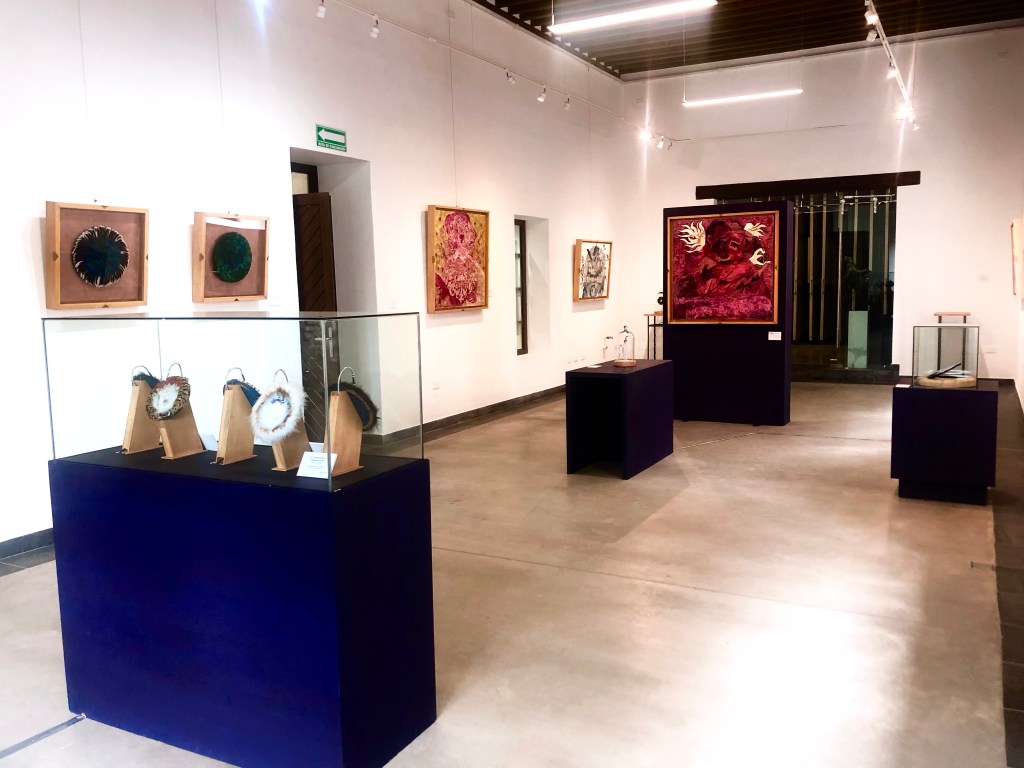

With the arrival of the first colonizers, the invention of America unfolded as a fantasy, and the promise of golden lands was spread throughout Europe as a myth. Justifying the exploitation of the newly discovered vaults of precious minerals, colonial greed developed a grand imagination that ensured the constant influx of material goods to Europe, regardless of the abuse and violence. In this gallery, Guevara focuses on the omens that herald “Empire” with a series of works that combine the preciousness of extracted techniques and materials, with the myths that sustain their relevance. With a long history, adverse possession has become a commonplace practice. It is the foundation of colonialism and the central legal principle that remains fundamental to global legislation, particularly in the U.S. and Europe. Since the 16th century, “such taking of possession without consent has been equally applicable to bodily violations of all kinds” (Mirzoeff, N. January 17, 2023). Through these historical forms of representation, the projection of desires for power has continuously defined entire continents, as well as their inhabitants and knowledge, and even their future. In this sense, Modernity has normalized abuse and violation, visualizing them as necessary elements for the triumph of colonialism, establishing a tradition that still persists today. In this chapter, indigo, silver, and various forms of maps intersect to reveal the “performative” aspect of extermination in relation to corporeality, as power establishes spatial relationships.
One of the most striking forms of violence brought by colonization was the transformation of our relationship with the environment. We shifted from a world where the relationships between species were disrupted, to establish a colonized universe where our space signifies nothing more than property, exploitation, and consumption in the service of power. The main figures who carried the banner of this transformation have gone down in history as legends of modernity—mythical characters who, at the cost of extermination, promised a new era of “progress, development, and prosperity.” Guevara presents us with a series of monstrous apparitions inspired by these historical figures, immortalized by equally mythologized artists. Their portraits dissolve into the violence of the landscape and the artistic materials, products of extraction and the fruits of their own enterprises. Guevara collapses the traditions of landscape and portrait with the iconography and materiality of art, in a series of works that represent the true violence produced by the origin and omens of the empire.
Dr. Emmanuel Ortega, Curator. July, 2024
PROMO VIDEOS
EDUCATIONAL PROGRAMING
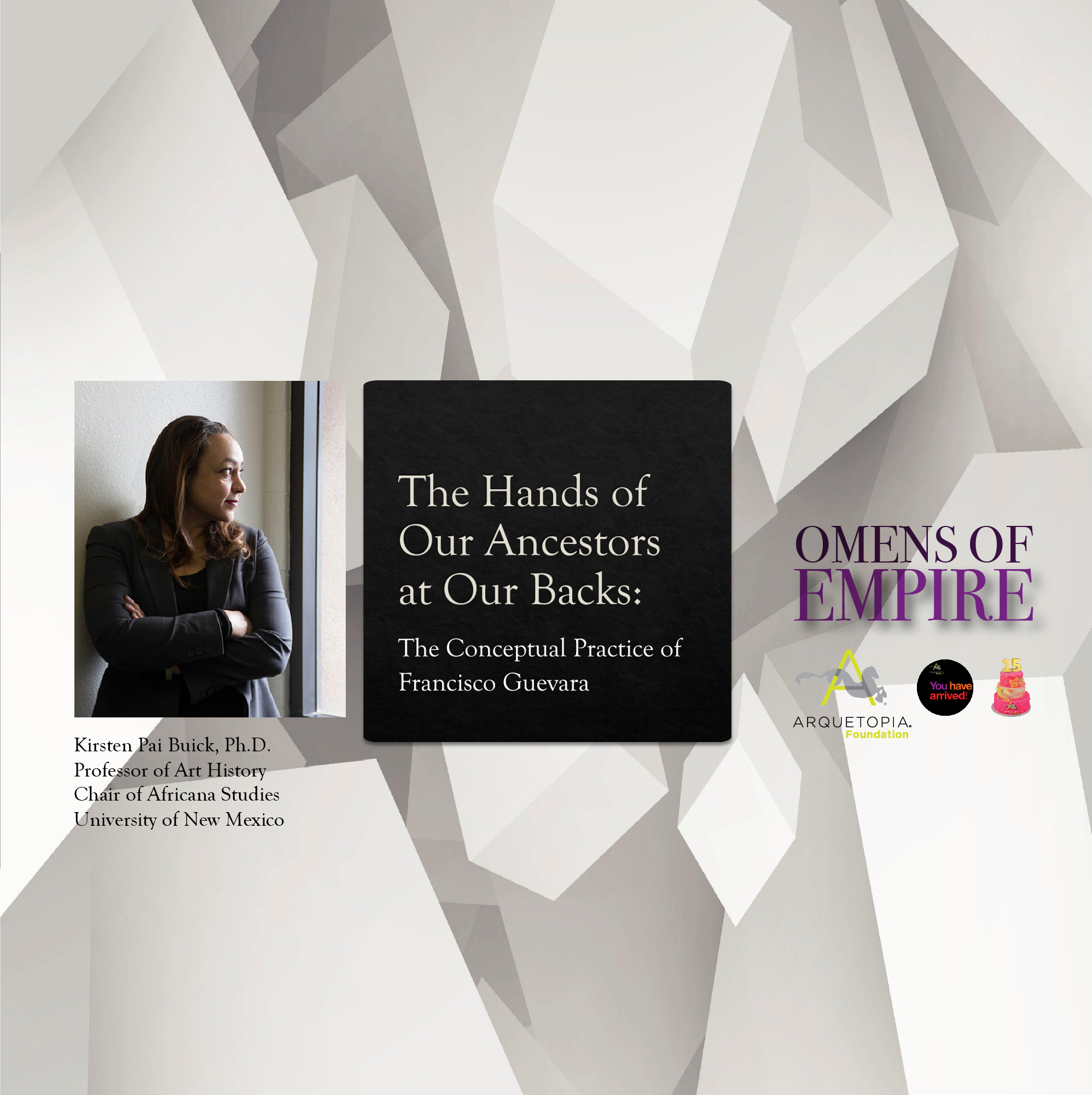
Dive deep into the work of Francisco Guevara—visual artist, activist, curator, and independent scholar. This lecture, connected to the contemporary art exhibition *Omens of Empire (Presagios de Imperio),* will be led by Dr. Kirsten Pai Buick. Conceptual artists use whichever materials and forms are most appropriate to convey their ideas, resulting in vastly different types of artworks that can range from performance to writing to everyday objects. These artists explore the possibilities of art-as-idea and art-as-knowledge, incorporating linguistic, mathematical, and process-oriented dimensions of thought, as well as invisible systems, structures, and processes. Francisco Guevara’s “object” is “Empire”—and the various acts of oppression deployed to shape our realities according to class, ability, nation, gender, and race or ethnicity. This lecture will examine his conceptual practice, including his pioneering work with Arquetopia’s “anti-residency” model.
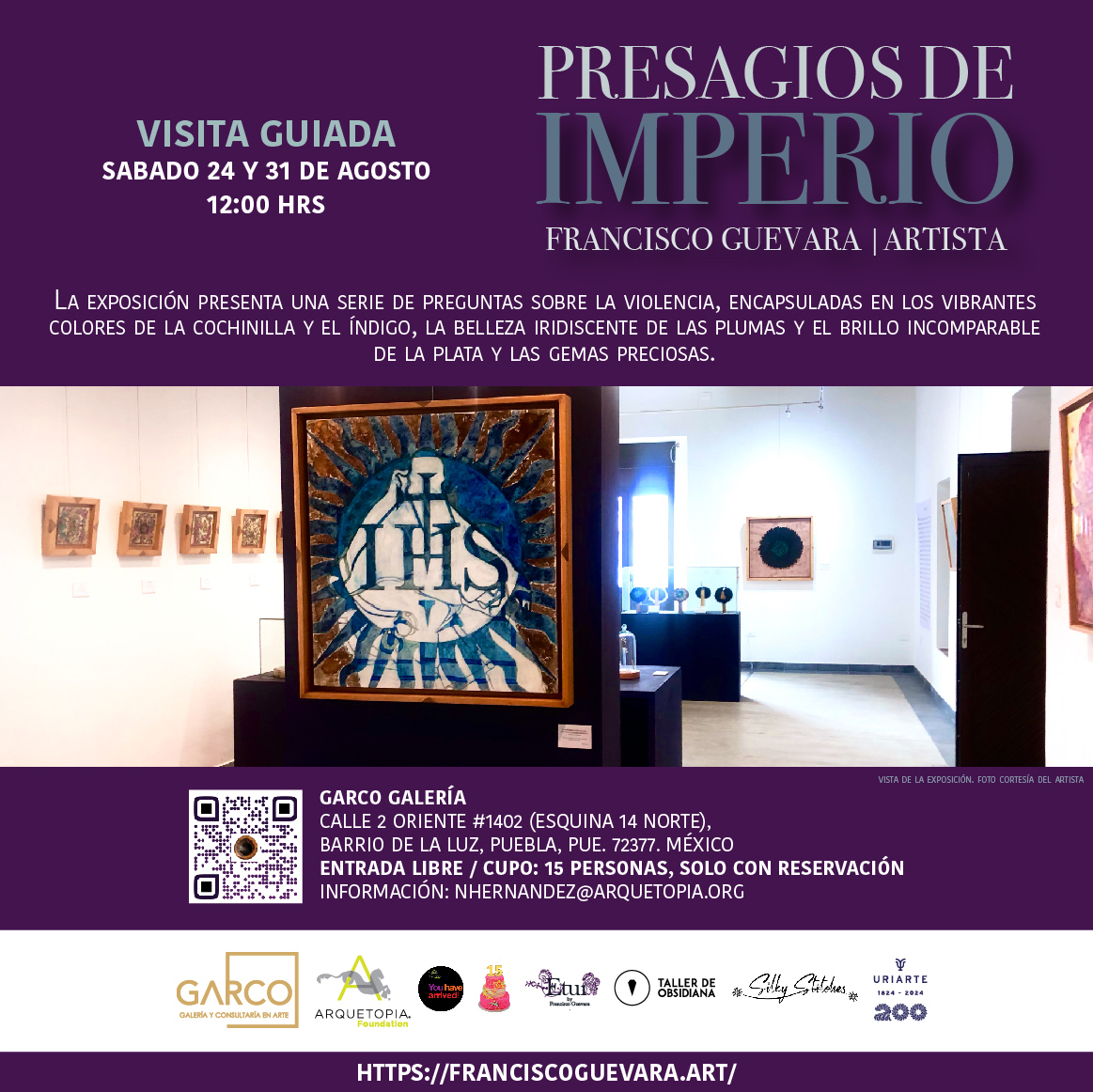
- GUIDED TOURS
ARQUETOPIA
Arquetopia is not a museum or cultural center, nor is it a house for art. It is an unconventional space of disruption that centers mobility as the origin of the ethical problem and violence in the processes of artistic production, especially in Mexico and Peru. Its programs draw from diverse global knowledge and experiences, creating intersections to challenge perspectives and ways of seeing, particularly those that prioritize beauty over thought, aesthetics over responsibility, or irony over awareness.
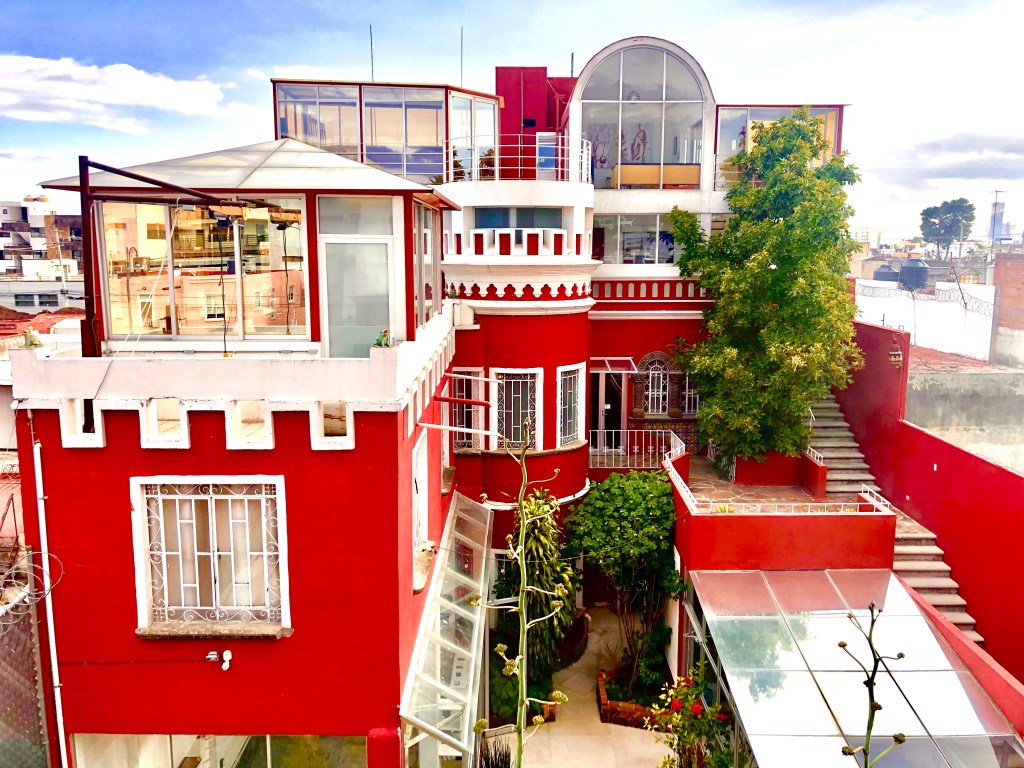
On its 15th anniversary, Arquetopia positions itself as the anti-residency, distancing itself from the exploitation that art often promotes and reimagining the artist as an agent of change. However, an agent of change is not the creative genius inspired by nature, nor the one who views social changes with suspicion, only to benefit from its abstraction and representation. Rather, they are the persons who daily seeks new forms of coexistence without losing sight of the injustices occurring around them.
This compels us to recognize, that the only viable path is the anti-colonial one, rooted in reciprocity and collaboration, challenging relationships between class, geography, and species, and consistently referencing colonialism while actively opposing neo-imperialism. Community must be understood as more than a place to visit or an extension of landscape, and under no circumstances can it be evaluated or rated based on customer satisfaction. Reciprocity entails questioning ourselves critically while extending a hand generously to walk together into the unknown.
This is how Arquetopia celebrates its fifteenth anniversary, reaffirming its commitment to remain a critical, dynamic, and creative space where ethics always take precedence and the responsibility to challenge racism, sexism, and classism is shared with artists.
Are you interested in collaborating? Contact us here http://www.arquetopia.org/
ARQUETOPIA EMBASSY PROGRAM
In celebration of its 15th anniversary, Arquetopia, in collaboration with the Government of Mexico and through its Embassies, Consulates, and various institutions, is launching an extensive program of touring exhibitions focusing on critical themes aimed at reaching diverse audiences. These exhibitions will be presented at various international venues, including:
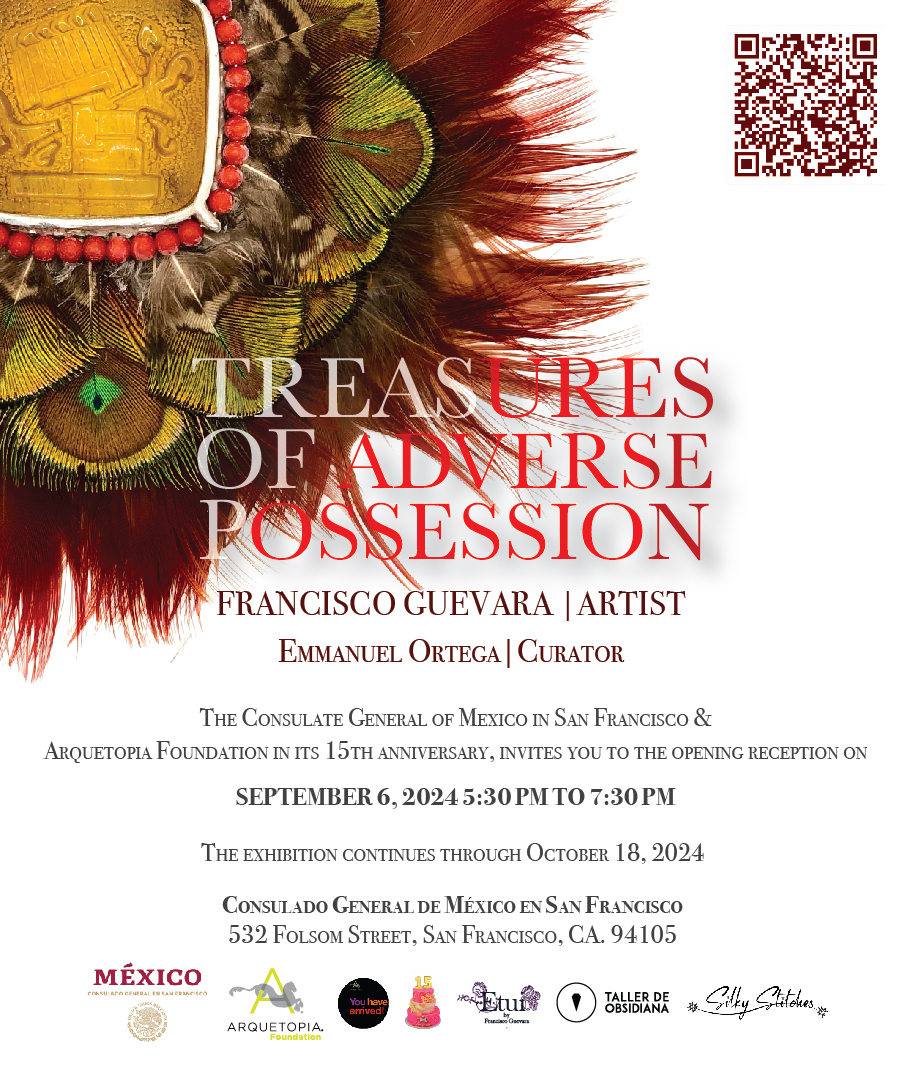
“Treasures of Adverse Possession” 2025-2027
- USA
- Consulate General of Mexico in San Francisco
- Consulate General of Mexico in los Ángeles
- Consulate General of Mexico in Sacramento
- Consulate General of Mexico in Phoenix
- Consulate General of Mexico in New Orleans
- Consulate General of Mexico in Atlanta
- Consulate General of Mexico in Raleigh
- Consulate General of Mexico in New Brunswick
- México
- Museo Universitario Casa de los Muñecos BUAP, Puebla
- Centro de las Artes San Agustín, Oaxaca
- Brasil
- Museu Historico Nacional / Consulado de México en Río
- Nigeria
- Embassy of Mexico in Nigeria
FRANCISCO GUEVARA | ARTIST & CURATOR
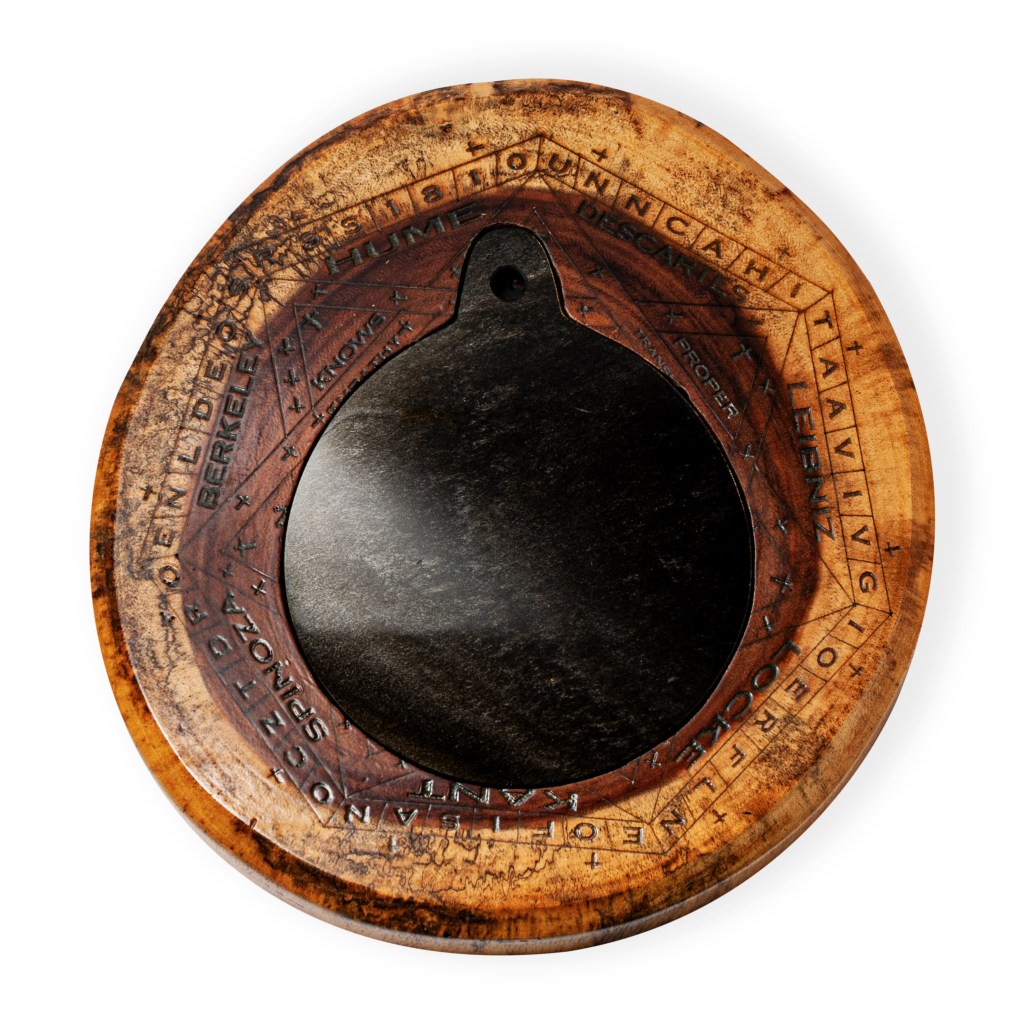
rancisco Guevara is a visual artist, independent scholar and curator based in Mexico and Peru. He specializes in Levinasian ethics applied to the design of cross-cultural artistic projects, and the analysis of performativity in contemporary art practices. His experience spans more than 20 years of designing, curating, and managing art projects through visual arts education, and international cooperation to promote social change. His essays and critical texts focus on place and history as ideological distortions, and address subjects such as contemporary art practices, historiography of art, and the artist residency field, and have been featured in numerous international publications. As of 2009, Guevara is co-founder and Co-Executive Director of Arquetopia, a non-profit foundation and transnational artist residency program promoting Development and social transformation through educational, artistic, and cultural programs.
As a visual artist, Guevara investigates the historical construction of the differentiation processes, embodiment, and the concept of distortion through a wide range of artistic/historical mediums, including painting, installation, and metalsmith. Protégé of Dolores Olmedo Patiño his work can be found in important private and public collections. He has participated in multiple collective exhibits and had nineteen solo shows, including the Museo Tamayo Arte Contemporaneo in Mexico, National Hispanic Cultural Center, Albuquerque Museum and University of New Mexico in the U.S., and the 10th Mexican Festival in Australia. His work can be found in important private and public collections such as: Fundación Coleccion Jumex, Dolores Olmedo Museum, Ministry of Foreign Affairs of Mexico, Ministry of Culture of Bolivia, Salma Hayek-Pinault Collection, Her Majesty Queen Margrethe II Private Collection, Denmark, among others. His residencies and honors include THE LAND/an art site, Youkobo Art Space Japan, and the American Institute of Architects Honor Award, both New Mexico and Albuquerque.
Since 2009, Guevara has served as the Executive Co-Director of Arquetopia, a foundation dedicated to promoting social development and transformation through educational, artistic, and cultural programs.
You can download the exhibition catalogue here
SPONSORS
Arquetopia Foundation and International Artist Residencies
PRESS
You can download the press release here
 Francisco Guevara
Dear Paco,
Congratulations to you all at Arquetopia and lots of Success with this amazing process. I am very proud and love your new work so much. It is extremely inspiring. I hope to be able to see some in real time.
Un abrazo, Miguel