The links between the reigns of Moctezuma II, the 9th Aztec Tlatoani of Tenochtitlan, and Elizabeth I, Queen of England converge in an obscure reflection over an unconventional mirror. This mirror made of volcanic glass, connected with Aztec god Tezcatlipoca, whose name could be translated as “Lord of the Smoking Mirror,” a linguistic apotheosis of Mesoamerican conceptual thought. The mirror is the heart of the mountains, holding its great power, and the reification of Tezcatlipoca’s omnipresence; the presence of absence that holds the power to know everything and is able to see into the hearts of men.
Between 1548 and 1550, John Dee, advisor and astrologer to Queen Elizabeth I, acquired one of these obsidian mirrors, smuggled from an early shipment from the Americas to Hapsburg Europe. Dee, who according to scholars, straddled a fine line between “natural” and “demonic” magic, is also credited with the imperial vision of England, spurring the rise of the British Empire in the subsequent centuries. This mirror, now in permanent display at the British Museum’s Enlightenment Gallery, was frequently used as a scrying device for divination, to communicate with spirits, summon visions of angels into the mirror’s reflective surface, and provide supernatural advice (Campbell 2021).
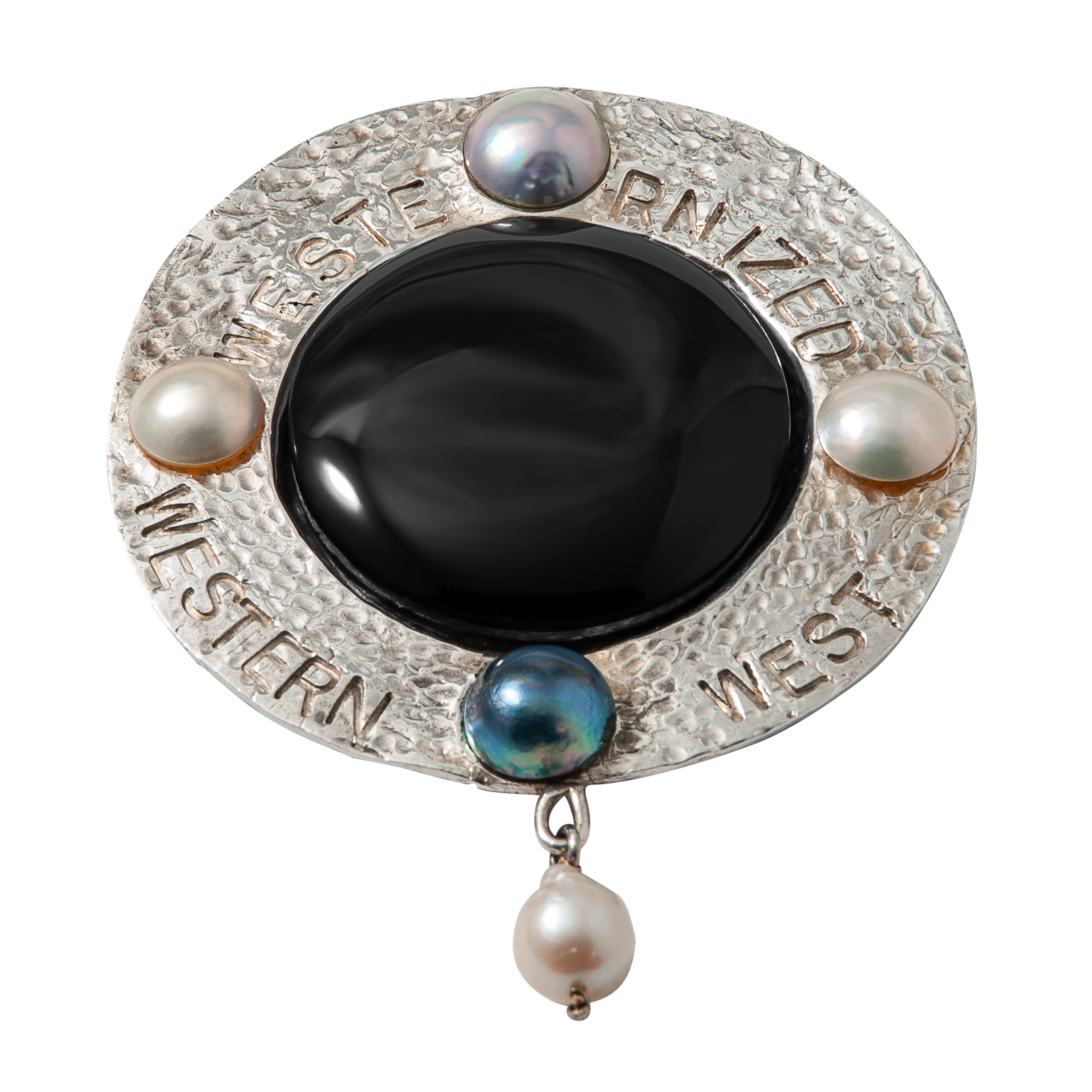
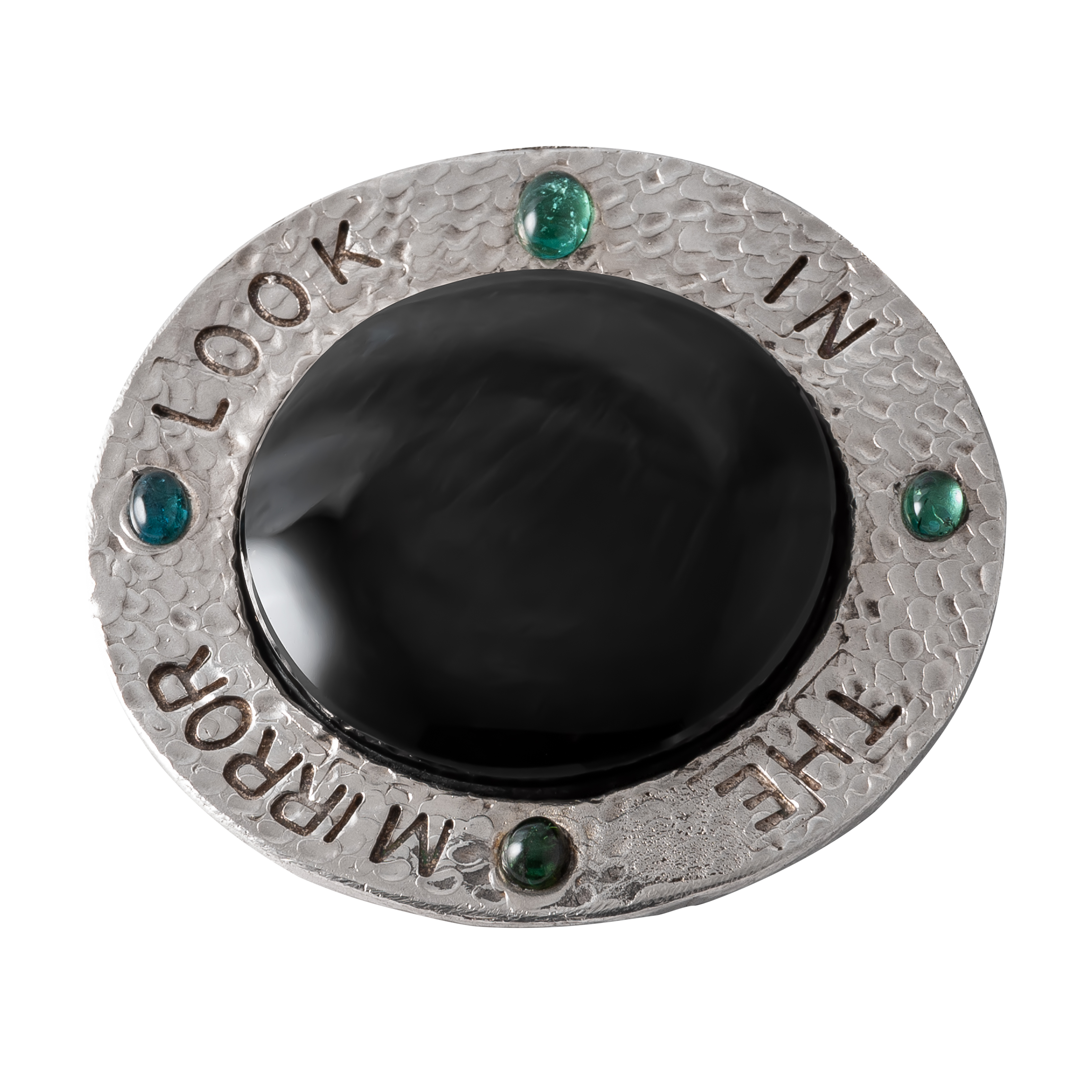
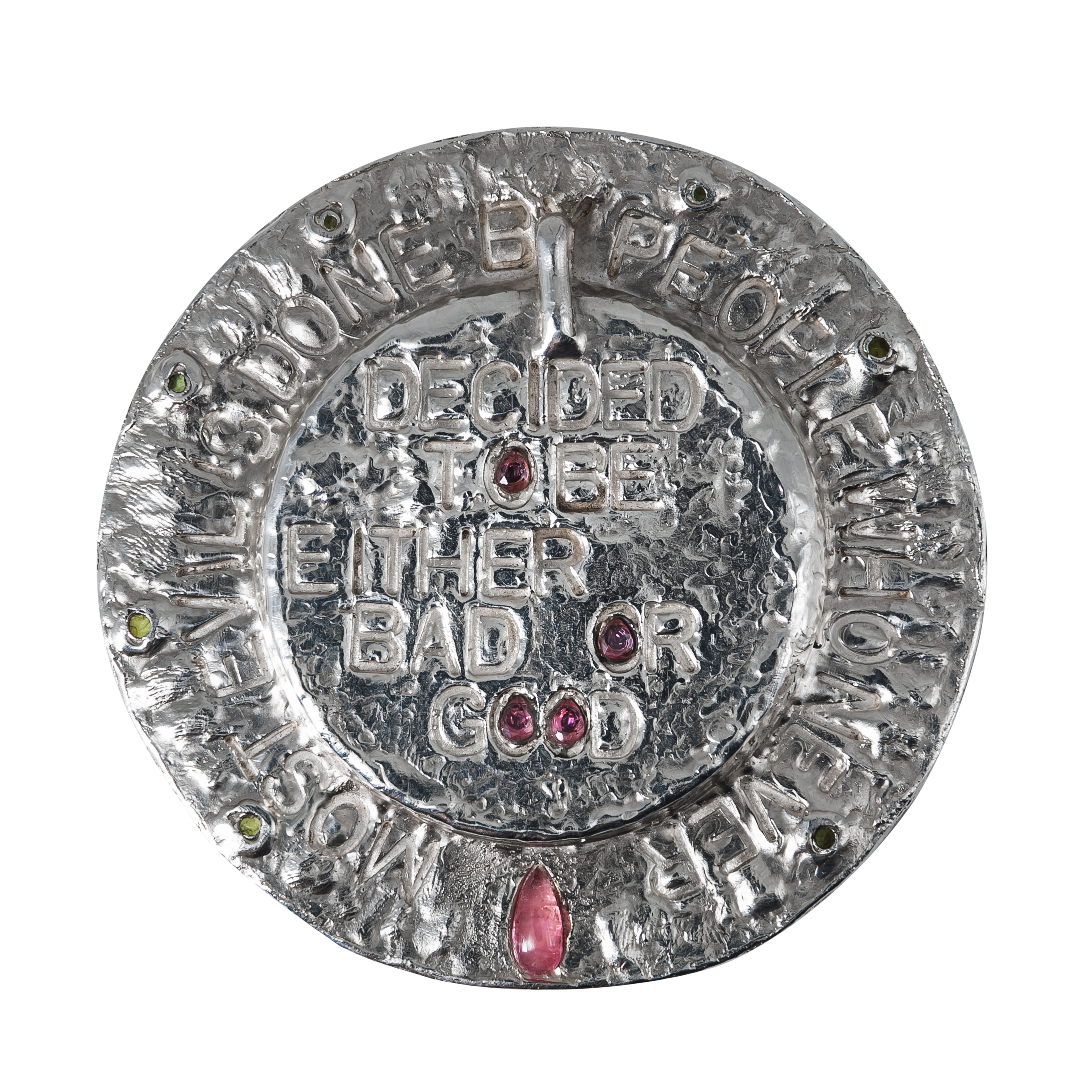
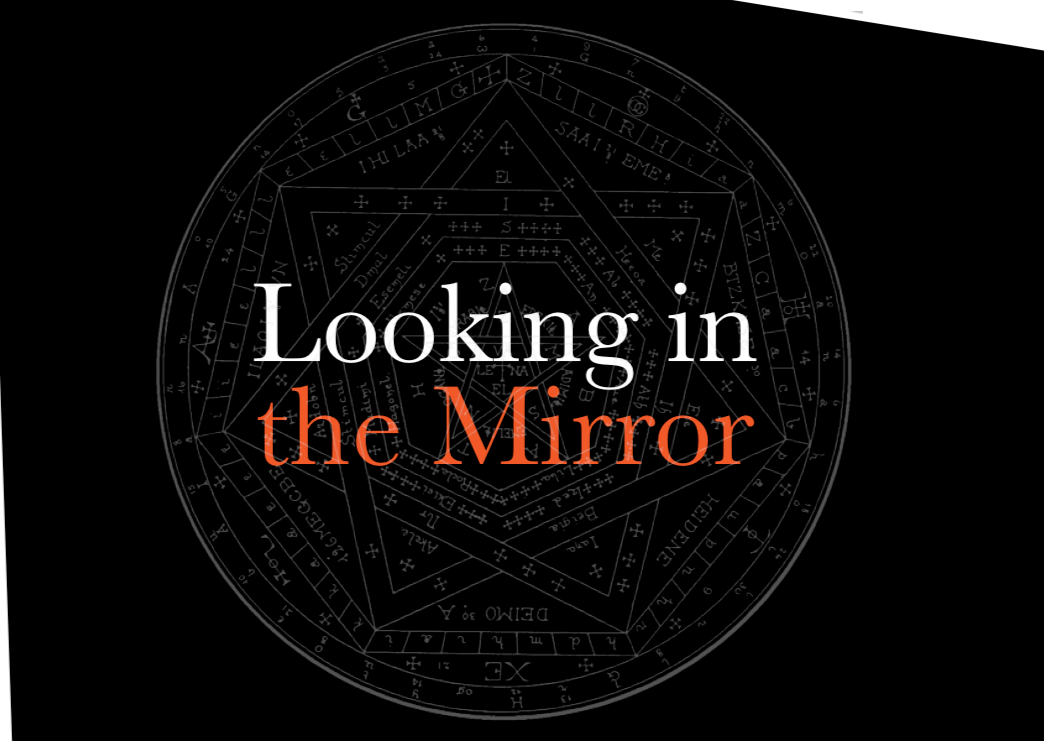
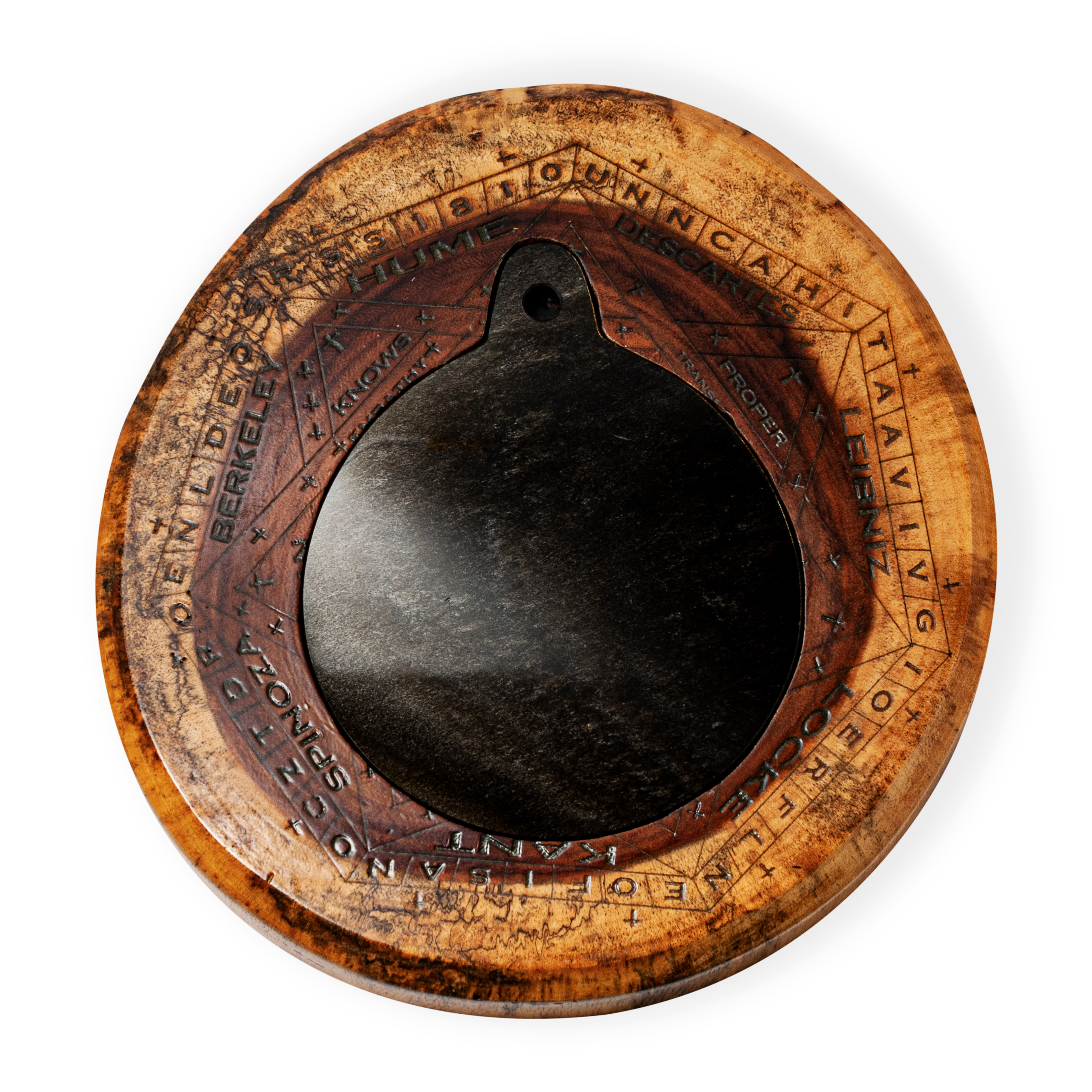
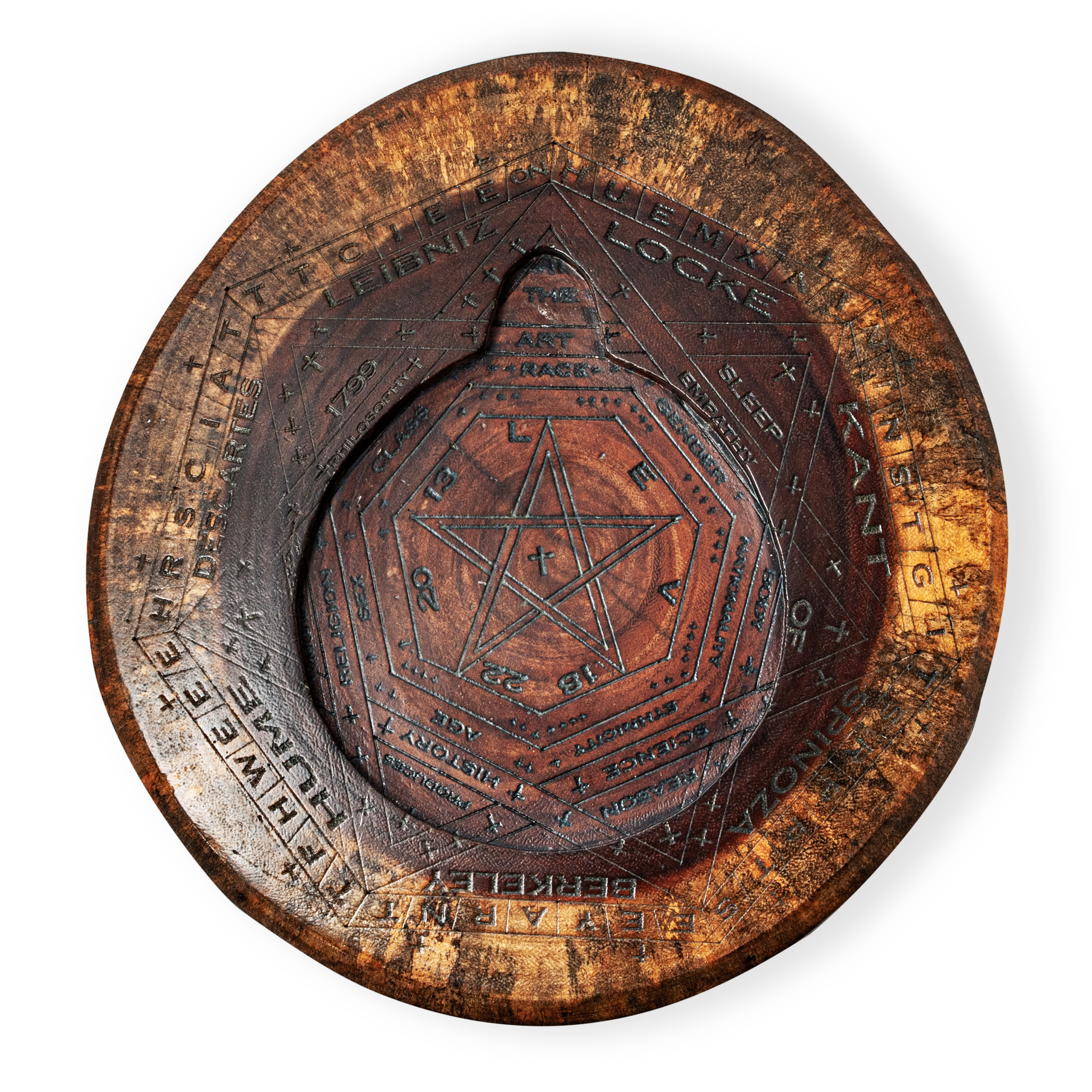
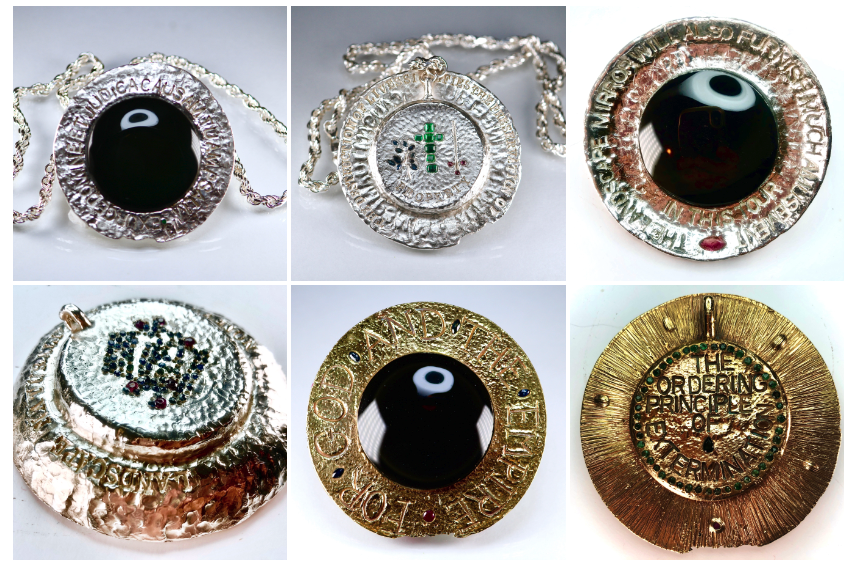
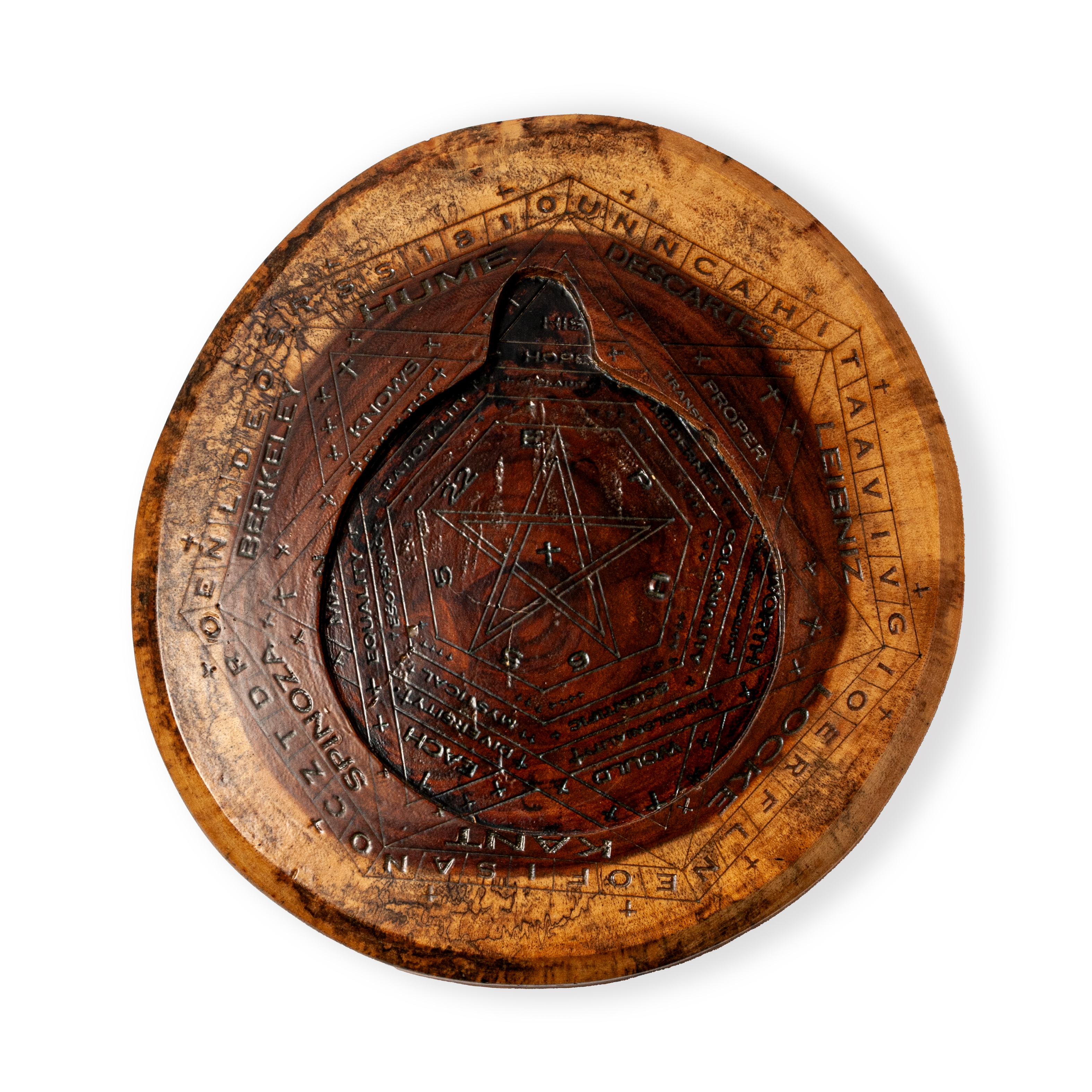
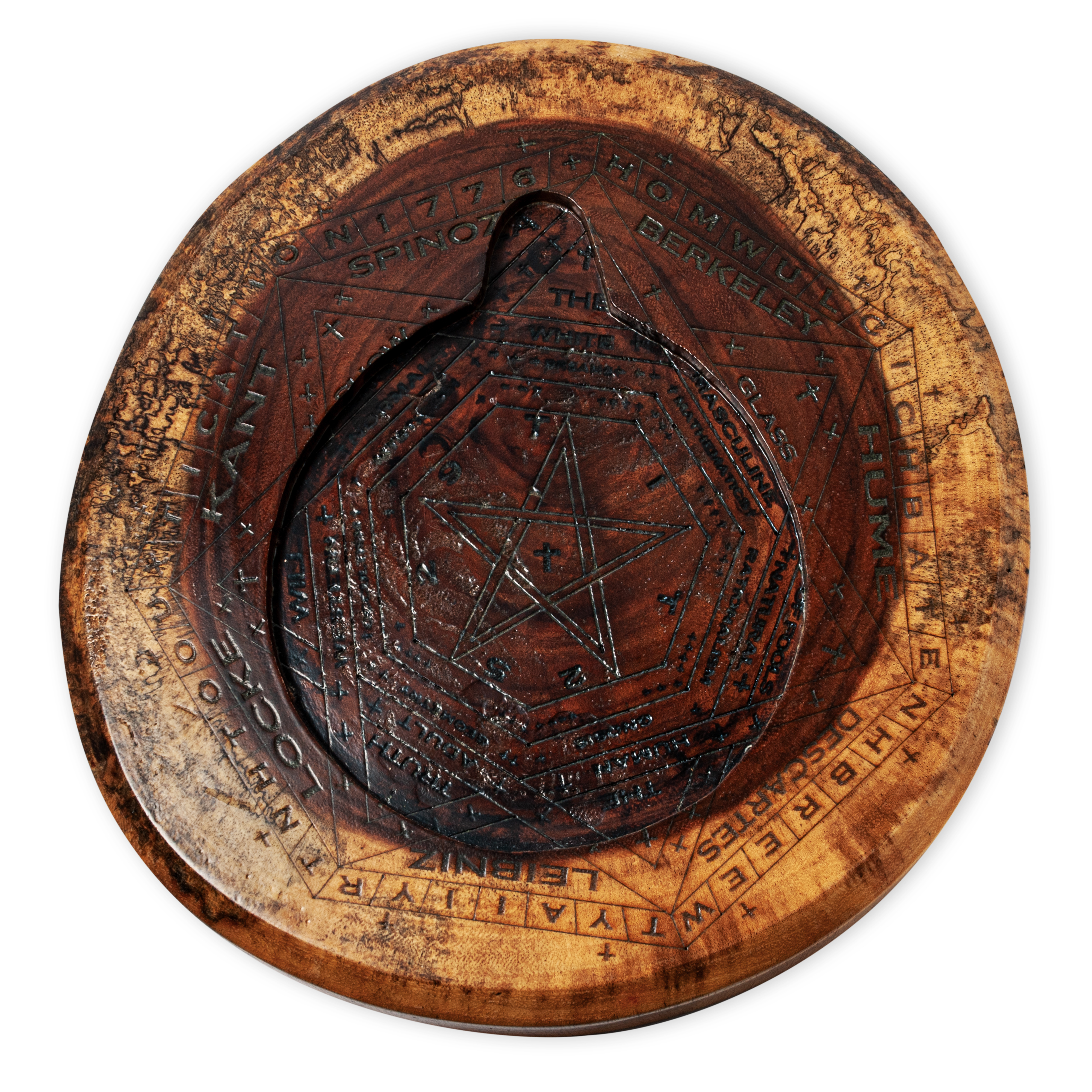
“Looking In the Mirror” is a series of obsidian mirrors encrusted with precious gemstones and woods, exploring different manifestations of “Empire” as a superstitious fantasy of destruction and extermination. Thinking about the black mirror as an “inversive” medium and inspired both by the obsidian mirrors from the British Museum, and the descriptions from the codexes Yanhuitlan and Kingsborough, this series link Cartesian philosophy to the practices of knowledge destruction and looting, to produce divine imperial illusions. From the so-called “conquest” of the Americas, to the birth and expansion of the British Empire, including the ransacking practices of the Grand Tour, the creation of museums, and even fairy tales, black mirrors have been present as a technology throughout the history of power.

 Francisco Guevara